
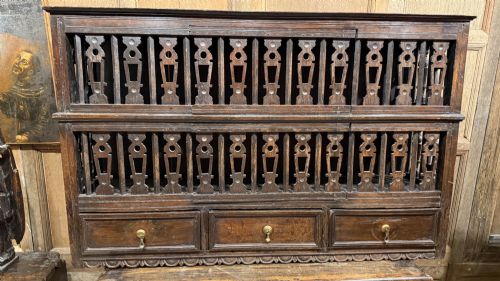
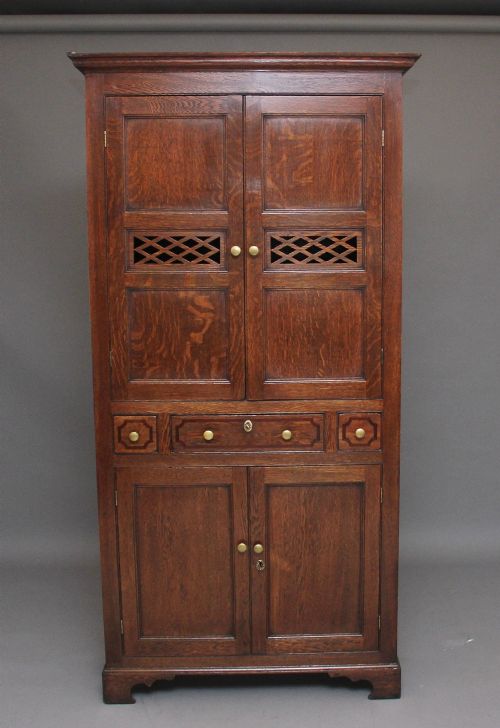


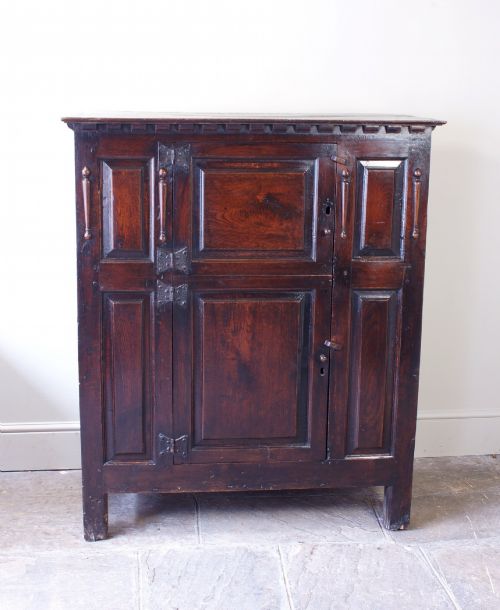


Country Oak Food Cupboard
A country oak food cupboard is a sturdy domestic storage piece built from honest timber to keep provisions safe.
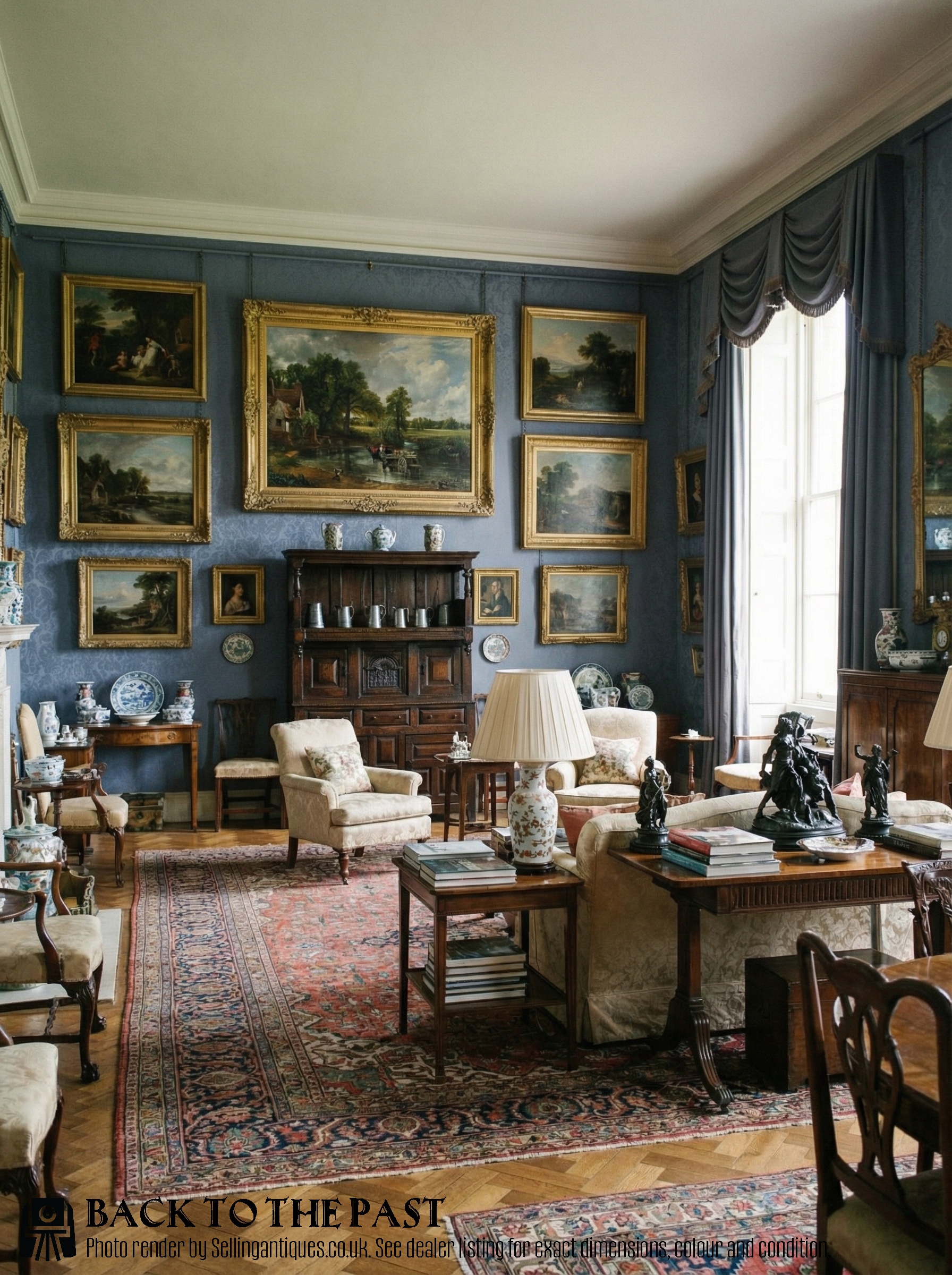
Country Oak Food Cupboard
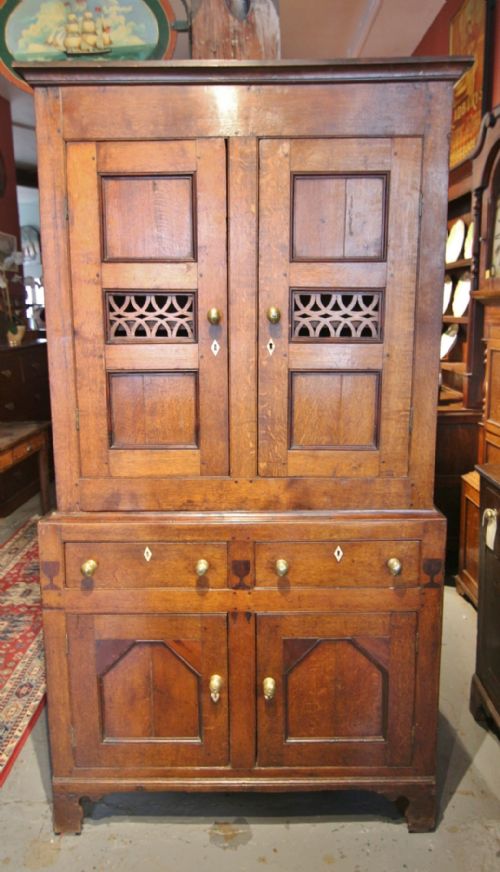
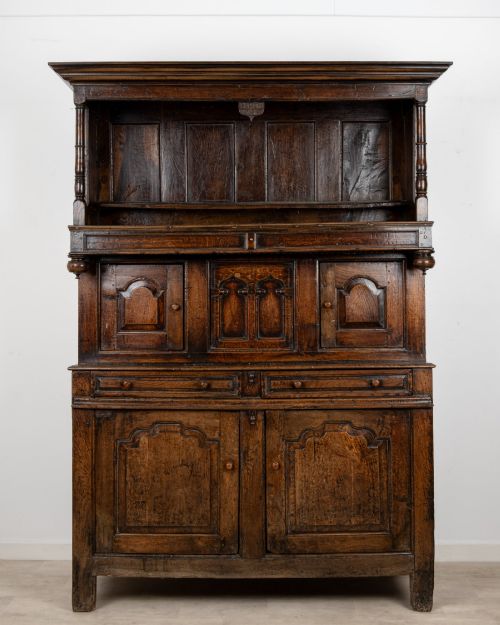
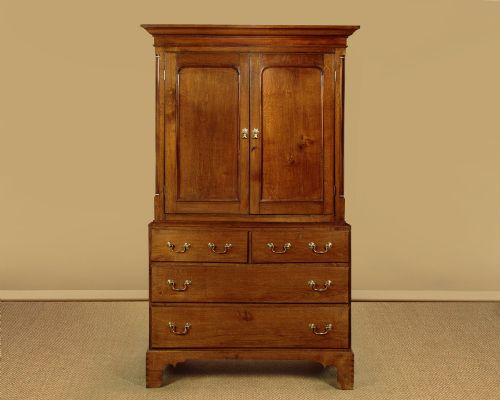
When you search for a country oak food cupboard, you encounter substantial utilitarian furniture spanning the seventeenth, eighteenth and nineteenth centuries. These pieces originate primarily from regional workshops in Wales, the West Country and rural France, taking forms such as bread and cheese cupboards, wall cabinets and court cupboards.
You are most likely to meet regional Welsh vernacular examples or French provincial pieces on this page. These incorporate traditional forms like the deuddarn, tridarn and panelled food safe, reflecting the domestic storage needs of historic rural households.
How they were made
Construction relies heavily on solid oak, shaped with traditional panel-and-frame techniques to accommodate the natural movement of timber over centuries. Workshops integrated durable brass and wrought iron for hinges, locks and latches to secure doors and contents.
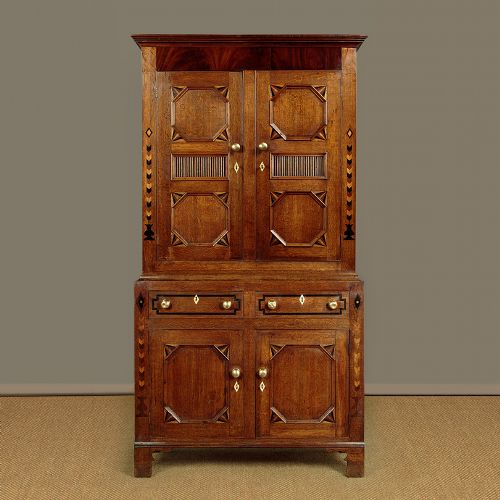
Decorative detailing often involved subtle inlaid wood utilising contrasting materials such as ebony, holly and bone. Joinery remained strictly hand-wrought, demonstrating the practical skill of regional blacksmiths and cabinetmakers.
Object types span Welsh vernacular court cupboards, French mountain cupboards, housekeeper's cabinets and wall-mounted bread safes.
What varies in quality
The distinction between ordinary and exceptional pieces lies in the integrity of the original timber and the survival of authentic hardware. Items retaining their original blacksmith-made locks, hinges and undisturbed surface patination command greater regard from collectors.
Regional distinctiveness and architectural ambition also dictate worth, moving from simple hanging food cupboards to elaborate multi-tiered court cupboards and tridarns. Refined vernacular proportions and careful inlaid decoration distinguish superior workshops from basic utilitarian builds.
The Country Oak Food Cupboard Glossary
- Deuddarn
- A traditional Welsh two-tiered oak cupboard featuring enclosed lower storage and an upper section supported by posts. This form developed during the seventeenth century for domestic displaying and storing.
- Court cupboard
- A heavy seventeenth-century oak sideboard or storage cupboard featuring carved supports and recessed upper sections. They served as status symbols in substantial rural homes.
- Panetiere
- A French provincial freestanding or wall-mounted bread safe constructed with spindle-turned galleries to allow ventilation. These pieces protected loaves from household pests.
- Livery cupboard
- A small wall-mounted or standing cupboard historically used for storing rations and candles. They often feature pierced or spindled doors for air circulation.
Country Oak Food Cupboard: Frequently Asked Questions
What is a country oak food cupboard?
A country oak food cupboard is a utilitarian storage piece built by regional makers to preserve perishables like bread and cheese.
These functional items utilise sturdy oak construction and ventilated panels to keep provisions safe from pests while allowing air circulation.
How do I date an old oak cupboard?
Dating relies on examining construction methods, timber patination and regional design traits. Seventeenth-century examples often feature heavy framing and carved decoration, while eighteenth and nineteenth-century pieces display simpler vernacular lines.
Hardware such as original blacksmith iron hinges and locks also provides reliable chronological clues for the piece.
Where were these cupboards made?
These pieces originated in rural domestic workshops across specific regions known for vernacular woodworking traditions. Common origins include rural Wales, the English West Country and provincial areas of France.
Local timber and distinct regional forms like the Welsh deuddarn define their geographical heritage.
How should I live with one?
Living with a historic oak cupboard requires placing it away from direct heat sources and dramatic humidity shifts to protect the timber. Regular treatment with appropriate beeswax preserves the dry, honest surface finish without creating artificial shine.
Their robust construction makes them practical for modern storage while retaining their historical character.