
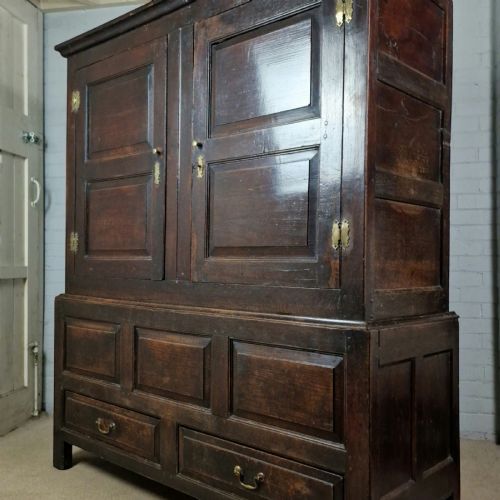
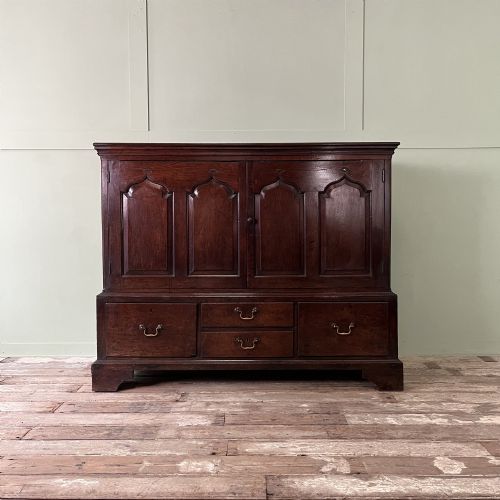
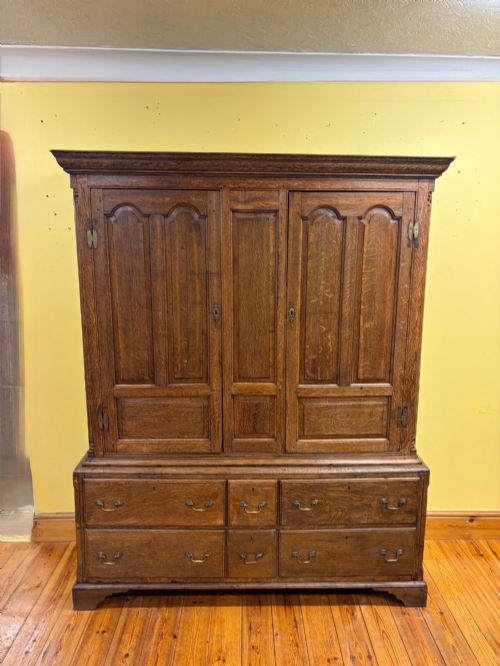
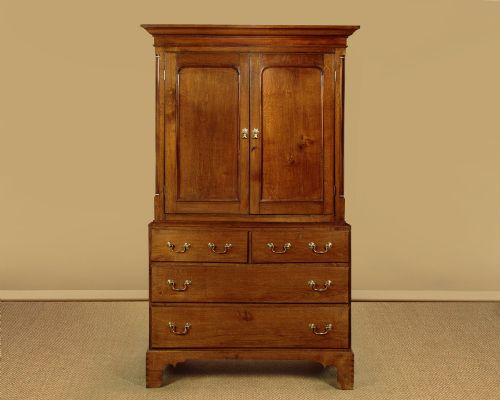
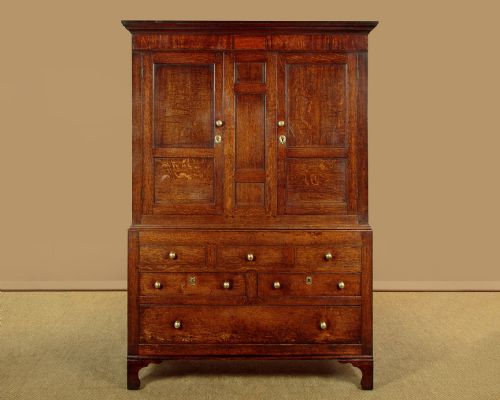
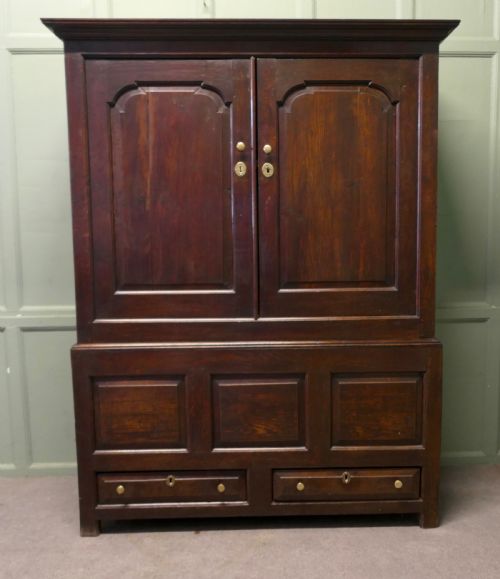

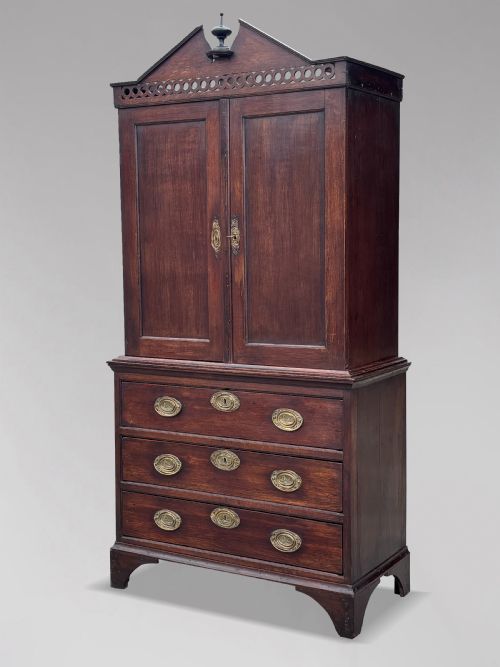


Country Oak Clothes Press
These country oak clothes press pieces are sturdy rural storage furniture offering generous proportions and rich patination for traditional interiors.
Country Oak Clothes Press
A country oak clothes press combines utilitarian storage with robust domestic carpentry across Georgian and nineteenth-century examples. You encounter regional vernacular forms including Welsh low press cupboards, housekeepers cupboards, and two-stage wardrobes.
The selection ranges from mid eighteenth-century livery cupboards to early nineteenth-century French armoires and hanging cupboards. These heavy timber pieces served centuries of households for linens, garments, and provisions.
The typical piece relies on solid oak construction, sometimes accented with painted finishes, brass hardware, and occasional marquetry or bone inlay. Buyers select them for genuine period character and deep storage capacity.
How they were made
Joiners and country carpenters built these cupboards using solid native timber, framing heavy panels with pegged mortise and tenon joints. Secondary woods such as pine appear internally for shelving and drawer linings.
Surface texture develops from hand-planed boards finished with traditional waxes and oils over decades of handling. Iron hinges and brass escutcheons secure the heavy doors while adding functional detail to the facade.
Some country carpenters left pencil marks and tally lines inside the door frames that still show today.
What varies in quality
The distinction between ordinary utility items and superior examples lies in the proportion and crispness of the fielded panels and cornice mouldings. Regional character also plays a part, with distinctive Cardiganshire or broader Welsh vernacular detailing commanding attention.
Timber selection and surface preservation determine the overall visual strength of each piece. Untouched patination and original ironwork separate honest rural survivors from heavily restored examples.
The Country Oak Clothes Press Glossary
- Livery cupboard
- A traditional storage piece originally used for provisions or clothing before dedicated wardrobes became common. These early cupboards often feature panelled doors and internal shelving.
- Press cupboard
- A heavy two-stage piece of furniture designed for flattening and storing linens or garments. The upper section usually houses shelves while the lower portion contains drawers.
- Vernacular furniture
- Domestic pieces made by local regional craftsmen using available native timber rather than following strict metropolitan London designs. This tradition encompasses distinct Welsh and provincial English styles.
- Housekeepers cupboard
- A large utilitarian storage unit traditionally used in country houses for household textiles and stores. They typically provide deep shelved capacity alongside lower drawer space.
- Armoire
- A large upright cupboard or wardrobe of French or continental origin. These pieces often feature deep hanging space behind wide panelled doors.
Country Oak Clothes Press: Frequently Asked Questions
How do I date a country oak press?
Dating relies on examining construction methods, timber thickness, and hardware styles. Hand-pegged joinery and pit-sawn board marks generally point towards eighteenth-century origins.
Later nineteenth-century examples often incorporate machine-cut elements and thinner secondary pine timbers. Regional vernacular details also help narrow down the period of manufacture.
Where were these cupboards used?
These pieces originated in rural farmhouses, manor houses, and provincial homes across Britain and France. They served as primary storage furniture in bedrooms, hallways, and dairies.
The robust construction suited demanding domestic environments where heavy linens and garments required secure, dry storage.
How do I care for antique oak?
Maintain the timber by applying a traditional beeswax polish sparingly to nourish the dry surface. Avoid placing cupboards near direct heat sources or strong sunlight to prevent board splitting.
Allow the wood to breathe and clean surfaces with a soft, dry cloth rather than modern chemical sprays.