
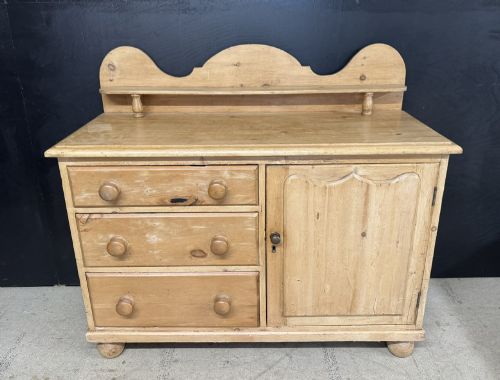
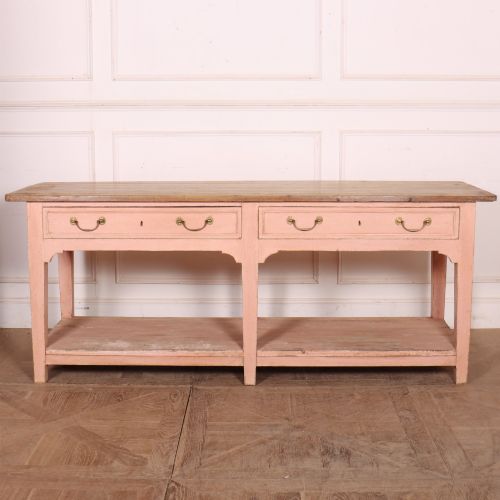

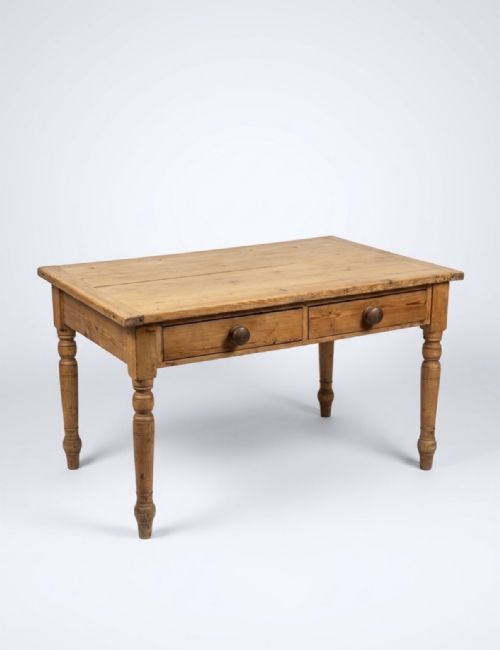
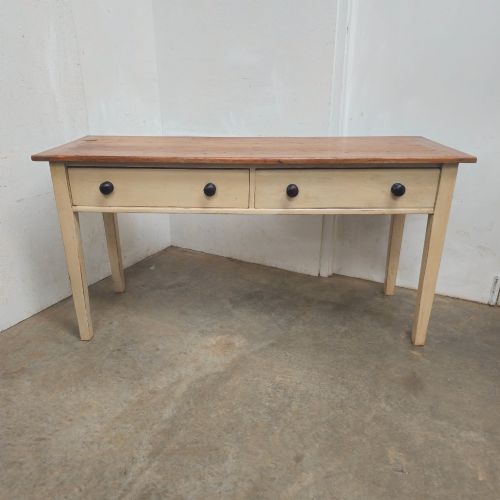

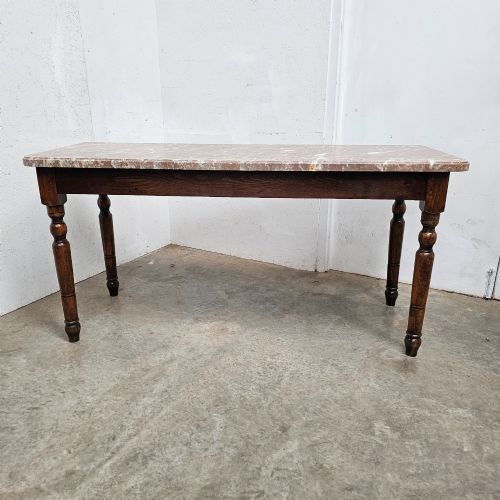
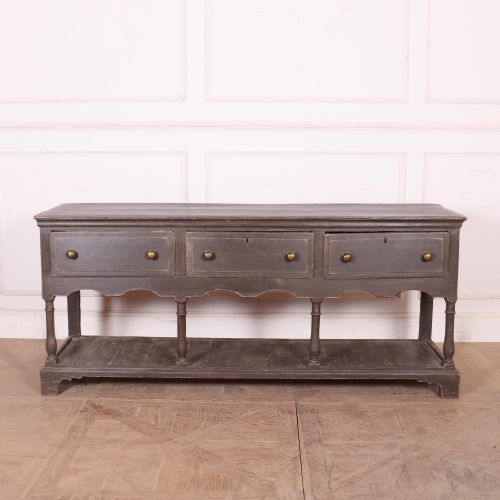
Country Kitchen Server
A country kitchen server provides robust utility and honest timber character, anchoring domestic spaces with centuries of practical charm.
Country Kitchen Server
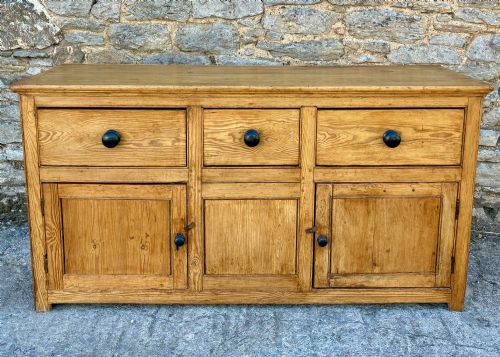
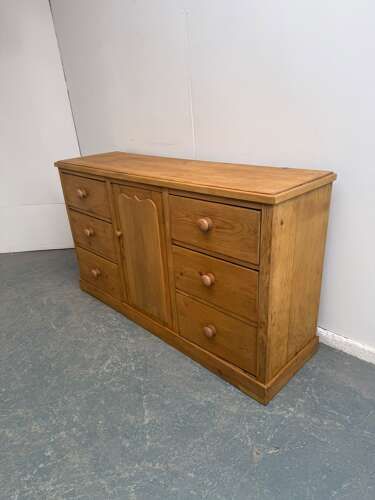
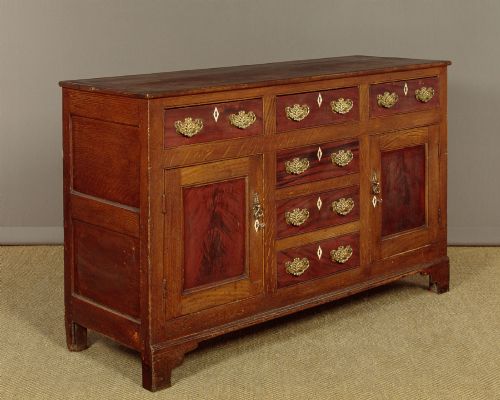
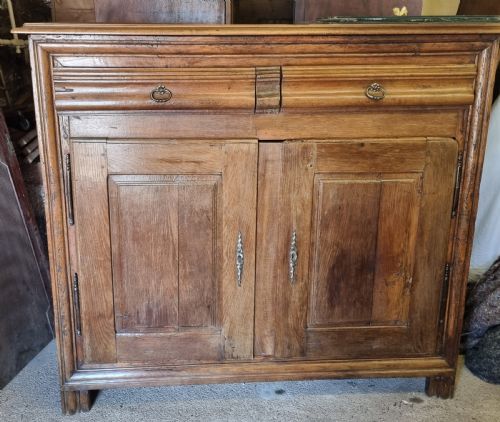
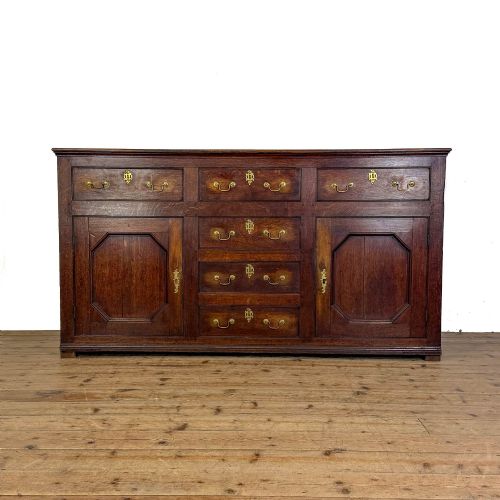
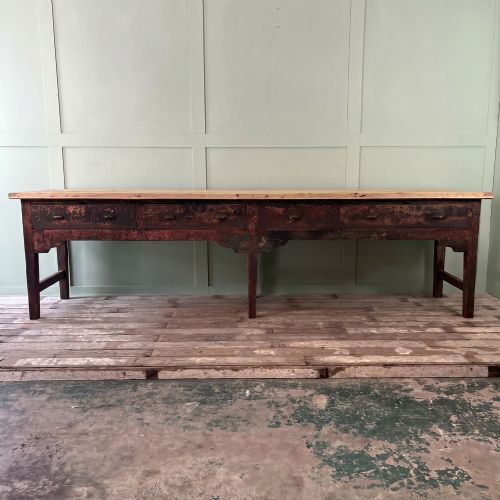
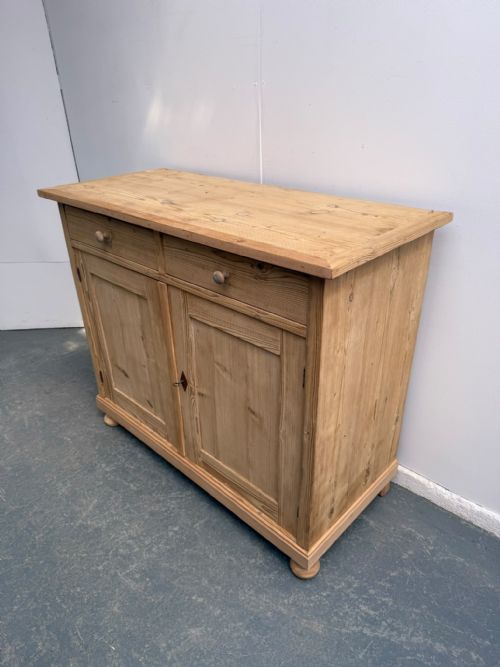
A country kitchen server functions as a sturdy work surface and storage unit, combining the utility of a dresser base, sideboards, or a serving table. These pieces emerge primarily from the 18th century, Georgian, and Victorian periods, reflecting domestic life in English, Welsh, and French rural settings.
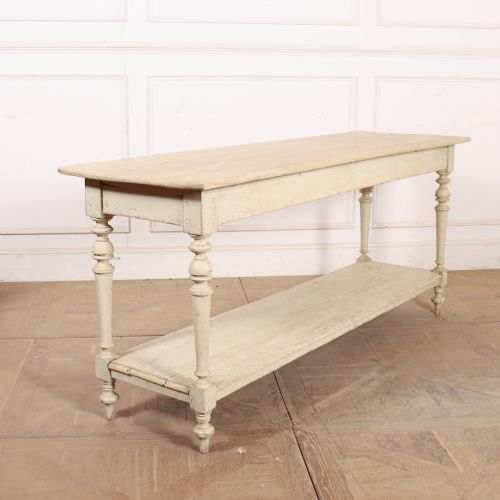
Buyers meet numerous dresser bases and serving tables on this page, often featuring potboards or lower shelves designed for daily provisions and kitchenware. The form prioritises function, resulting in low, heavy proportions suited to constant domestic use.
Regional variations span English country, French provincial, and rustic farmhouse aesthetics. Oak, pine, and fruitwood construct the majority of forms, carrying the marks of generations of food preparation and household labour.
Materials and construction
Cabinet makers utilised solid timbers such as oak, pine, pitch pine, sycamore, and fruitwood, selecting woods based on local availability and functional resilience. Surfaces frequently show layers of historical paint, wax finishes, or scrubbed bare timber resulting from decades of washing.
Hardware consists of iron and brass fittings, including drop handles and hinges that secure drawers and cupboards beneath heavy timber tops. Potboards and lower tiers provide structural rigidity through pegged joints and robust stretchers.
Object forms span dresser bases, serving tables, and dairy tables.
Judging quality in utility furniture
Quality rests in the integrity of the original timber frame, the retention of honest surface patination, and minimal structural alteration over time. Pieces retaining their original potboards, drawers, and unpainted or historically layered painted surfaces command higher regard among collectors.
Proportion and timber selection separate utilitarian workshop output from finer country house commissions. Finer examples display balanced drawer arrangements, well-chosen oak or fruitwood grains, and sound joinery that withstands heavy daily weight.
The Country Kitchen Server Glossary
- Potboard
- A lower open shelf fitted beneath a dresser base or serving table used originally for storing heavy ceramic pots and pans. This structural addition stabilises the legs while offering accessible floor-level storage.
- Dresser base
- The lower section of a kitchen dresser, functioning independently as a sideboard or serving surface with drawers and cupboards. It provides a wide working top above enclosed storage space.
- Fruitwood
- Dense timber harvested from fruit-bearing trees such as pear or apple, utilised by provincial makers for its fine grain. It yields a warm tone particularly favoured in French country furniture.
- Dairy table
- A specialised work table constructed with scrubbed pine or sycamore tops designed for cold food preparation. These surfaces resisted moisture absorption during butter and cheese making.
- Patination
- The surface sheen and colour acquired by wood and paint through decades of handling, cleaning, and exposure to light. It serves as a visual indicator of genuine age and historical use.
Country Kitchen Server: Frequently Asked Questions
How do I use a server in a modern kitchen?
A country kitchen server functions effectively as a freestanding island, a coffee station, or a buffet surface for dining areas. The lower drawers and shelves accommodate tableware, linens, and cookware.
The sturdy top handles everyday food preparation while adding historical character to contemporary domestic spaces.
What is the difference between oak and pine servers?
Oak servers originate predominantly from earlier periods like the 18th century and George III eras, offering dense durability and deep grain patterns. Pine servers became widespread during the Victorian era, presenting a lighter appearance that often accepts painted finishes well.
Both timbers served practical domestic roles, though oak generally denotes higher initial workshop status.
How do I care for a waxed timber top?
Maintain waxed surfaces by applying a traditional beeswax polish periodically to nourish the wood and repel moisture. Avoid placing hot dishes directly onto the timber to prevent marking the historic finish.
Regular dusting with a dry cloth preserves the natural patination built up over centuries.
Are painted finishes on servers original?
Painted finishes vary significantly, ranging from contemporary decorative coats to historic layers applied generations ago. Examination of the paint layers reveals whether the pigment has worn naturally through use or represents later decoration.
Both original scrubbed timber and historical paint hold distinct appeal depending on collector preference.