


Traditional Farmhouse Sideboard
A traditional farmhouse sideboard anchors a kitchen or dining room with honest utility, offering deep storage built from heavy pine, oak, or chestnut.
Traditional Farmhouse Sideboard
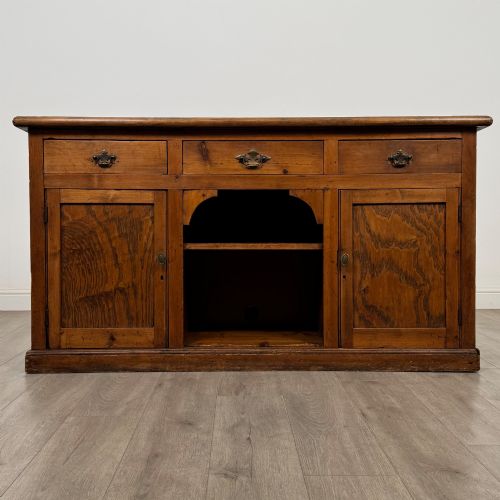
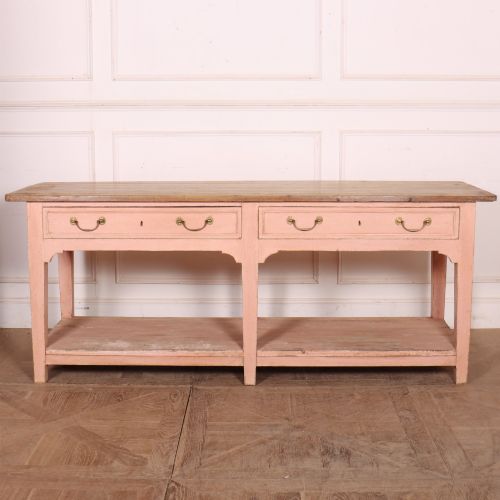
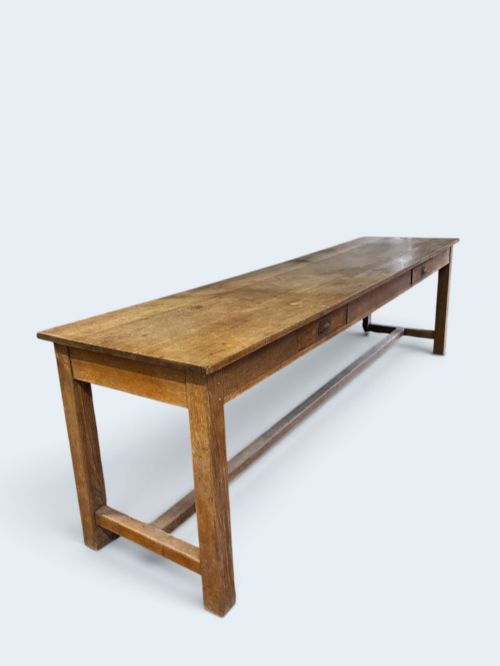
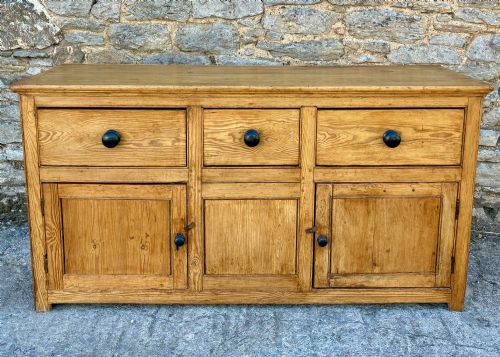
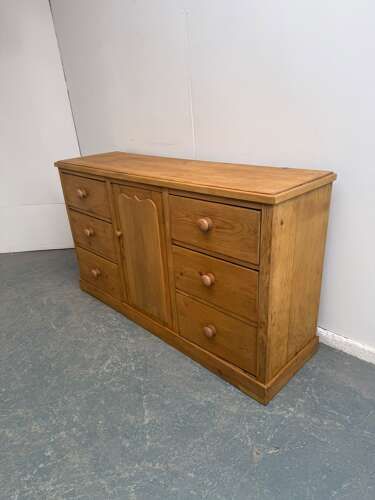
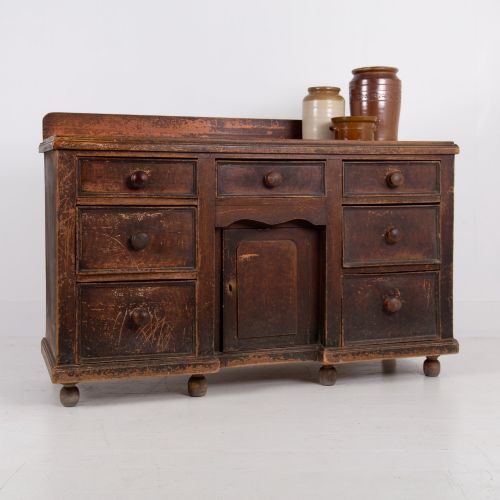
A traditional farmhouse sideboard covers hardworking utility furniture designed for rural homes, frequently appearing on this page as kitchen dresser bases, serving tables, and potboard servers. These sturdy items originate across the nineteenth and eighteenth centuries, bringing practical surface space and enclosed storage to domestic settings.
The varieties you are most likely to meet on this page span British and French country origins, taking the form of low dresser bases or serving tables rather than towering cupboards. Woods like pine and oak dominate the selection, often finished with original paint, waxed surfaces, or bleached tones that reflect decades of domestic use.
How they were made
Construction relies heavily on solid timbers such as pine, oak, and chestnut, assembled with robust joinery capable of withstanding heavy daily use in busy kitchens. Metal elements remain functional rather than decorative, with iron and brass hardware securing doors and drawers.
Surface treatments vary between natural waxed finishes, bleached oak, and layers of original paint that preserve the character of the wood underneath. Cabinetmakers built these pieces for service rather than display, utilising straightforward panelled construction and sturdy potboards for open storage.
Materials documented across the inventory include solid oak, pine, painted wood, chestnut, brass, and iron.
What varies in quality
Quality in a traditional farmhouse sideboard rests on the integrity of the timber and the honesty of its surface, distinguishing utilitarian workshop builds from finer country house examples. Pieces retaining their original paint or untouched waxed finishes hold greater integrity than those stripped down and heavily restored.
Proportion and scale also separate the items, ranging from narrow servers to monumental country house dresser bases that require substantial floor space. The choice of primary wood, whether solid oak, chestnut, or native pine, dictates both the weight of the piece and its visual presence in a room.
The Traditional Farmhouse Sideboard Glossary
- Potboard
- An open lower shelf beneath a dresser base or serving table, traditionally used for storing heavy pots and pans. This practical feature defines many early country pieces.
- Dresser base
- The lower section of a kitchen dresser, functioning as a standalone sideboard with drawers and cupboards. It provides a flat working surface alongside enclosed storage.
- Serving table
- A long, narrow table designed for dishing up food before it reached the dining table. These pieces often feature simple legs and minimal drawers.
- Bleached oak
- Oak timber treated to lighten its natural colour, giving the wood a pale, Scandinavian-influenced appearance. This finish appears on select nineteenth-century serving tables.
Traditional Farmhouse Sideboard: Frequently Asked Questions
What is a traditional farmhouse sideboard?
A traditional farmhouse sideboard is a utilitarian storage piece typically found in country kitchens and dining rooms, often taking the form of a dresser base or serving table.
These items were built from solid woods like pine and oak to handle heavy domestic work, providing a flat surface and lower storage.
How do I date an antique sideboard?
Dating relies on examining the timber selection, construction methods, and hardware style, with pieces on this page stretching from the eighteenth to the early twentieth century.
Clues such as original paint layers, hand-cut joinery, and the specific type of wood help place a piece within the Victorian era or earlier periods.
Where were these sideboards used?
These pieces served primarily in rural kitchens, sculleries, and country house dining rooms for food preparation and storage.
Their sturdy construction made them ideal for holding heavy cookware, ceramics, and provisions before formal fitted kitchens existed.
How do I care for a waxed wood finish?
Caring for a waxed surface involves occasional re-waxing to nourish the pine or oak and dusting with a soft, dry cloth.
Avoid placing these items in direct sunlight or near heat sources to prevent the timber from drying out or splitting.