





Country House Wool Rug
A country house wool rug brings deep colour, rich pattern and instant warmth to large rooms and traditional spaces.
Country House Wool Rug
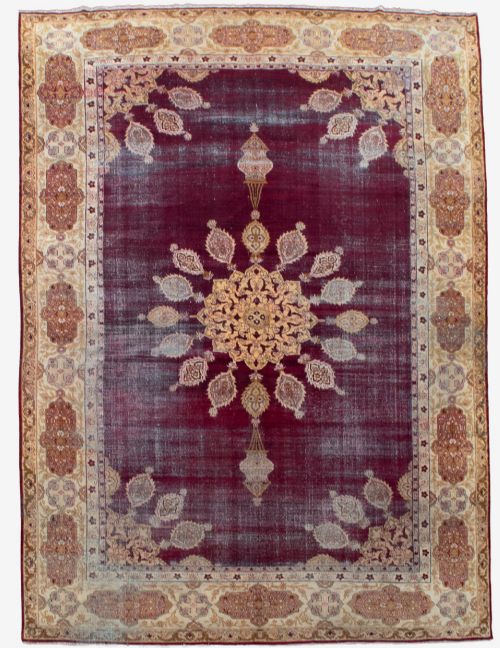
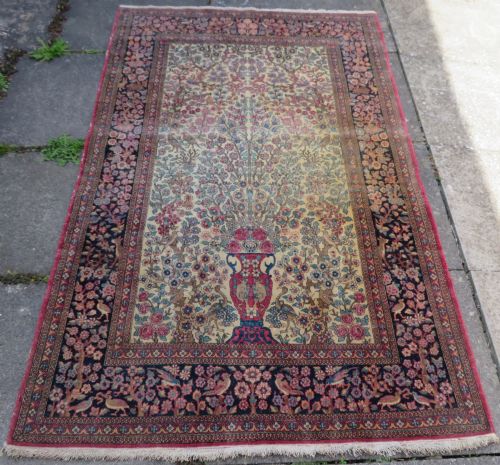
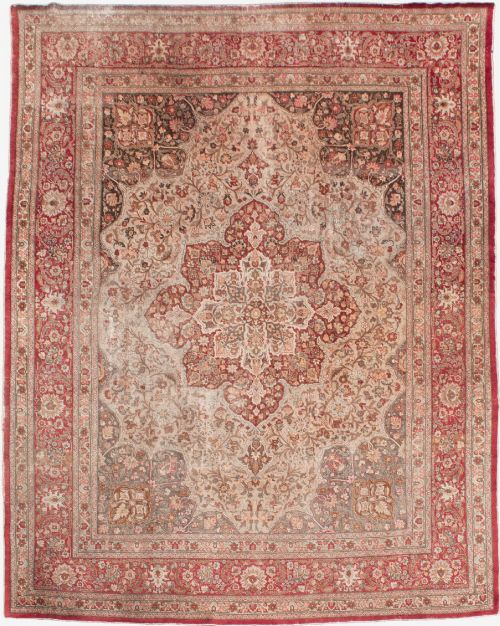
A country house wool rug encompasses large-scale carpets and floor coverings suited to expansive rooms and traditional interiors. When searching for a country house wool rug, buyers encounter substantial Persian, tribal, and European pieces originating from the nineteenth and early twentieth centuries.
How they were made
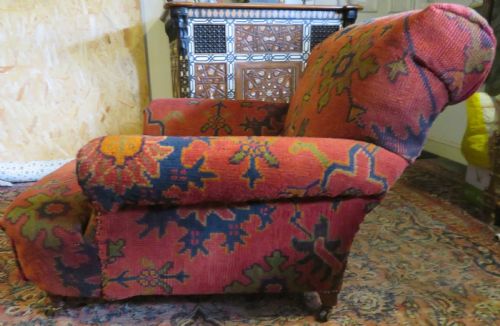
These floor coverings rely primarily on natural wool, frequently combined with cotton foundations to provide structural stability for large carpets. Wood and brass also appear in associated furniture items upholstered in matching textiles.
Weavers employed traditional knotting and weaving techniques passed down through generations across Persian, Turkish, and European workshops. The resulting structures withstand decades of domestic use while retaining their visual depth.
Current listings span the nineteenth and early twentieth centuries, featuring wool, cotton, wood, and brass across diverse Persian and European styles.
What varies in quality
The fineness of the weave and the complexity of the design dictate the overall quality of each textile. Tightly knotted piles and carefully balanced botanical or geometric compositions distinguish superior examples from simpler ones.
The depth and longevity of the natural dyes used in the wool determine how gracefully the piece ages. Richly saturated grounds and harmonious colour palettes elevate the visual impact within a room.
Howard And Sons
The Country House Wool Rug Glossary
- Carpet
- A large textile floor covering designed to anchor the furniture arrangement in a principal room. These substantial pieces often define the entire character of a traditional interior.
- Runner
- A long, narrow carpet format specifically proportioned for hallways, corridors, and passageways. They protect high-traffic wooden floors while adding pattern and warmth.
- Kilim
- A flat-woven carpet or textile made without a pile, frequently utilised in upholstery as well as floor coverings. This technique creates a durable, reversible fabric with sharp geometric designs.
- Pile
- The upright loops or cut strands of wool that form the soft surface of a rug. The density and height of this layer dictate the physical feel and wear resistance underfoot.
- Ground
- The main background colour or field area of a carpet upon which the central medallions and secondary motifs are set. Ivory and saturated earthy tones frequently fill this space.
Country House Wool Rug: Frequently Asked Questions
How do I style a large wool carpet?
Position the carpet so that the principal furniture pieces sit comfortably on top, anchoring the seating arrangement within the room.
Allow enough surrounding floorboards to show so the scale of the textile flatters the proportions of the space.
Where should a runner rug be placed?
Place runners in high-traffic transition spaces such as long hallways, grand entryways, or narrow corridors to soften footsteps.
Ensure there is adequate clearance for doors to open freely over the thickness of the wool pile.
How do I care for antique wool rugs?
Vacuum the carpet gently on a low suction setting without a rotating brush roll to protect the historic wool fibres from unnecessary friction.
Rotate the piece periodically to ensure even exposure to foot traffic and sunlight across the entire surface.
What distinguishes different regional rug styles?
Regional styles reveal themselves through distinct design vocabularies, such as the bold geometric medallions of Heriz or the intricate all-over floral patterns of Mahal.
Palette choices and knotting densities also point directly back to the specific workshops and tribal groups that produced them.