
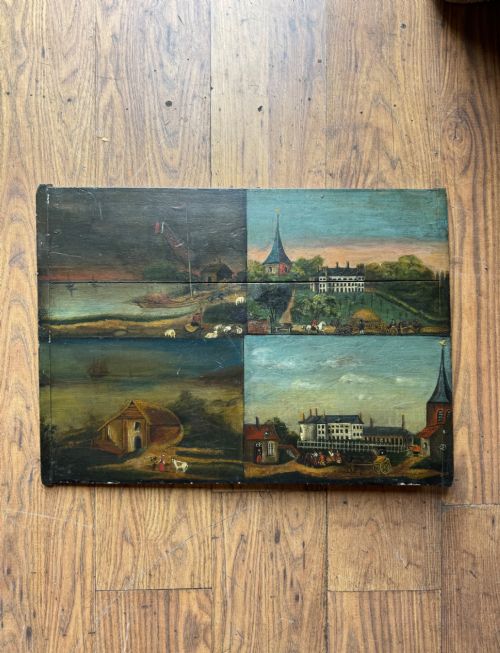
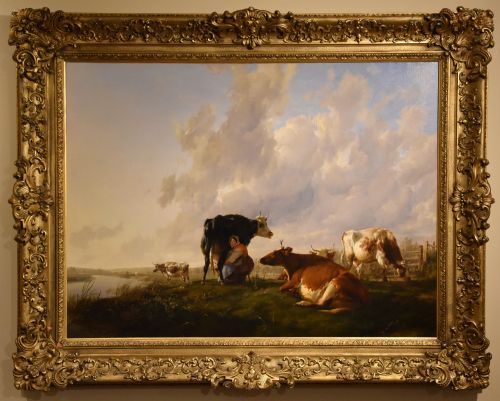
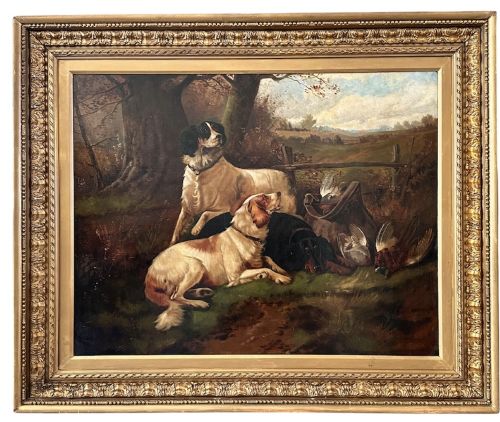
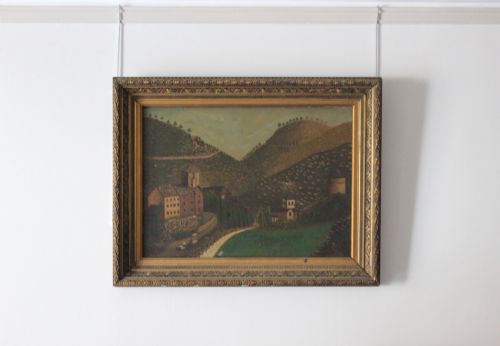
Country House Oil Painting
A country house oil painting brings the quiet weight of rural estates, sporting life and domestic interiors onto the wall.
Country House Oil Painting
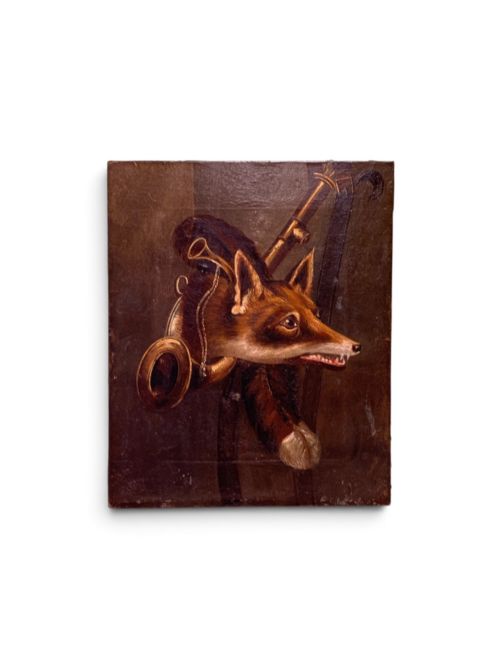
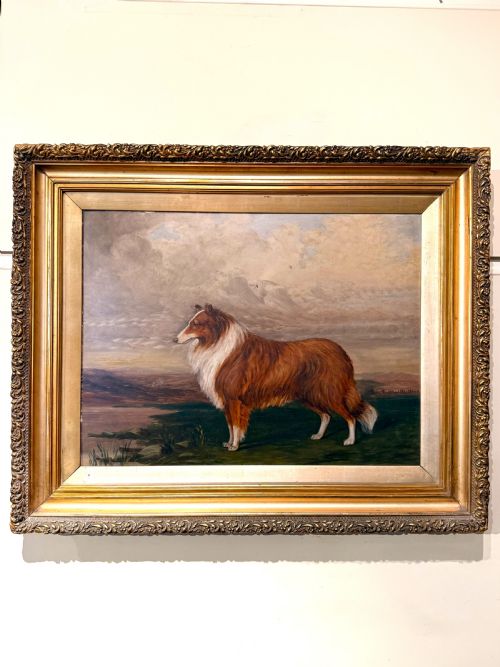
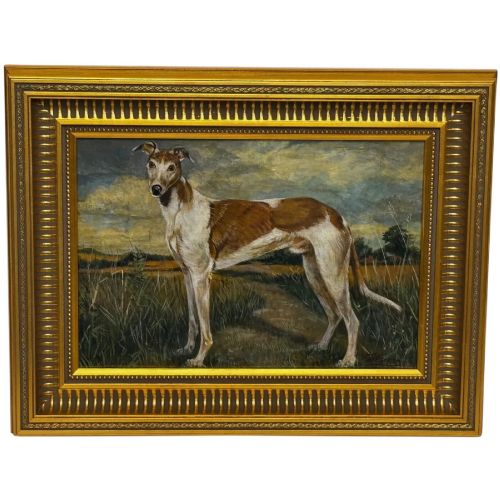
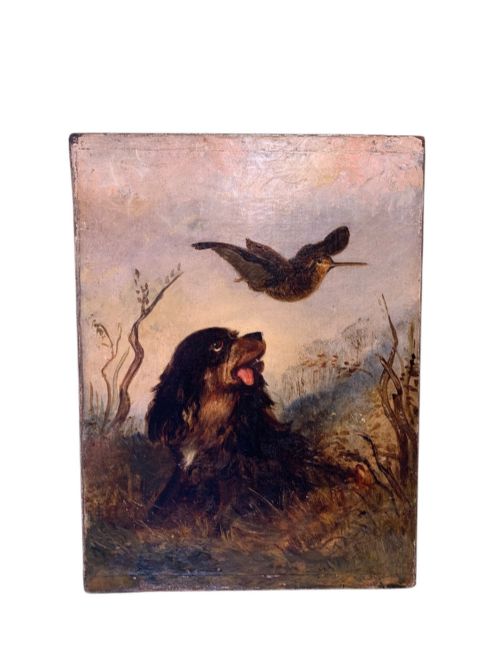
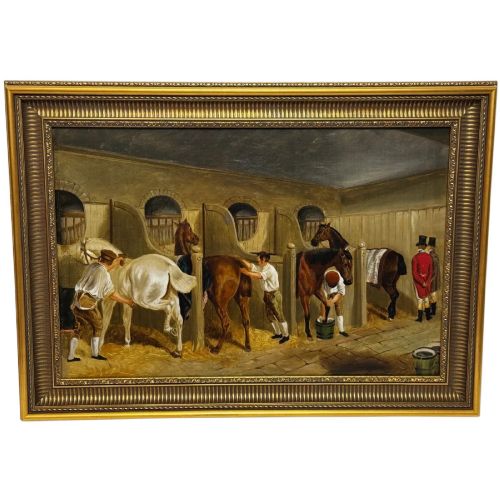
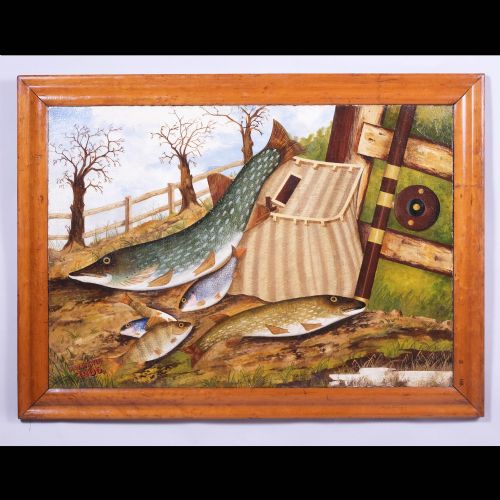
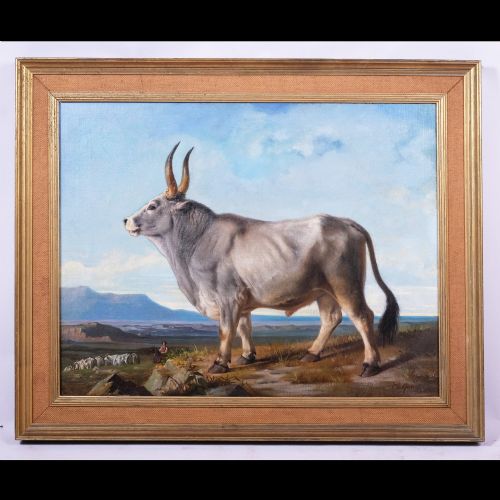
A country house oil painting captures the subjects of rural property, from sporting animals and livestock to domestic interiors and expansive gardens. You will frequently encounter works originating from the Victorian and Edwardian periods, alongside Georgian examples depicting horses, hounds and farm scenes.
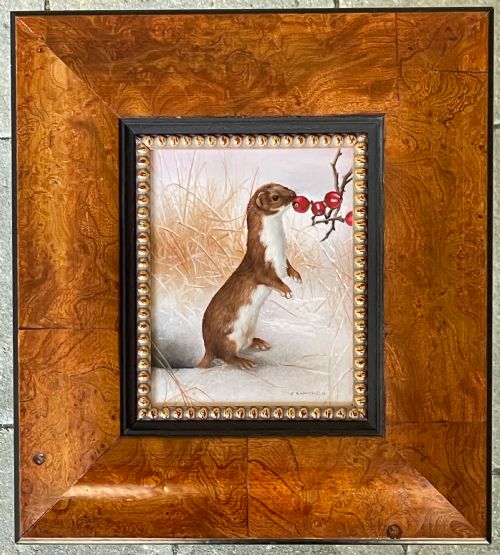
The selection ranges from naive folk art and provincial canvases to accomplished portraits of racehorses and cattle by named Victorian animaliers. These pieces reflect the tastes of landed estates, documenting the animals, landscapes and leisurely pursuits associated with country living.
How they were made
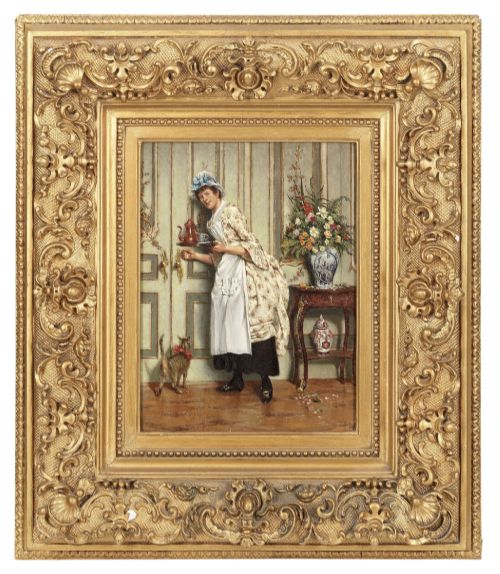
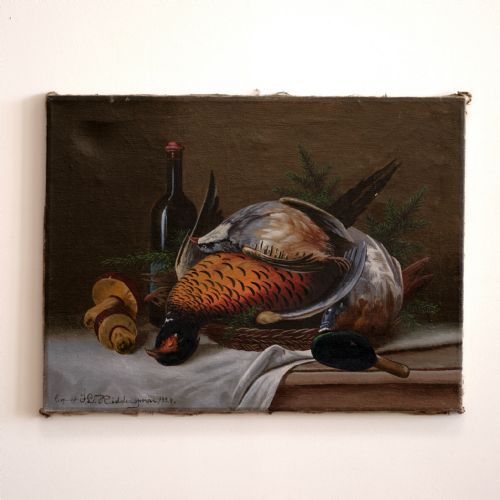
Artists painted primarily with oil paint upon stretched canvas or prepared wood panels, building up layers of pigment to achieve depth in coats of hair, foliage and stone. Giltwood and gesso frames, often ornamented with gold leaf, enclosed these works to suit the grand drawing rooms of historic residences.
The physical support dictates the survival of the piece, with canvas requiring proper tension and panel work needing stable humidity to prevent warping. Original frames matched to the painting provide crucial structural context for works spanning the eighteenth to the twentieth centuries.
Country House Oil Painting Retail Price Guide 2026
Typical asking prices for country house oil painting among the pieces listed under this phrase on Sellingantiques today, from the lower quarter to the upper quarter. They describe what is for sale here now, not the wider market.
Listings feature oil paintings across the nineteenth and twentieth centuries, utilising canvas, wood panels, giltwood frames and gold leaf.
What varies in quality
Anatomical precision and handling of light separate skilled animal portraiture from provincial or naive execution. Master painters render the sheen of a horse coat or the texture of a spaniel ear with nuanced brushwork, whereas lesser hands produce stiff outlines and flat surfaces.
Provenance and attribution elevate certain canvases, particularly those linked to documented artists or specific sporting lineages. The harmony between the artwork and its original gilded frame also influences the overall integrity of the piece.
Stephen Samuel Lewin·Thomas Sidney Cooper·John Sargent Noble·Carl Whitfield·Johann Friedrich Voltz·John Alfred Wheeler·Claude Cardon·John Frederick Herring Jnr·Henry John Yeend King
The Country House Oil Painting Glossary
- Oil on canvas
- Pigments bound in a drying oil, usually linseed, applied to a woven fabric support stretched across a wooden frame. This medium allowed artists to achieve rich tones and subtle blendings.
- Giltwood
- Wood, commonly pine or gesso-coated carved timber, covered with a thin layer of gold leaf or metallic powder. It forms the traditional decorative framing for formal portraits and landscape oils.
- Sporting art
- Depictions of hunting, shooting, racing and household animals associated with rural estates. These works formed a central category of nineteenth-century patronage.
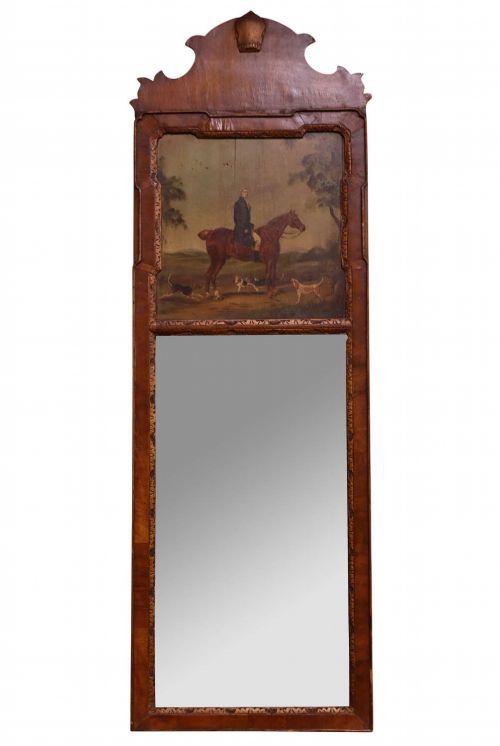
- Trumeau
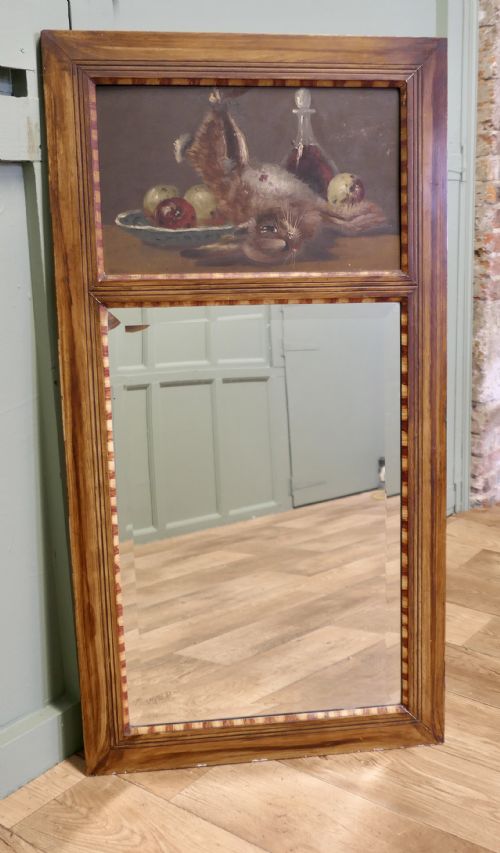
- A decorative wall mirror combined with an oil painting panel above the glass. Originating in French interior design, these pieces fitted grand salon spaces.
- Naive art
- Work produced by artists without formal academic training, characterised by flat perspective and direct expression. Such pieces offer charming insight into provincial folk traditions.
Country House Oil Painting: Frequently Asked Questions
What subjects appear most often in these paintings?
Canvases frequently depict hunting dogs, racehorses, cattle, farmyard scenes and domestic interiors set against rural backdrops. These themes reflect the daily life and recreational pursuits tied to historic estates.
Landscapes featuring gardens, deer parks and architecture also recur across the nineteenth and early twentieth centuries.
How do I date a nineteenth-century oil painting?
Dating relies on the style of dress, the stretcher construction of the canvas, and the composition of the frame. Pigment analysis and signature styles of known animaliers offer further chronological markers.
Inscribed titles or old exhibition labels on the reverse often provide definitive dates.
Where should I hang a large framed canvas?
These works suit principal reception rooms, hallways or dining spaces where traditional proportions accommodate heavy gilt frames. Protection from direct sunlight and damp walls preserves both the canvas and the oil pigments.
Pairing them with period furniture enhances the domestic context for which they were originally painted.
What distinguishes naive art from academic work?
Naive paintings display a simplified perspective and direct brushwork produced outside formal academy training. Academic works prioritize anatomical accuracy, tonal graduation and classical composition.
Both styles hold distinct appeal for collectors depending on their preference for rustic charm or polished portraiture.