

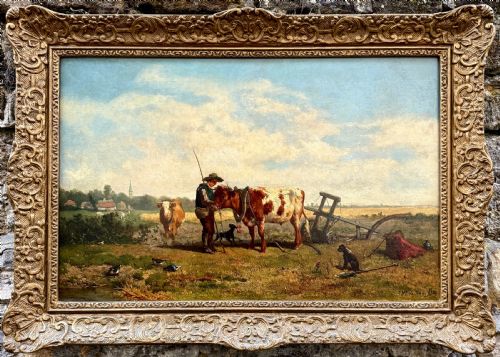


Victorian Cattle Oil Painting
A victorian cattle oil painting captures the pastoral charm and rural industry of the nineteenth century through finely rendered depictions of livestock and pastoral landscapes.
Victorian Cattle Oil Painting
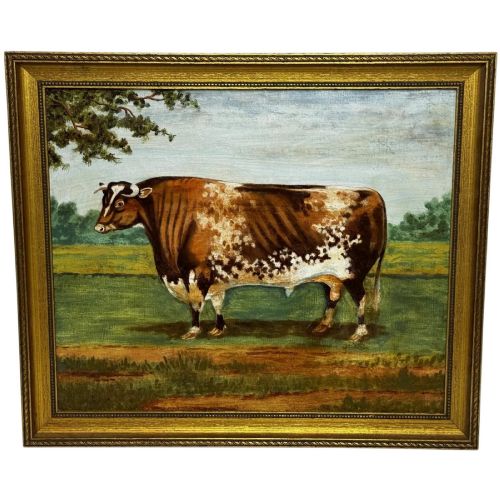
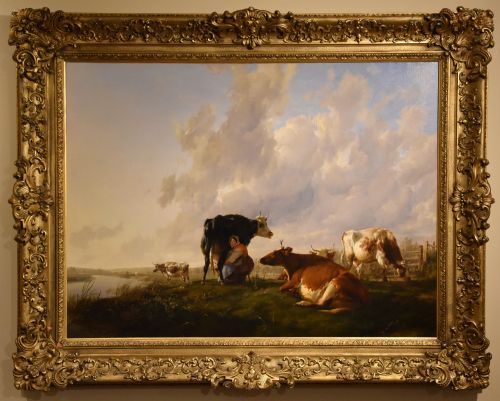
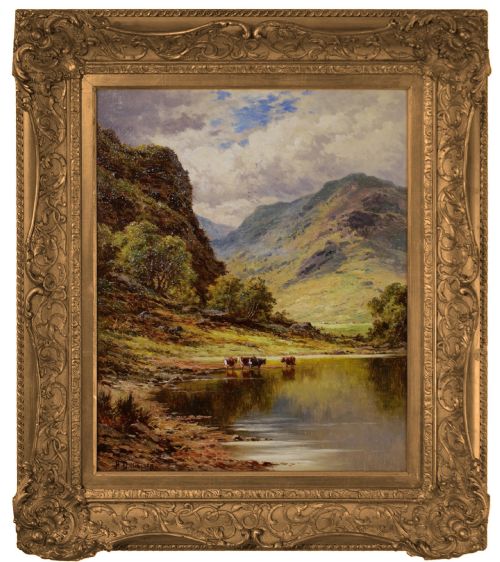
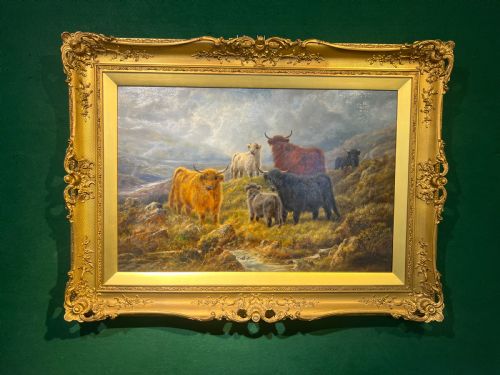
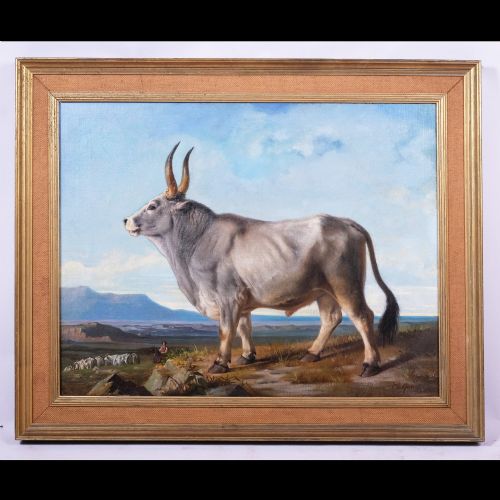
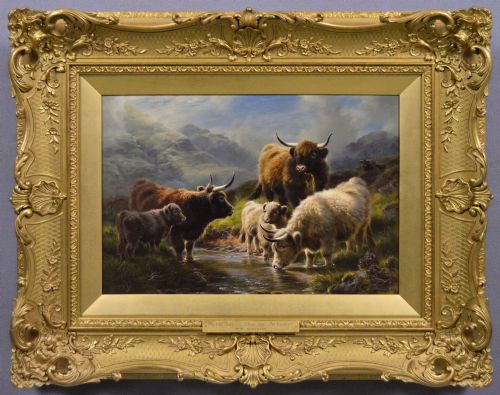
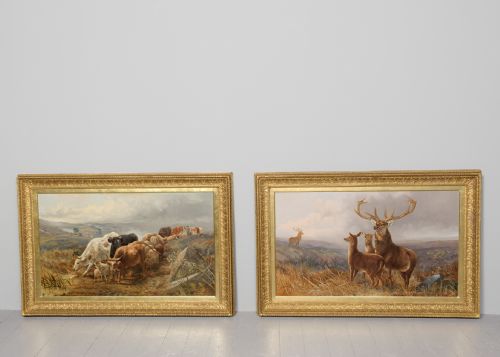
A victorian cattle oil painting typically portrays domesticated livestock such as shorthorn bulls, dairy cows, and long-haired highland cattle within detailed rural or mountainous settings. These works range from intimate studies of farmyard animals to large-scale Scottish loch scenes complete with drovers and grazing herds.
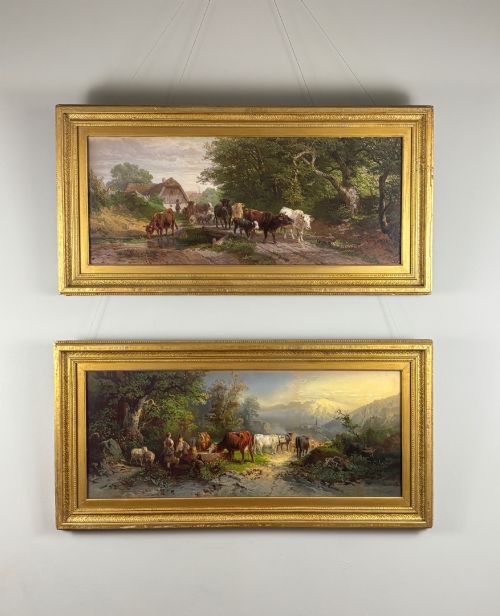
Buyers encountering this genre will frequently find canvases dated from the middle decades of the nineteenth century through to the early twentieth century. Common formats include single framed portraits of prized bulls alongside atmospheric pairs depicting cattle resting by rivers or sheltering in barns.
Materials and technique
Artists of this period predominantly applied oil paint onto stretched canvas, utilising the medium's slow drying time to build rich layers of colour and texture. Detail was achieved through careful brushwork that defined the muscular anatomy of the beasts and the naturalistic textures of wet fur, foliage, and water.
The finished works are typically housed in heavy wooden frames finished with gesso, gold leaf, or giltwood. These ornate frames enhance the depth of the pastoral scenes and reflect the interior display standards of nineteenth-century domestic collections.
Recorded periods span the nineteenth century and early twentieth century, encompassing Victorian pastoralism and British impressionism.
Assessing quality
Quality in these pastoral works rests largely upon the artist's ability to render the anatomy, posture, and weight of the animals with convincing realism. Weaker examples often present stiffly drawn livestock set against formulaic backgrounds, whereas superior paintings display attentive observation of light, weather, and animal behaviour.
The harmony between the landscape and the livestock further separates standard production work from accomplished fine art. Masterful pieces integrate the cattle seamlessly into specific geographical contexts, such as misty Scottish lochs or river valleys, supported by substantial, well-preserved period framing.
Thomas Sidney Cooper·Robert Watson·Henry Hillier Parker·Alfred de Breanski Snr·Sidney Richard Percy
The Victorian Cattle Oil Painting Glossary
- Giltwood
- Wood carved and covered with a thin layer of gold leaf or gold paint. It provides a bright, reflective border characteristic of nineteenth-century picture frames.
- Gesso
- A plaster-like mixture applied to wooden frame bases to create smooth surfaces for gilding and relief moulding. It is easily carved once dry to form intricate decorative motifs.
- Pastoral
- A genre of art depicting rural life, shepherds, and livestock in idealized natural settings. These scenes emphasise the peaceful coexistence of humans, animals, and the countryside.
- Stretcher
- The wooden frame framework upon which an artist's canvas is secured and tensioned before painting. Inscriptions on this wooden support often record the title or provenance of the work.
Victorian Cattle Oil Painting: Frequently Asked Questions
What subjects do these paintings show?
These artworks depict domesticated animals, particularly prized shorthorn bulls, dairy cows, and highland cattle grazing in pastoral valleys or by Scottish lochs.
Many compositions also feature herdsmen, drovers, farmyard scenes, and rural river landscapes under varying weather conditions.
How were these artworks framed originally?
Period pieces are typically housed in substantial wooden frames decorated with moulded gesso and finished in gold leaf or gilt wood.
These ornate surrounds were designed to complement the rich tones of the oil paint and project status within a nineteenth-century interior.
How do I care for an antique oil painting?
Display the canvas away from direct sunlight and maintain stable room temperatures to prevent the oil paint and wooden stretcher from warping or cracking.
Dust the surface and the carved gilt frame gently with a dry, soft brush without applying moisture or cleaning solutions.
How can I date a nineteenth-century canvas?
Dates are often established through artist signatures, biographical records, exhibition labels, or inscriptions written directly onto the wooden stretcher bars.
Stylistic shifts, costume details of any figures present, and the construction style of the gesso frame also provide reliable chronological markers.