



Victorian Farm Animal Artwork
Victorian farm animal artwork captures pastoral life through oil on canvas, offering buyers detailed depictions of cattle, horses and poultry.
Victorian Farm Animal Artwork
Victorian farm animal artwork presents horses, cattle, sheep, pigs and poultry rendered in oil paint on canvas.
The versions met most frequently on this page originate in the nineteenth century, including specific dates across the eighteen-fifties to nineteen-twenties.
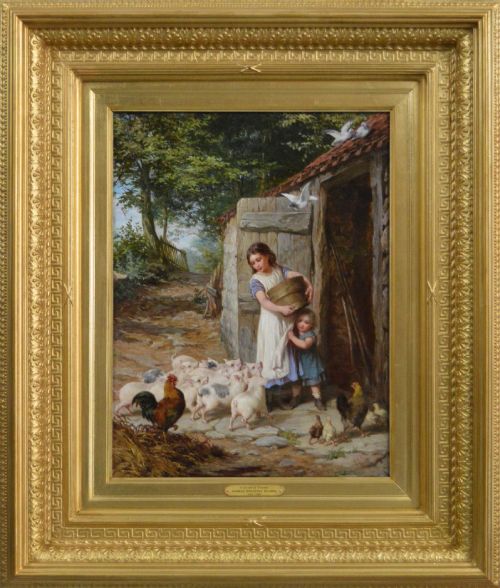
Compositions range from intimate genre scenes of women and children feeding livestock to expansive pastoral landscapes featuring prize bulls and farmyard animals.
Materials and Techniques
Painters utilised oil paint applied to canvas, often supported by wood stretchers and housed within giltwood and gesso frames embellished with gold leaf.
Techniques span nineteenth-century realism and pastoral styles, capturing textures of animal coats, feathers and rustic farmyard settings.
Listings feature nineteenth-century and early twentieth-century oil paintings on canvas, incorporating gold leaf, gesso and wood frames.
Quality Variations
Execution of anatomy, light and texture separates accomplished animal painting from simpler folk art depictions.
The handling of backgrounds, from detailed cottage interiors to atmospheric pastoral landscapes, defines the relative sophistication of each piece.
George Augustus Holmes·Claude Cardon·Franz van Severdonck·John Frederick Herring Jnr·Samuel Joseph Clark·Eugene Verboeckhoven·Percival Glenfern·John Frederick Herring·Pierre Emmanuel Dielmans·Thomas Sidney Cooper·Edgar Hunt·W A Clark·A Davis·Louis Marie Dominique Robbe·Charles Hunt Jnr
The Victorian Farm Animal Artwork Glossary
- Oil on Canvas
- Pigment mixed with drying oil applied to stretched fabric. This medium allowed artists to achieve rich depth and subtle tonal shifts in animal coats.
- Giltwood
- Wood carved and covered with a thin layer of gold leaf or metallic powder. Frames made this way enhance the warm tones of nineteenth-century pastoral scenes.
- Genre Painting
- Artwork depicting scenes from ordinary daily life, often including figures interacting with farm animals. These works tell narrative stories about rural existence.
- Realism
- An artistic movement focused on depicting subjects truthfully without artificiality. In farm animal artwork, this appears in the accurate portrayal of livestock anatomy and farmyard environments.
- Gesso
- A paint mixture consisting of a neutral binder mixed with chalk, gypsum, or pigment. It served as a prepared surface on wooden frames before gilding.
Victorian Farm Animal Artwork: Frequently Asked Questions
What animals appear in these paintings?
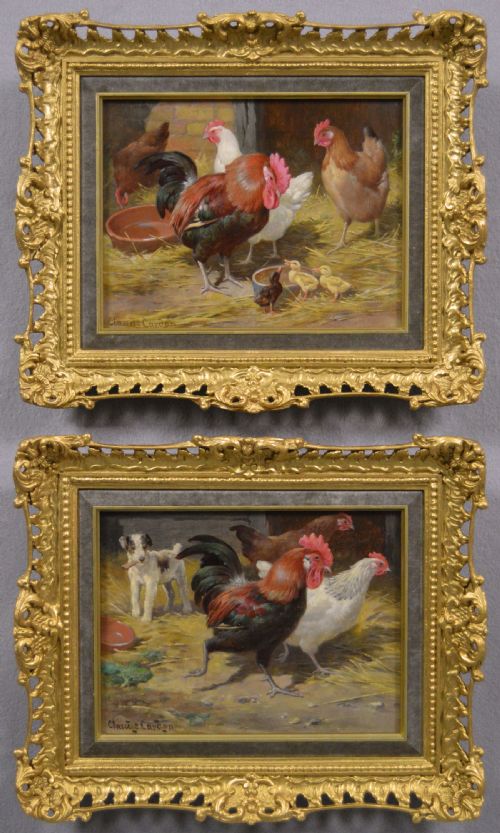
Canvases display horses, shorthorn cattle, sheep, calves, pigs, goats, cockerels, chickens, ducks and poultry.
Scenes frequently group multiple species together within farmyards, stables and pastoral landscapes.
How do I date these artworks?
Dates rely on artist signatures, stylistic markers of nineteenth-century realism, and framing materials like giltwood and gesso.
Inscribed dates and biographical records for painters active between the eighteen-fifties and nineteen-twenties provide further chronological context.
Where should I hang these paintings?
Traditional oil paintings suit dining rooms, libraries and studies, pairing well with wood furnishings and classic interiors.
Keep canvases away from direct sunlight and excessive moisture to protect the oil paint and gold leaf frames.
Are these paintings signed by artists?
Many works bear signatures or are attributed to specific nineteenth-century artists, followers and schools.
Attributions connect pieces to notable painters and regional traditions of British and continental realism.