





Country House Carpet
A country house carpet brings grand scale and grounded history to a room, offering large woven surfaces designed for substantial domestic spaces.
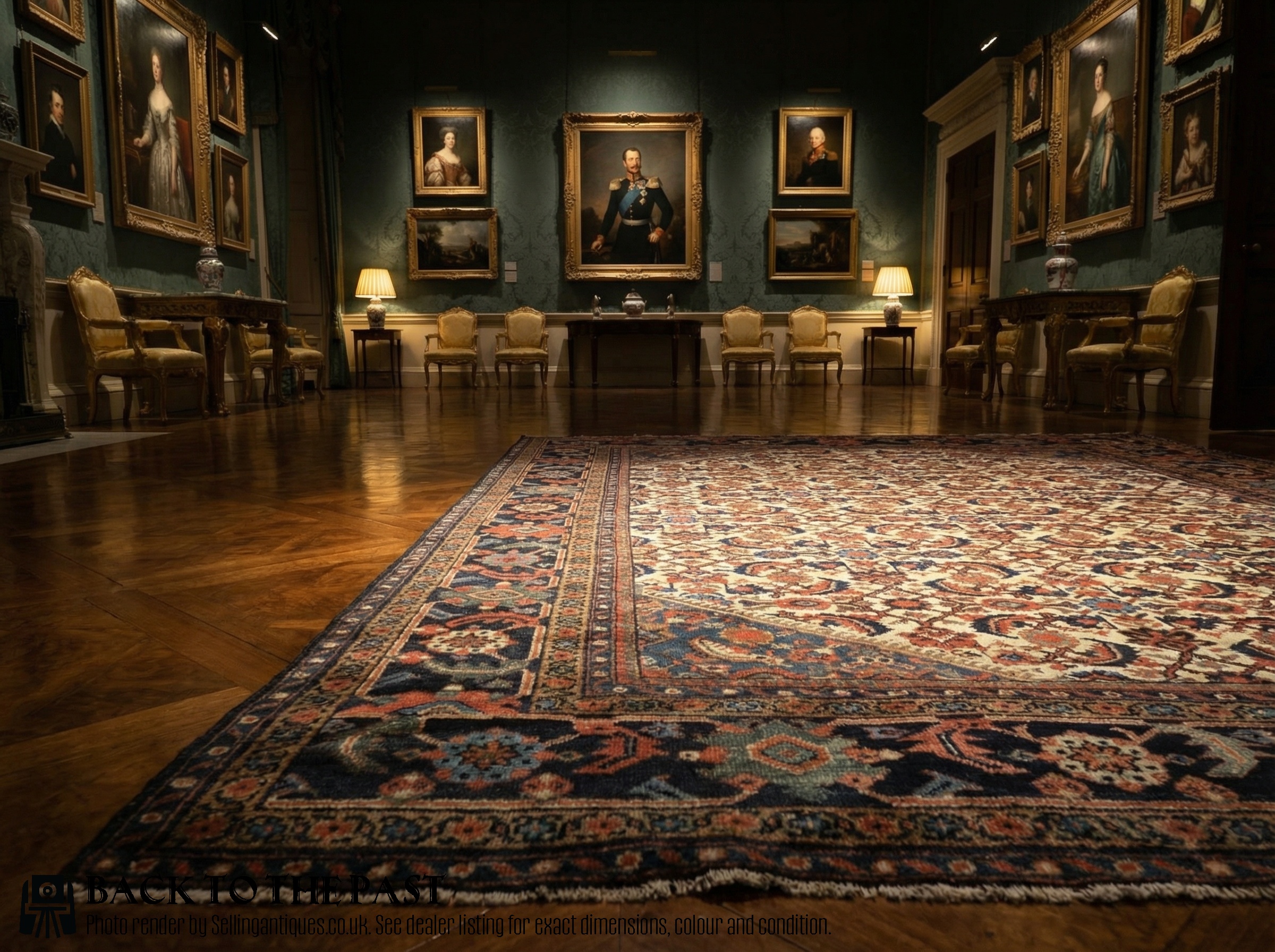
Country House Carpet
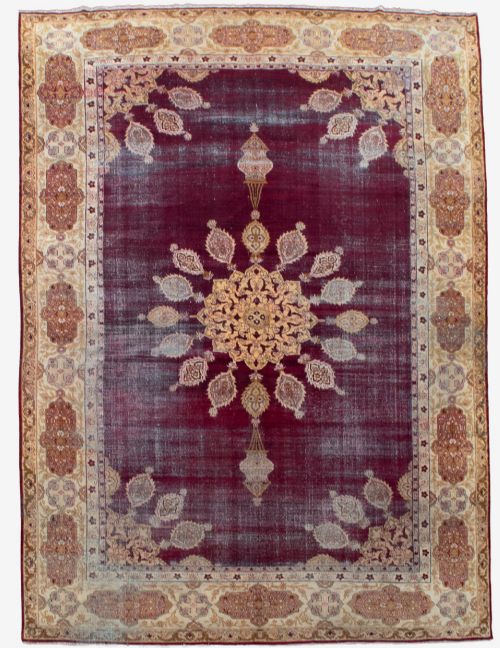
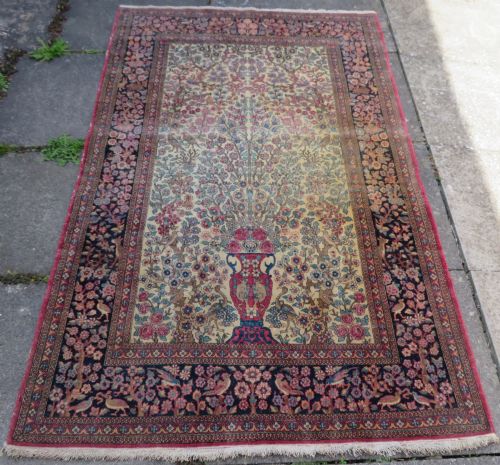
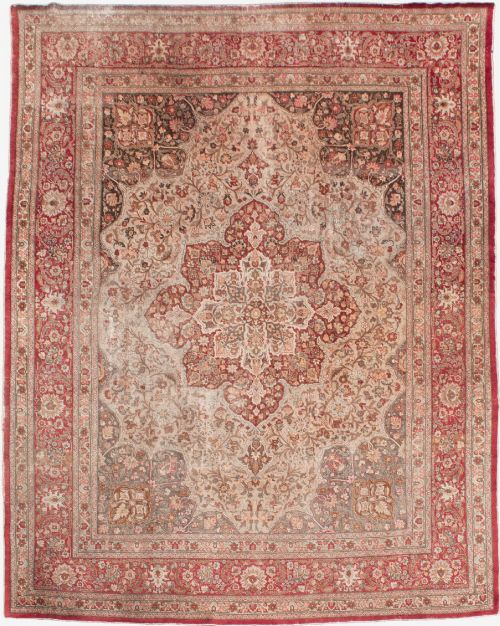
A country house carpet encompasses large-scale room-sized floor coverings originating from traditional weaving centres, particularly Persia and Turkey, alongside tribal regions. These substantial pieces served the generous proportions of country estate drawing rooms and reception halls, anchoring broad interiors with complex woven geometry.
The versions most commonly met on this page span the late nineteenth century and the early decades of the twentieth century. They arrive primarily as grand Heriz, Tabriz, Mahal, and Oushak carpets, frequently featuring room-filling dimensions alongside robust wool construction.
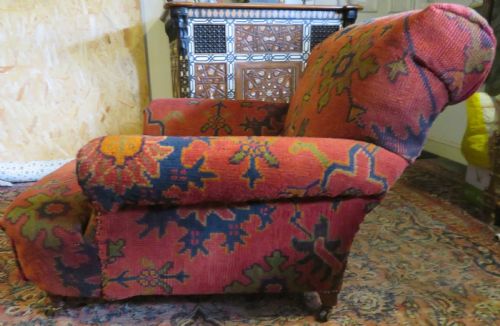
Beyond standard room sizes, the category extends to substantial runners and specific seating upholstery created from repurposed fragments. These forms reflect the historic practice of adapting grand textiles for continuous domestic use across stately British interiors.
Materials and construction
These carpets rely primarily on durable wool piles hand-knotted onto sturdy cotton foundations. This pairing provided the structural strength required to support room-sized formats exposed to heavy estate footfall.
Dyers utilised natural materials to achieve rich palettes, combining deep terracotta, ivory grounds, and subdued field tones that soften gracefully over generations. The density of the knotting directly supported the intricate medallion and all-over floral designs recorded across the regional outputs.
Country House Carpet Retail Price Guide 2026
Typical asking prices for country house carpet among the pieces listed under this phrase on Sellingantiques today, from the lower quarter to the upper quarter. They describe what is for sale here now, not the wider market.
Listings feature wool and cotton carpets spanning Persian and Turkish origins, including Heriz, Tabriz, and Oushak styles.
Distinctions in quality
Quality separates through the purity of the natural dye palette and the deliberate harmony of the secondary colours. The most desirable examples exhibit soft, nuanced secondary tones that have mellowed evenly across the wool pile without appearing muddy.
Structural integrity and proportion also divide the standard from the exceptional. A superior piece maintains its original scale and border symmetry, displaying precise knot density that preserves the clarity of intricate geometric medallions and all-over field patterns.
The Country House Carpet Glossary
- Heriz
- A style of Persian carpet known for bold geometric central medallions and robust corner spandrels woven with thick wool.
- Mahal
- A category of Persian weaving produced in the Markazi region, typically featuring relaxed all-over floral patterns on softer grounds.
- Oushak
- A Turkish carpet type distinguished by large-scale palmette designs and muted, luminous wool colours.
- Tekke
- A Turkmen tribal weaving tradition recognised by repeating gul motifs arranged across dense fields.
- Spandrel
- The triangular area situated between the outer edge of a curved medallion and the rectangular corners of the carpet border.
Country House Carpet: Frequently Asked Questions
Where should a country house carpet go?
These large pieces suit generous reception rooms, open-plan living areas, and high-ceilinged dining spaces where their substantial dimensions can anchor the surrounding furniture without crowding the floor.
Position them centrally to allow the primary medallions and borders to remain visible beneath natural light.
How do I care for wool carpets?
Regular gentle vacuuming without a rotating brush bar prevents dust accumulation within the dense wool pile. Professional cleaning by specialists in antique textiles ensures the cotton foundation remains stable.
Keep these textiles away from direct, prolonged sunlight to preserve the natural dyed tones.
What defines an Oushak carpet?
Oushak carpets originate from western Turkey and are celebrated for their relaxed, expansive floral motifs and softer wool textures. They often employ muted, earthy palettes rather than high-contrast primary colours.
Their open compositions allow them to complement both traditional and contemporary interiors effortlessly.
How are Heriz and Tabriz carpets different?
Heriz carpets feature strong, geometric medallions and thick, durable wool suited to heavy traffic areas. Tabriz carpets generally display finer, more curved floral designs with intricate detail across the central field.
Both styles represent major Persian weaving traditions adapted for grand domestic scales.