

Country Farmhouse Chairs
Country farmhouse chairs bring solid timber construction and generations of domestic utility to a kitchen or dining space.
Country Farmhouse Chairs
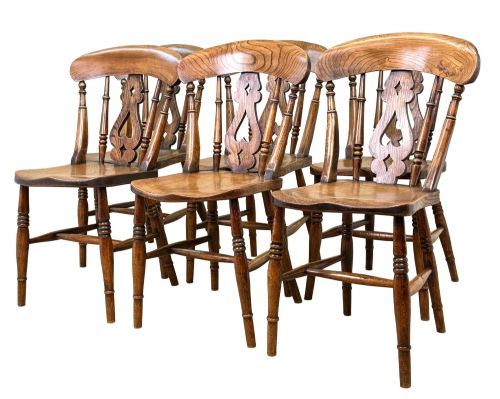
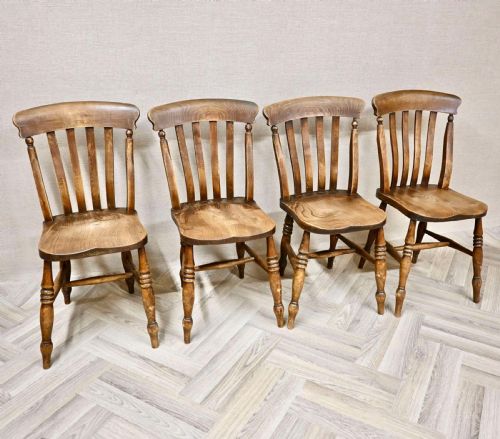
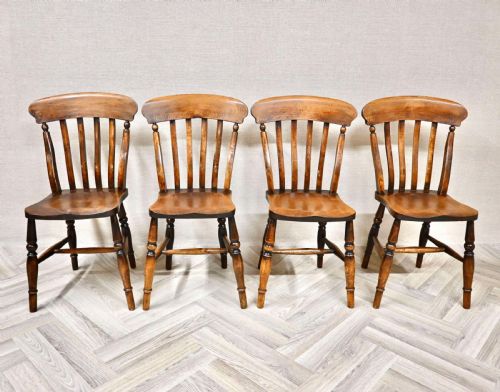
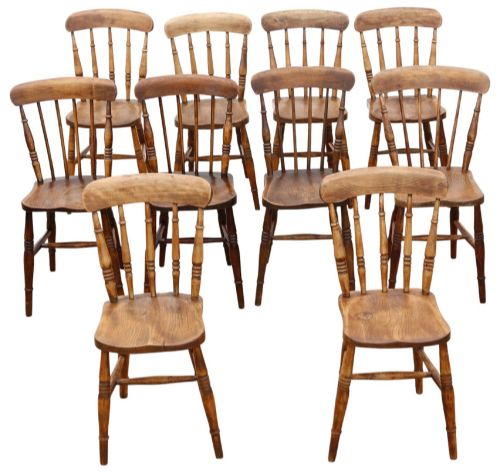
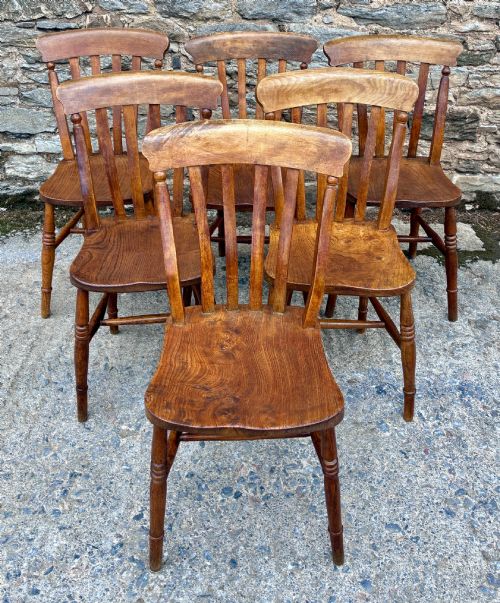
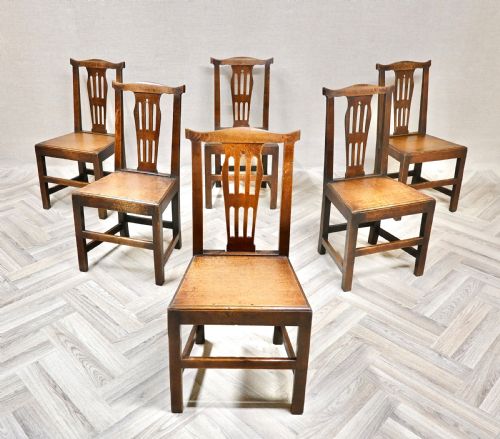
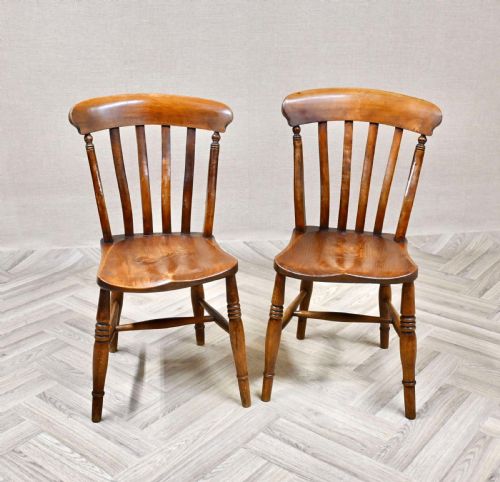
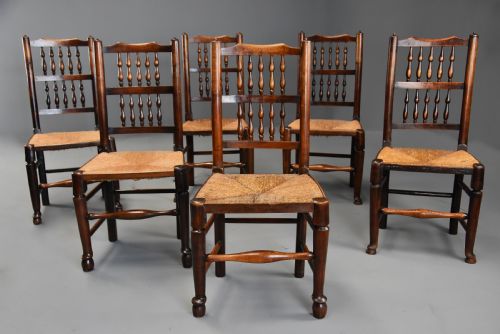
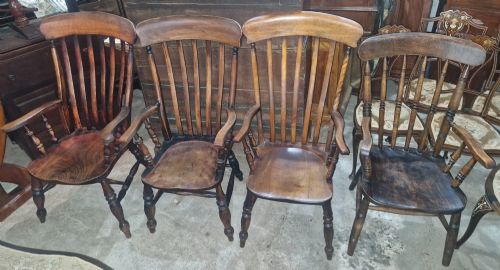
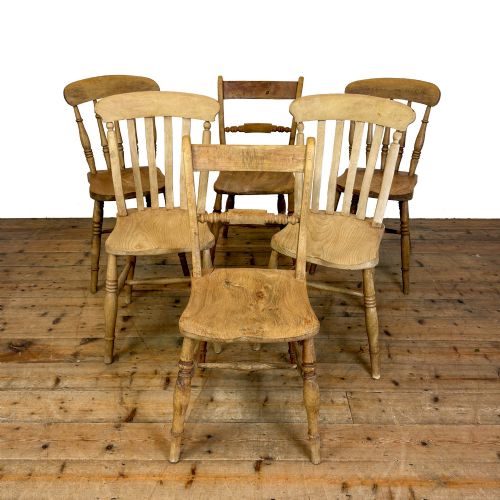
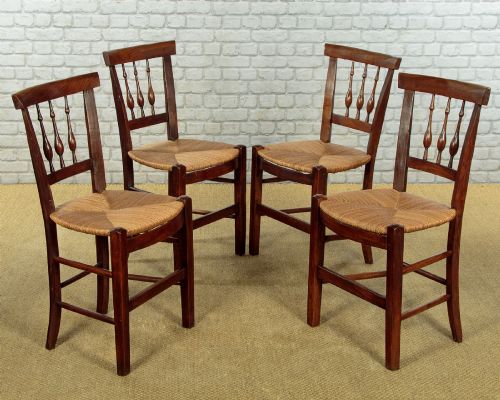
Country farmhouse chairs comprise traditional seating forms shaped for domestic utility and daily service in kitchens and dining spaces. Buyers examining these listings meet various regional iterations, from Windsor stick backs to sturdy ladder backs.
The selections span the Georgian period through the Victorian era and into the early twentieth century, reflecting generations of practical craftsmanship. Single pieces, pairs, and large matching or harlequin sets appear regularly across the inventory.
Makers shaped elm, ash, and beech into everyday furniture designed to withstand heavy use around the family hearth and table. High-backed armchairs, rocking chairs, benches, and simple dining chairs dominate the available forms.
How they were made
Cabinet makers and rural bodgers combined local hardwoods, selecting elm for solid, crack-resistant seats and ash or beech for resilient spindles and legs. This division of timber matched the structural demands placed on each part of the chair.
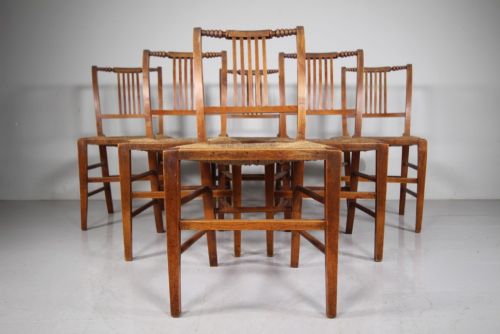
Constructive methods relied heavily on turned components and pegged joints rather than metal fasteners, allowing wood to expand and contract naturally. Rush seating also appears woven directly onto frames to provide durable, flexible support.
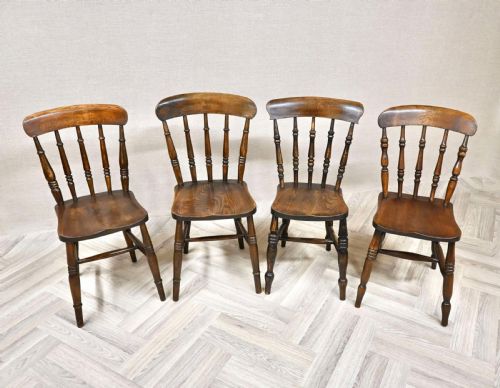
Listings feature nineteenth-century and Georgian elm, ash, and beech in Windsor, ladder back, and spindle forms.
What varies in quality
Quality separates examples by the integrity of their timber and the subtlety of their turning work. Superior pieces retain deep, natural patinas developed through decades of daily handling and domestic polish.
Proportion and comfort distinguish finer regional workshops from standard utility production. Strong skeletal framing without excessive replacement parts marks the difference between enduring vernacular design and lesser survivors.
Worksop
The Country Farmhouse Chairs Glossary
- Windsor chair
- A timber chair constructed with a solid wooden seat into which the legs and back spindles are separately bored and wedged. These chairs often feature bow backs or comb pieces.
- Ladder back
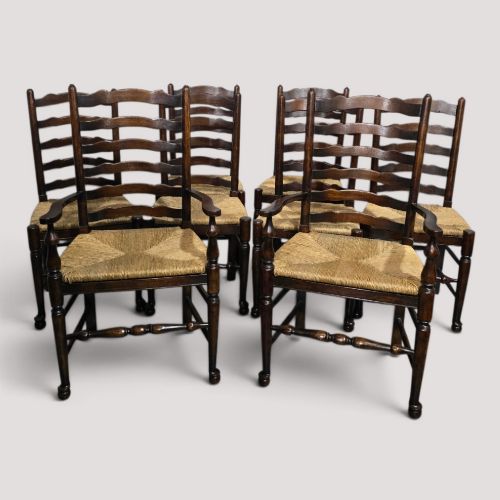
- A chair featuring horizontal wooden slats between the upright rear posts of the backrest. This traditional vernacular form frequently supports rush seating.
- Harlequin set
- A collection of dining chairs that match in general style, period, or material while exhibiting subtle individual variations. These assemblies formed organically over time.
- Patina
- The surface sheen and colour built up on wood over many years through use, light exposure, and polishing. It serves as an indicator of age and handling.
- Spindle back
- A chair back filled with slender, turned vertical wooden rods rather than a solid splat. This construction lightened the frame while maintaining structural rigidity.
Country Farmhouse Chairs: Frequently Asked Questions
What defines a farmhouse chair?
Farmhouse chairs are utilitarian wooden seats built for rural kitchens and dining rooms using regional timbers like elm and ash. Their robust construction prioritises durability and comfort over formal decorative styles.
These pieces developed across generations of local carpentry traditions, resulting in practical forms such as Windsors and ladder backs designed for daily domestic life.
How do I identify a Windsor chair?
Windsor chairs feature a distinct design where the legs and back components fit directly into a thick, solid carved wooden seat. They often incorporate bentwood hoops or spindle arrays.
Makers frequently utilised contrasting timbers, employing elm for the supportive seat and ash or beech for the turned legs and spindles.
What is a harlequin set?
A harlequin set is a group of dining chairs sharing a similar period, material, and vernacular style without being identical twins. Individual chairs within the set display minor variations in turning or proportions.
These collections emerged when households gathered matching chairs together over long periods rather than purchasing a uniform factory-produced suite.
How should I care for antique country chairs?
Antique wooden chairs require stable indoor humidity levels to prevent timber shrinkage and joint loosening. Regular applications of traditional wax help nourish the surface and preserve the historic patina.
Avoiding direct heat sources and sunlight protects the old finishes and natural timbers from drying out or splitting over time.