



Country Cottage Artwork
Country cottage artwork brings pastoral stillness indoors through nineteenth- and twentieth-century watercolours, oil paintings and framed prints depicting rural life.
Country Cottage Artwork
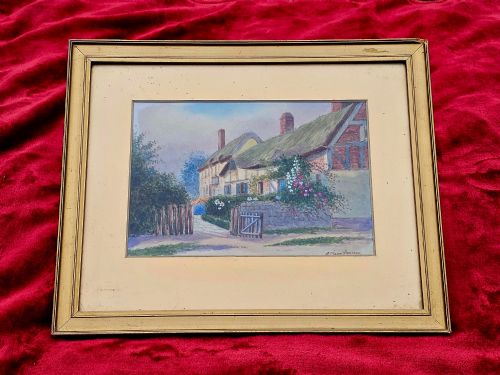
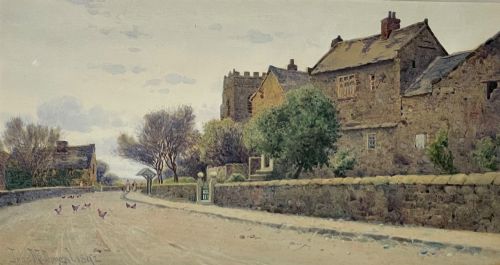
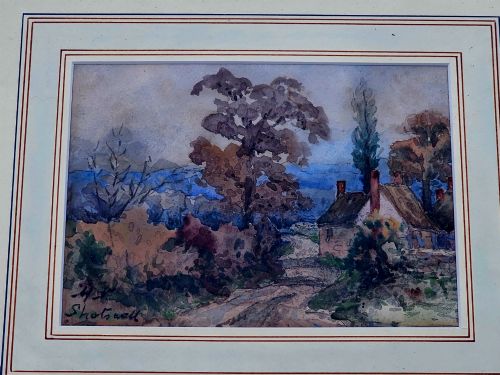
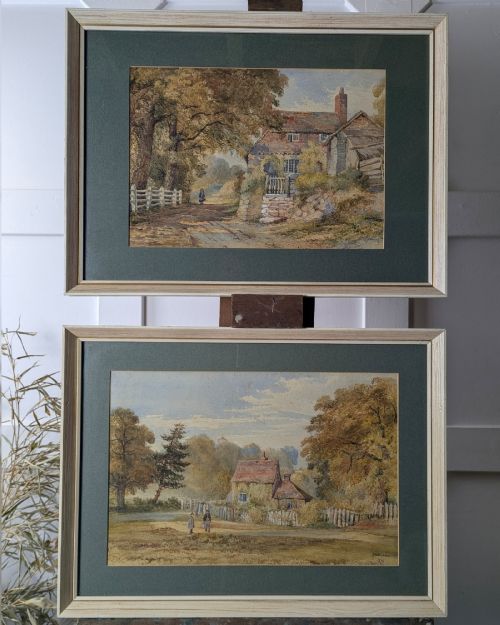
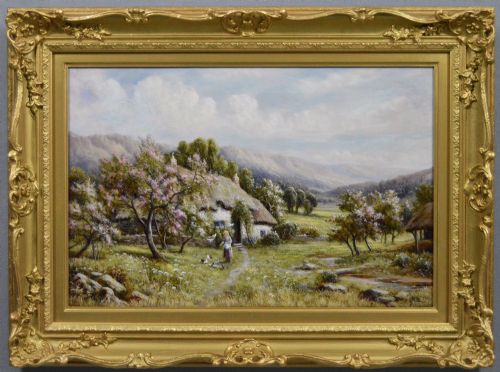
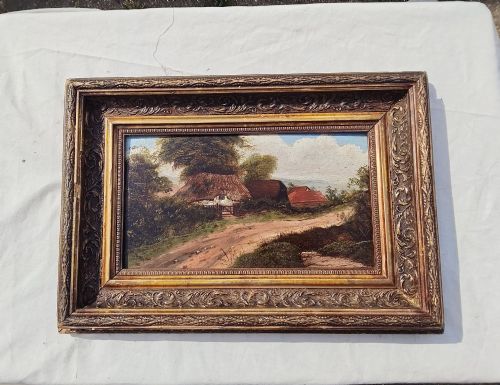
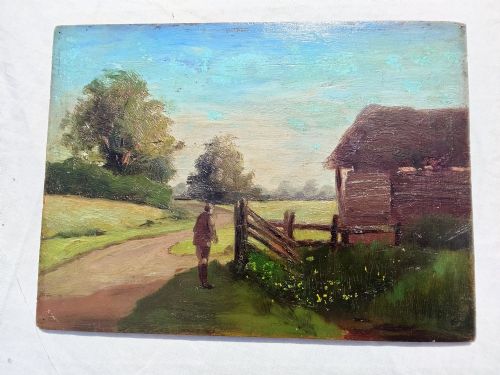
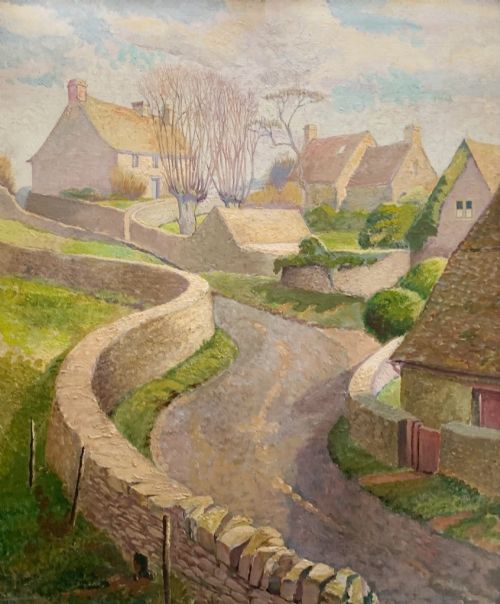
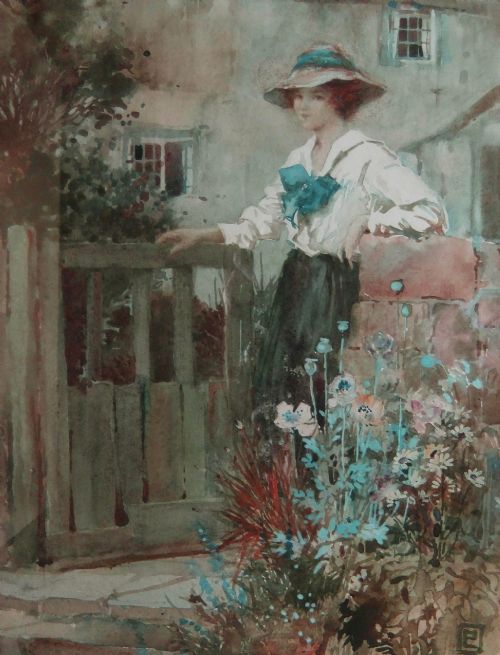
When you search for country cottage artwork, you are looking at domestic scenes, thatched dwellings, rustic farmsteads and rural landscapes captured by artists working from the Victorian era through the mid-twentieth century. These pieces record a vanished or idealised rural life through structured compositions often focusing on figures, gardens and riversides.
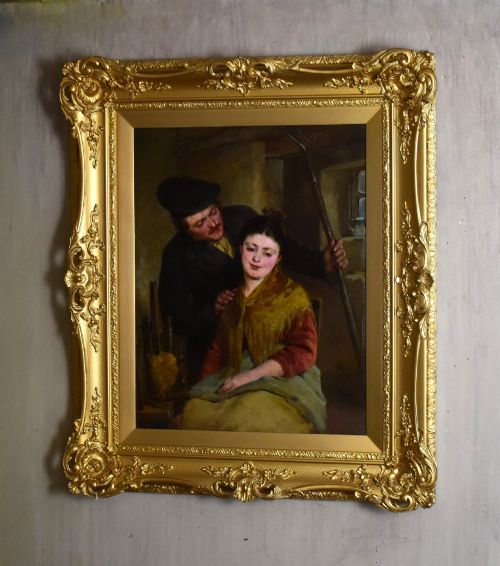
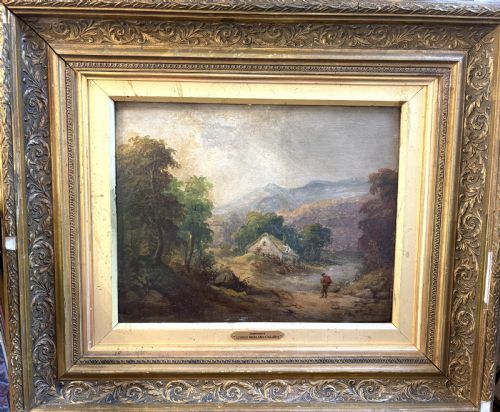
The selections available here rely heavily on watercolours and oil paintings on canvas, panel, card or board. Common forms range from intimate nineteenth-century watercolours signed by regional painters to larger twentieth-century oil paintings reflecting British Impressionism and pastoral traditions.
Materials and methods
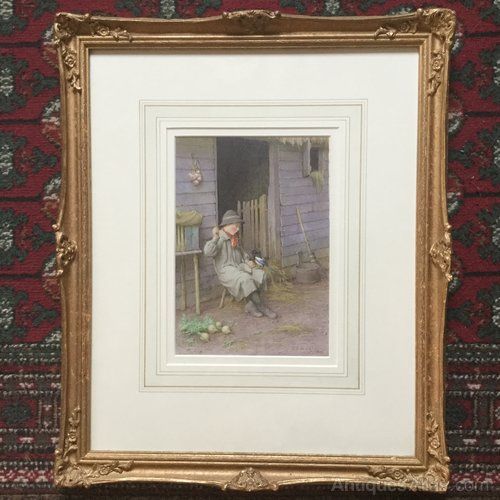
Artists built these scenes using watercolour pigment on paper or oil paint applied to canvas, wood panels, wooden boards and cards. Support materials like thick paper and prepared wood boards dictated the fine brushwork and layered washes characteristic of Victorian and Edwardian pastoral painting.
Many works retain their period framing, utilising gilt wood and glass to protect the delicate watercolour pigment or oil surface. Mixed media and lithographic reproduction techniques also appear among the twentieth-century pieces, showing varied approaches to capturing rural subjects.
Listings feature works across Victorian, Edwardian, and mid-twentieth-century periods using oil, watercolour, and mixed media.
Assessing quality and execution
Quality in country cottage artwork rests on the confidence of the brushwork, the handling of natural light and the fidelity of the composition. Stronger pieces show direct observation of rural light on thatch and foliage rather than formulaic repetition of pastoral clichés.
The longevity of the piece depends on the preservation of the pigment and the support, whether oil on canvas or watercolour on paper. Original framing and clear signatures by known regional artists of the British or European schools elevate the standing of an individual work.
William Howard Hardy·A. Marie Parsons·John McDougal·Robert A. Nottingham·Robert John Hammond·Howard Helmick·Percy Lancaster·Charles Edward Wilson·J S Ainley·James Hardy Junior·Frederick James Knowles·William Greaves·Theresa Stannard·Helena Maguire·Linnie Watt·Owen Bowen·Ernest Higgins Rigg·Harry Sylvester Stannard·Henry Charles Fox·Will Anderson·Robert Hollands Walker·John Falconar Slater·Thomas James Lloyd·B. Kaufmann·Abraham Hulk Junior
The Country Cottage Artwork Glossary
- Oil on Canvas
- Pigment mixed with drying oil applied to a stretched woven fabric support. This technique allows for rich texture and deep colour blending.
- Watercolour
- A painting method where fine pigment is suspended in a water-based solution and applied to paper. It relies on the white of the paper to provide luminosity.
- Impressionism
- A style of painting focusing on the visual impression of the moment, particularly the shifting effects of light and colour. It influenced many twentieth-century landscape painters.
- Pastoral
- A genre of art depicting the rustic life of shepherds, cottages and country folk in an idealized rural setting. These scenes emphasise peace and simplicity.
Country Cottage Artwork: Frequently Asked Questions
What periods do these paintings come from?
The listings span from the nineteenth century through the mid-twentieth century, capturing Victorian, Edwardian and later modernist interpretations of rural life.
You will encounter works dated across the 1900s, 1910s, 1920s and 1930s, alongside earlier Victorian and Georgian examples.
How should I care for a antique watercolour?
Watercolours are sensitive to direct sunlight, which can fade pigments and discolour paper over time. Display them away from windows and high humidity.
Ensure the framing utilises acid-free mounts and protective glass to safeguard the paper support.
What is the difference between oil on canvas and oil on board?
Oil on canvas uses a stretched fabric support that provides slight flexibility and a distinctive woven texture beneath the paint layers. Board or panel supports use rigid wood or heavy card.
Rigid boards were often favoured by artists painting outdoors on location for their durability and stability.
Are all these works by British artists?
Many pieces originate from British schools and regional painters documenting local villages, cottages and rural scenes across England, Scotland and Wales.
European influences such as the French Barbizon style also appear among the landscape paintings from the period.