






Muted Green Fine Art
These pieces of muted green fine art bring tranquil pastoral scenes and landscapes into a room through subtle tones and traditional handling.
Muted Green Fine Art
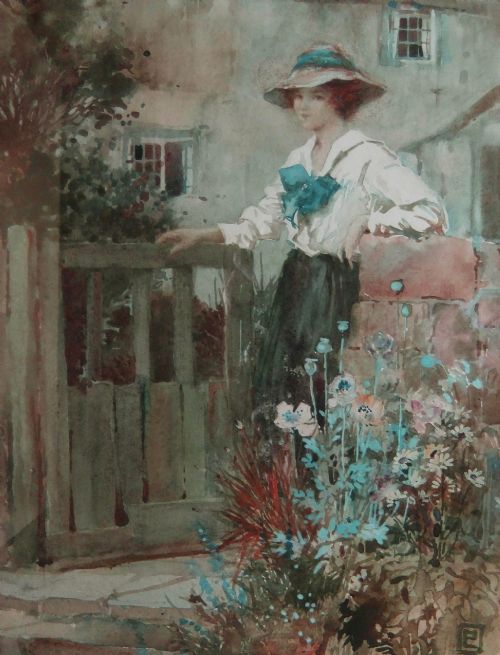
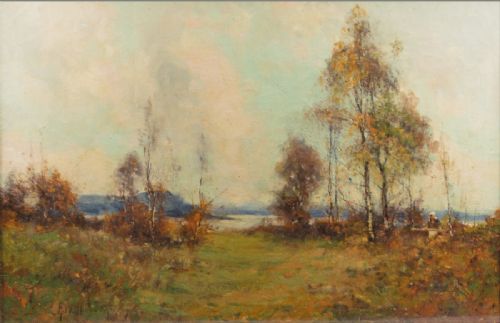
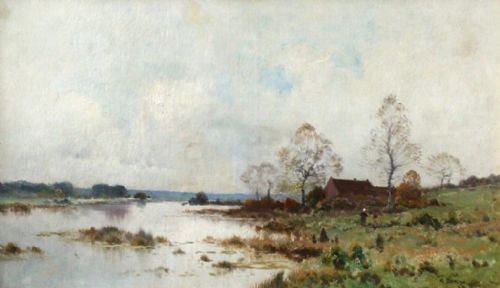
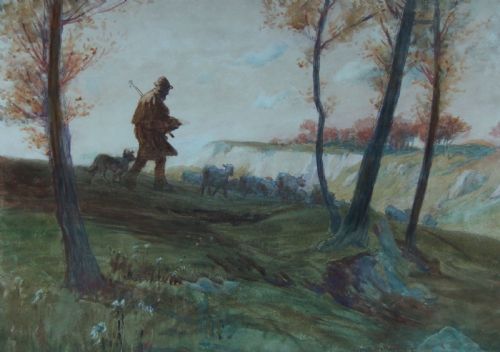
Muted green fine art comprises paintings and watercolours that capture landscapes, rustic cottages, and figures within natural settings using subdued earthy palettes. Buyers searching for muted green fine art encounter works spanning the nineteenth century through the mid-twentieth century, capturing enduring pastoral subjects.
Landscapes, river views, and rural scenes form the core of these works, frequently highlighting quiet waterways, wooded slopes, and agricultural fields. Pieces from the nineteen-tens and nineteen-twenties appear alongside Victorian examples and mid-century works dating up to nineteen-sixty.
Materials and technique
Artists relied primarily on oil paint applied to canvas, wood panels, or boards, alongside watercolour applied to paper. These mediums allowed painters to build up atmospheric depth and subtle tonal shifts suited to landscape subjects.
Brushwork ranges from the careful realism of Victorian painters to the looser, expressive handling characteristic of British and Scottish Impressionism. Support materials such as wood panels and stretched canvas provide the sturdy foundation necessary for these traditional painting techniques.
Several artists captured quiet moments of daily country life, including laundry days, fishing expeditions, and children gathering primroses.
Judging quality in the range
The finesse of the brushwork and the preservation of the original paint surface or watercolour pigment dictate the standing of an individual piece. Works that retain their original support and tonal subtlety without heavy intervention command greater appreciation among collectors.
Percy Lancaster·Alexander Wellwood Rattray·Florence Hess·Henri Joseph Harpignies·Herbert Royle·Ernest Higgins Rigg·George Faulkner Wetherbee·Frank Shenton·Kershaw Schofield·James Bertrand·Peter Greenham·John Pedder·Thomas Mackay·Samuel Bough·Alfred Leyman
The Muted Green Fine Art Glossary
- Oil painting
- A work created using pigments bound in a drying oil, typically applied to canvas, wood panel, or board. This medium allows for rich blending and textured application.
- Watercolour
- A painting method where fine pigments are suspended in a water-based solution and applied to paper. It yields translucent washes of colour that capture delicate light.
- Barbizon School
- A nineteenth-century French art movement focused on real-life landscape painting inspired by nature. Artists in this circle emphasised tone, colour, and atmospheric light.
- British Impressionism
- A late nineteenth and early twentieth-century style adopting French impressionist techniques of loose brushwork and natural light within British landscape and domestic subjects.
- Panel painting
- A work executed on a flat piece of wood rather than stretched canvas. Wooden panels offer a rigid and durable surface favoured by many nineteenth-century artists.
Muted Green Fine Art: Frequently Asked Questions
What periods do these paintings cover?
The works span from the nineteenth century through the Victorian era and into the mid-twentieth century, including pieces dated from nineteen-ten, nineteen-twenty, nineteen-fifty, and nineteen-sixty.
This broad timeline demonstrates how landscape painting traditions evolved while maintaining a consistent focus on natural, earthy palettes.
How are watercolours mounted?
Watercolour paintings in this selection are executed on paper supports, capturing delicate washes and fine details typical of early twentieth-century works.
Such pieces require careful framing behind glass to protect the paper and pigments from environmental damage over time.
What subjects appear most often?
Landscape views, river scenes, rural cottages, and figures in natural settings dominate the available works. Artists frequently depicted agricultural life, woodland paths, and tranquil lakes.
These pastoral motifs reflect the enduring appeal of the British countryside and continental rural views during the nineteenth and twentieth centuries.