


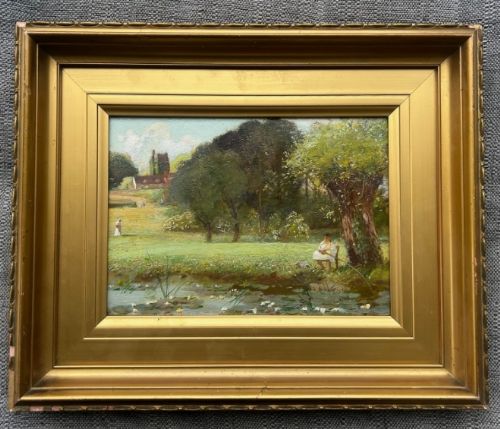


Antique Riverbank Oil Painting
An antique riverbank oil painting captures pastoral quiet on canvas and wood panel, offering a window into rural waterways preserved from earlier centuries.
Antique Riverbank Oil Painting
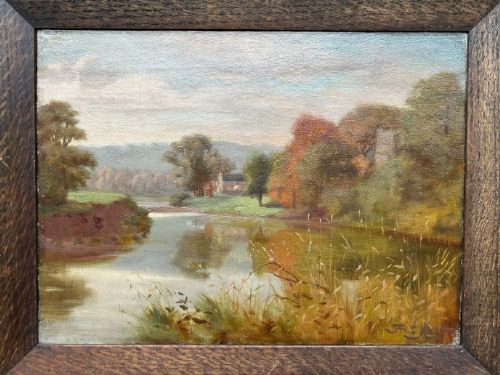
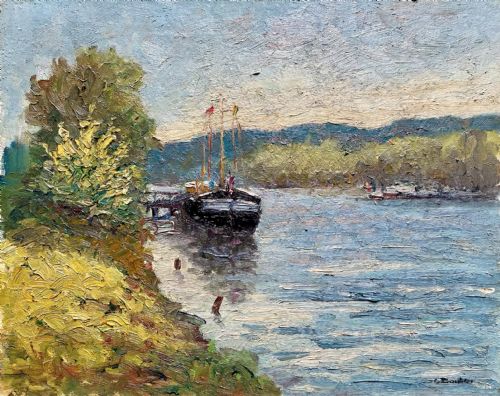
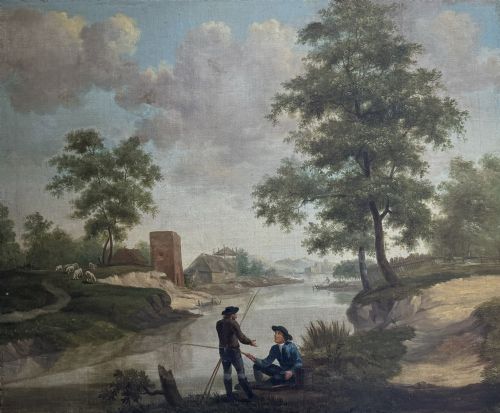
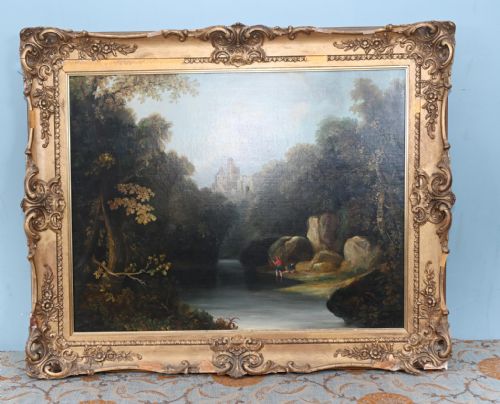
When searching for an antique riverbank oil painting, collectors encounter works dominated by nineteenth-century British and French canvases depicting rural waterways, anglers, and livestock. These fine art paintings range from intimate wood panel studies to larger framed compositions portraying autumn scenes and quiet tributaries.
The subjects frequently incorporate figures resting by the water, boats moored near banks, and cattle grazing on water meadows. Works span various regional schools, connecting viewers directly to nineteenth-century landscapes and early twentieth-century interpretations.
Materials and construction
These works rely primarily on oil paint applied to woven canvas or wood panels, occasionally housed within period gilt wood and gesso frames. Painters built up textures using traditional ground pigments, creating durable surfaces that preserve the subtle tones of water and foliage.
Support materials varied according to scale, with portable wood panels favoured for plein air sketches while larger canvases accommodated detailed studio landscapes featuring figures and cattle.
Antique Riverbank Oil Painting Retail Price Guide 2026
Typical asking prices for riverbank oil painting among the pieces listed under this phrase on Sellingantiques today, from the lower quarter to the upper quarter. They describe what is for sale here now, not the wider market.
Subjects documented across the inventory include monk fishing, cattle grazing, and ducks on river banks.
Evaluating quality and execution
Quality separates through brushwork confidence and the subtlety of light handling across water and sky, distinguishing accomplished academic or school works from more formulaic output. The articulation of atmospheric depth and naturalistic animal or human figures determines the standing of a composition.
The preservation of the original paint surface, stability of the canvas or panel, and the appropriateness of any period gilt wood frame contribute significantly to the overall integrity of the piece.
Frederick Marriott·Sir David Murray·Frank Hyde·William Manners·Pierre Emmanuel Eugene Damoye·Constant Ludovic Artz·Henry Cheadle·Robert John Hammond
The Antique Riverbank Oil Painting Glossary
- Canvas
- A heavy woven fabric stretched across a wooden frame to serve as a support for oil paint. It provides a flexible and textured surface favoured by landscape artists.
- Gesso
- A traditional paint mixture consisting of a binder mixed with chalk, pigment, or plaster used to prepare wood panels and frame mouldings. It creates a smooth, absorbent base for gilding and paint.
- Barbizon School
- A French art movement focused on real-life landscape painting, emphasising atmospheric qualities and rural scenery. Artists associated with this style recorded direct observations of nature.
- Wood Panel
- A rigid wooden support used by painters instead of canvas for executing detailed landscape and river scenes. Panels offer a stable surface that resists the sagging associated with aged textiles.
Antique Riverbank Oil Painting: Frequently Asked Questions
How should I clean an old oil painting?
Surface dust can be removed gently with a soft, dry brush, avoiding any moisture or household cleaners.
Professional conservation is required for deeper cleaning or varnish removal to prevent damaging the underlying paint layer.
What periods do these river paintings represent?
The available selection primarily encompasses nineteenth-century and early twentieth-century works, alongside occasional eighteenth-century examples.
Stylistic shifts move from traditional British and French Realism toward Impressionist and Post-Impressionist approaches.
Are these paintings usually framed?
Many examples retain period wooden gilt or gesso frames that complement the age and origin of the artwork.
Original framing helps preserve the piece, though condition varies between individual listings.
How do I identify the artist?
Signatures, monograms, or inscriptions on the canvas, panel, or verso often provide direct attribution to named painters or regional schools.
Unsigned works are typically attributed to British or French schools based on stylistic evidence and subject matter.