


Coromandel Casket Box
These coromandel casket box pieces bring dense, dark tropical timber and heavy metal mountings straight to your desk for safekeeping.
Coromandel Casket Box
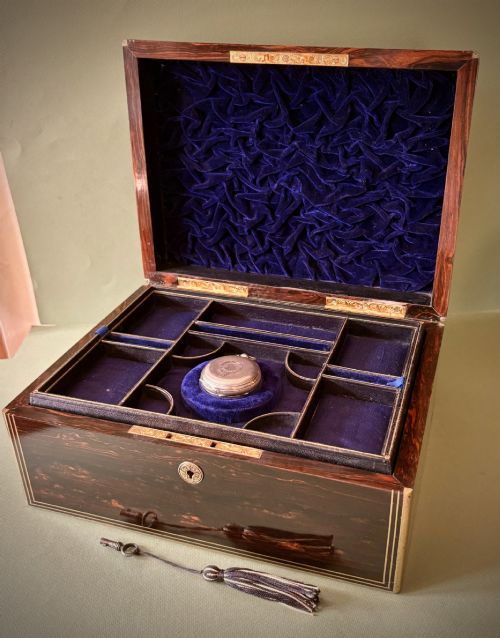
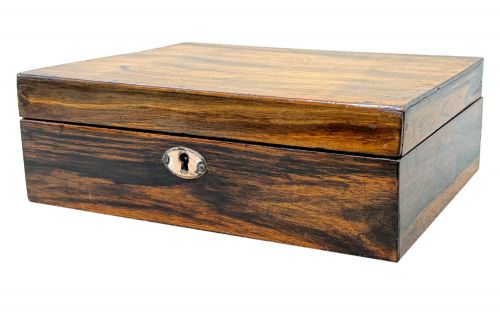
A coromandel casket box is a heavy, highly decorative container designed to hold jewellery, stationery, writing implements, or scent bottles. When you search for a coromandel casket box, you encounter rectangular work boxes, dome-topped desk organisers, and fitted vanity cases from the nineteenth century. Victorian examples dominate the selection, spanning periods from early Victorian to the later decades of the nineteenth century.
The forms vary according to their original purpose, ranging from stationery caskets with brass letter slots to compartmentalised jewellery boxes lined with velvet. Many pieces date from the mid-Victorian era, specifically around eighteen sixty to eighteen eighty, though Regency examples also appear. These objects served affluent Victorian households as portable luxuries for writing desks and dressing tables.
How they were made
Cabinet makers utilised dense coromandel wood as the primary carcass, prized for its dark grain and rich streaking. This timber is frequently paired with contrasting brass mounts, corner brackets, and ormolu detailing.
Inlaid decoration plays a central role in the construction, incorporating shimmering mother-of-pearl and occasionally pietra dura panels. Interiors feature fitted velvet compartments designed to secure specific items like sewing tools or glass bottles.
Some Victorian letter boxes include secret bottom drawers that slide out only when you release a hidden interior wooden catch.
What varies in quality
The standard of a coromandel casket box rests on the complexity of its internal fittings and the precision of its brass mounting. Pieces that retain their complete original velvet linings, trays, and glass bottles demonstrate superior craftsmanship.
The choice of timber grain and the intricacy of mother-of-pearl inlay distinguish standard utility boxes from exhibition-grade caskets. Stronger examples often incorporate architectural elements such as dome tops or Gothic revival styling.
C.G. Hope Hastings
The Coromandel Casket Box Glossary
- Coromandel wood
- A dense, heavy tropical timber sourced from South Asia, known for its dark brown colour and striking black streaks.
- Ormolu
- Gilt bronze mounted onto furniture and boxes as decorative feet, handles, or corner straps.
- Pietra dura
- An artistic technique using cut and fitted polished coloured stones to create geometric or floral pictures on stone panels inset into the wood.
- Tantalus
- A locking wooden frame holding glass bottles or decanters securely while leaving their contents visible.
- Stationery box
- A desk accessory featuring upright partitions or slots specifically sized for envelopes, paper, and letters.
Coromandel Casket Box: Frequently Asked Questions
What was a coromandel casket box used for?
These boxes served domestic purposes in Victorian homes, functioning as secure receptacles for personal valuables, writing paper, and sewing implements. Owners kept them on desks, dressing tables, or in reception rooms.
Their interiors often featured specialised compartments tailored to hold specific items such as glass scent bottles or letter stamps, protecting delicate objects from dust and damage.
How do I date a coromandel box?
Dating relies on stylistic clues, materials, and construction techniques found within the piece. Victorian examples often incorporate Gothic revival or Aesthetic movement motifs alongside heavy brass binding.
Earlier Regency pieces display different proportions and inlay patterns compared to later nineteenth-century productions. Examining the interior paper linings and lock mechanisms also helps establish a chronological timeframe.
Are the interiors usually original?
Many surviving boxes retain their fitted velvet trays, silk pockets, and original compartments. Some pieces show signs of re-lining where the delicate fabric wore away through decades of use.
Complete fitted interiors with matching glass bottles or original stationery dividers command greater interest among collectors seeking untouched examples.
How do I care for a coromandel box?
Keep the timber away from direct sunlight and extreme temperature fluctuations to prevent the wood from splitting or warping. Dust the brass mounts and mother-of-pearl inlay gently with a soft, dry cloth.
Avoid using modern liquid polishes, which can seep into the grain or damage antique velvet and paper linings inside the compartments.