
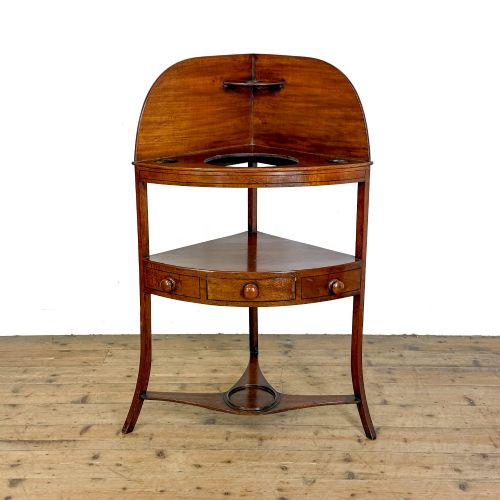
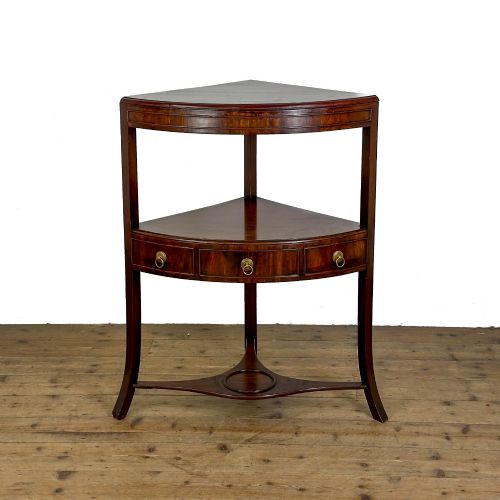
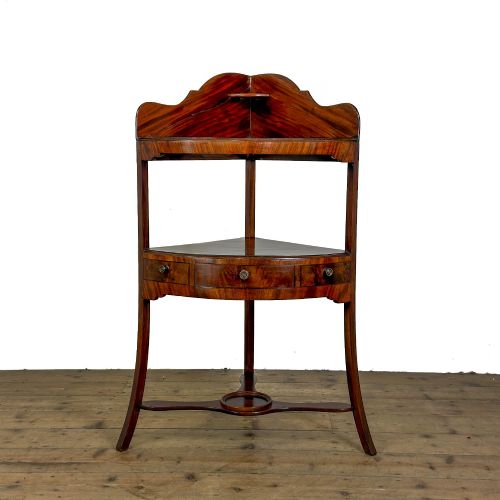
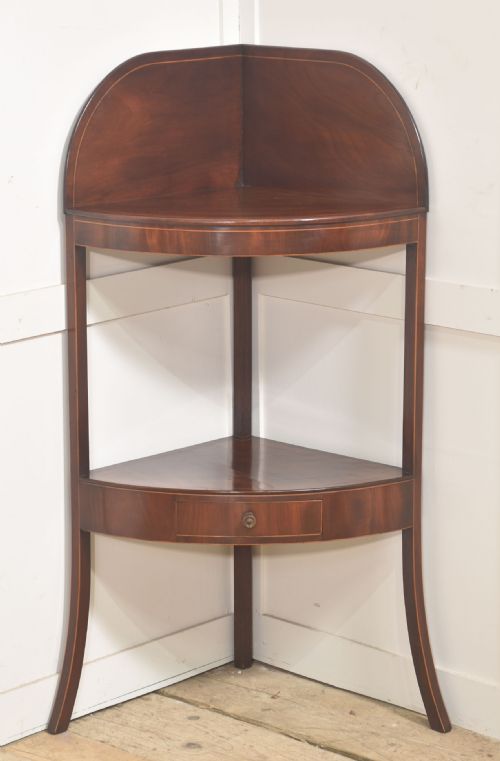


Corner Wash Stand
These corner wash stand examples bring clever triangular design into rooms that need functional charm without bulk.
Corner Wash Stand
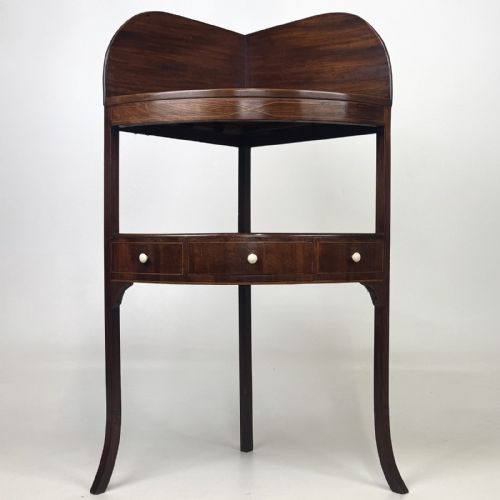
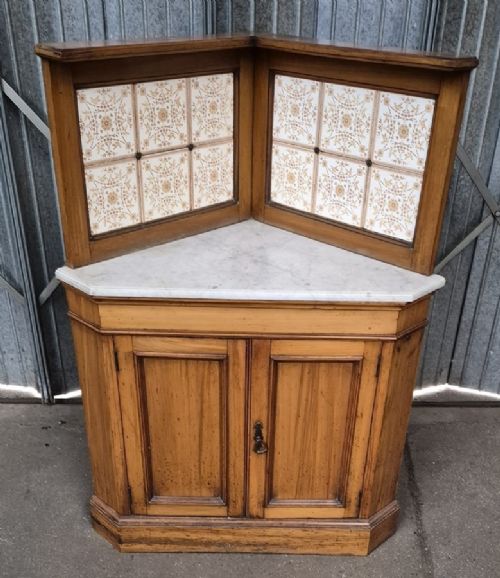
A corner wash stand fits neatly into room angles, making practical use of dead space while offering useful surface areas. The pieces seen here span periods from the eighteenth century through to the Edwardian era, with Georgian mahogany versions appearing most frequently alongside later Victorian and Regency examples.
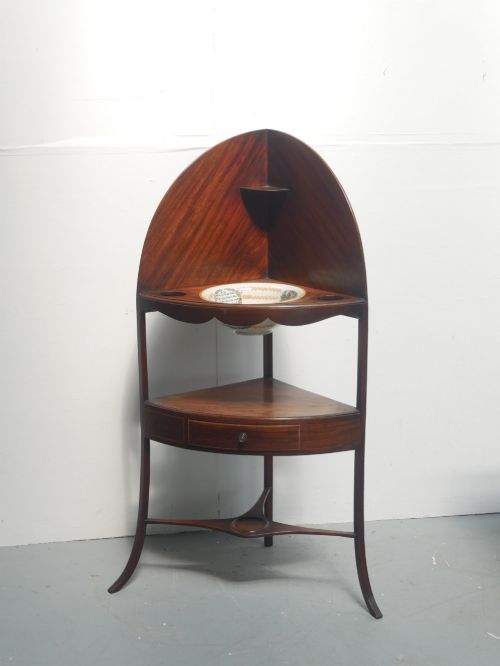
Most designs utilise multiple tiers or levels, often incorporating a basin cutout at the top alongside lower shelves for jugs and bowls. Later adaptations show these utilitarian stands repurposed as lamp or plant tables once plumbing moved indoors.
How they were made
Cabinet makers relied heavily on mahogany as the primary timber, occasionally turning to walnut, satinwood, pine, or oak for specific commissions. Finer pieces incorporate delicate boxwood inlay to define the edges of the triangular top and front aprons.
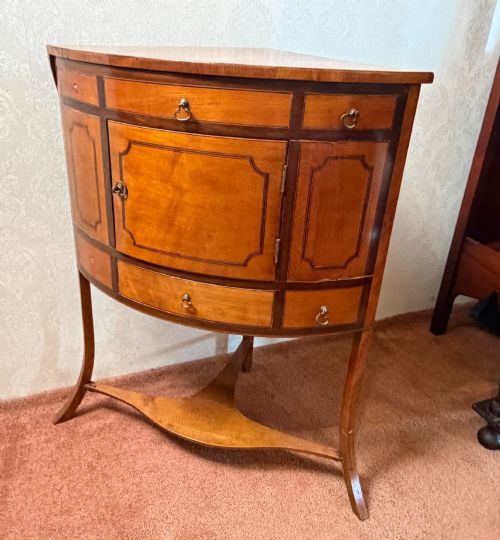
Construction methods involved tight joinery designed to fit rigid ninety-degree angles, frequently featuring shaped splashbacks and turned or tapering legs. Some specialised examples include marble tops or brass fittings, whilst others utilise clever folding mechanisms.
Listings feature mahogany predominantly, alongside walnut, satinwood, oak, pine, marble, brass, and boxwood inlay.
What varies in quality
The distinction between standard utility items and finer cabinet work rests upon timber selection and secondary details like inlay work. Grain matching across the triangular surfaces and the crispness of turned supports demonstrate the skill of the original workshop.
Proportion and structural cleverness also separate the range, particularly where folding tops or bow fronts add complexity to the simple corner blueprint. Pieces bearing maker stamps or retaining original painted surfaces represent the upper tier of surviving examples.
Walker & Sons·Gillows Lancaster·Maple & Co
The Corner Wash Stand Glossary
- Bow front
- A convex curved front section that softens the sharp angles of the triangular shape. This treatment appears frequently on Regency and Georgian pieces.
- Boxwood inlay
- Contrasting pale wood strips inserted into darker timber surfaces to create linear decoration. It often frames the edges of mahogany tops.
- Splashback
- The raised wooden barrier at the rear of the stand designed to protect walls from water splashes. These take plain, shaped, or tiered forms.
- Tiered
- Built with multiple horizontal shelves arranged vertically above one another. This construction provides stability and storage space in a compact footprint.
Corner Wash Stand: Frequently Asked Questions
What is a corner wash stand?
A corner wash stand is a triangular piece of furniture designed to fit snugly into room corners for personal washing before indoor plumbing became common.
Today, these stands serve as decorative plant tables, corner lamp tables, or hallway display surfaces due to their compact footprint.
How do I date a corner wash stand?
Dating relies on timber choice, secondary woods, and stylistic details like bracket feet versus tapering legs. Georgian and George III pieces typically feature solid mahogany, while Victorian and Edwardian examples introduce marble tops and different hardwoods.
Makers' stamps, where present, provide definitive dates and workshop origins for specific pieces.
Where do I put a corner wash stand?
These stands naturally tuck into empty room angles where standard rectangular furniture will not fit properly. They work effectively in hallways, bedrooms, or reception rooms as display surfaces for lamps and small plants.
Their triangular geometry allows them to anchor difficult corners without blocking walkways.
Did all corner wash stands hold basins?
Many original stands featured circular cutouts in the top tier specifically sized to hold ceramic wash bowls and water jugs. Other variations included solid folding wooden tops designed to conceal the basin cavity when not in use.