
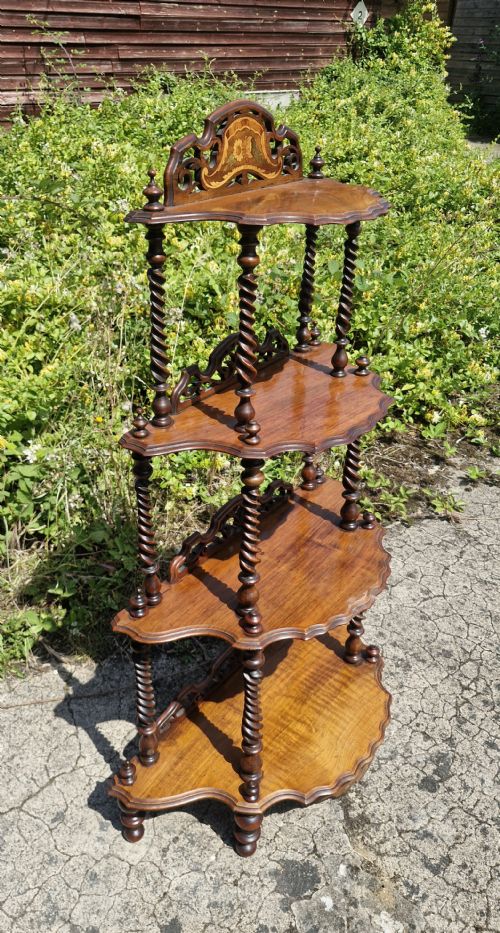
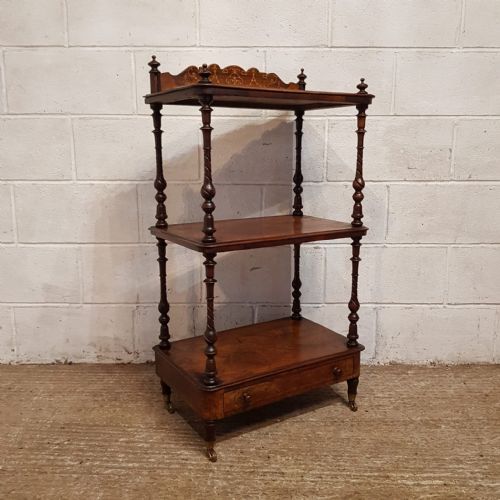
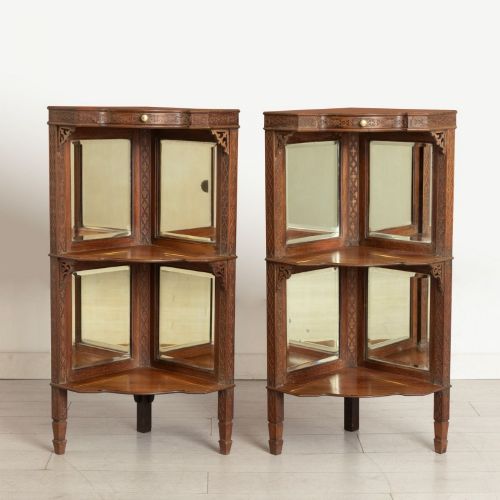
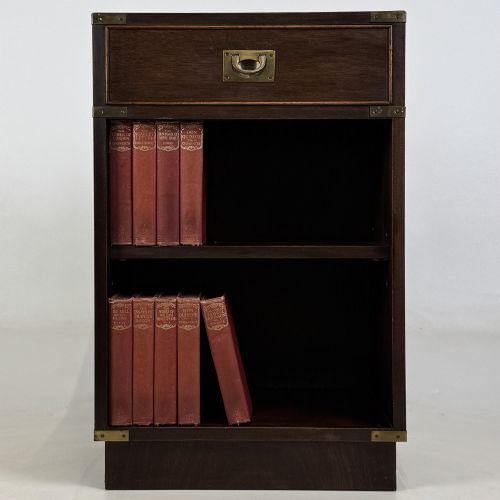
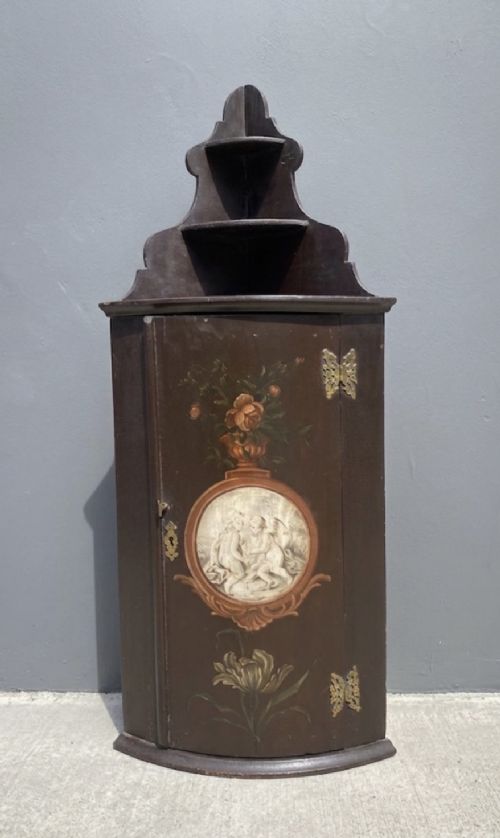


Corner Shelf Unit
These corner shelf unit pieces turn neglected wall angles into display space using timber tiered architecture.
Corner Shelf Unit
A corner shelf unit brings vertical display tiers and enclosed cupboards into room angles, utilising spaces that otherwise sit empty. When you search for a corner shelf unit, you meet forms that range from open multi-tiered stands to glazed display cabinets and hanging cupboards.
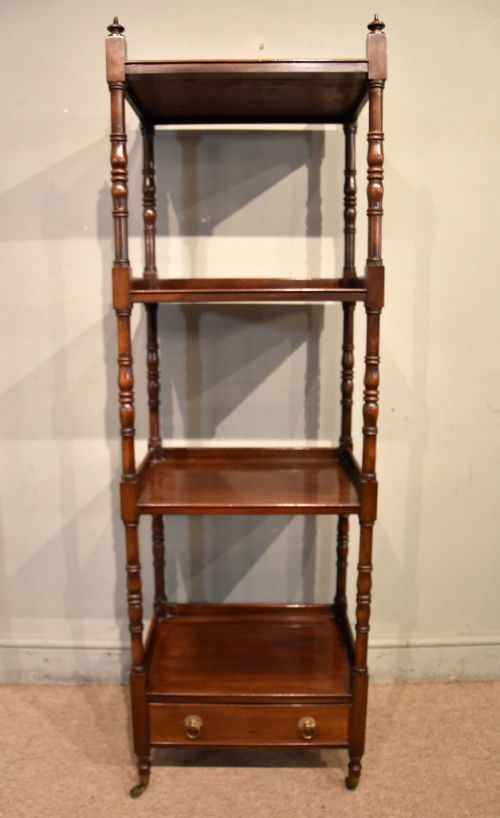
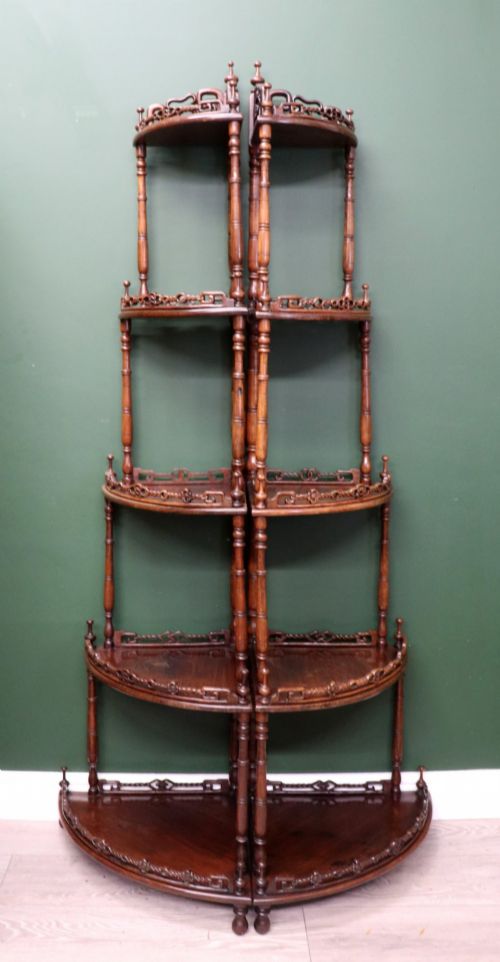
The pieces on this page span the eighteenth, nineteenth and twentieth centuries, taking the shape of whatnots, etageres and corner units. Mahogany, walnut and painted woods dominate, constructed in styles from Georgian and Regency to Victorian and Edwardian.
Materials and Construction
Cabinetmakers built these units primarily in timbers such as mahogany, burr walnut, rosewood and oak, often adding brass fittings, glass panels and painted surfaces. Grain selection matters greatly, particularly where burr walnut or figured mahogany provides natural pattern across the tiers.
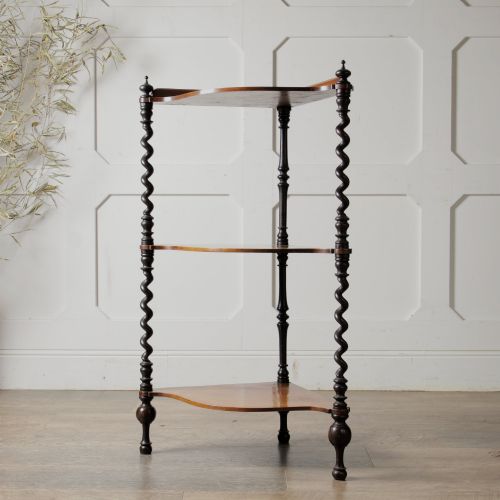
Joinery techniques include barley twist supports, turned columns and inlaid banding, alongside campaign style elements and tambour fronts. Makers balanced structural stability with open tiers, creating multi-level shelving units capable of supporting display objects.
Some nineteenth-century whatnots stacked up to six tiers high, turning household display into an exercise in vertical ambition.
Assessing Quality
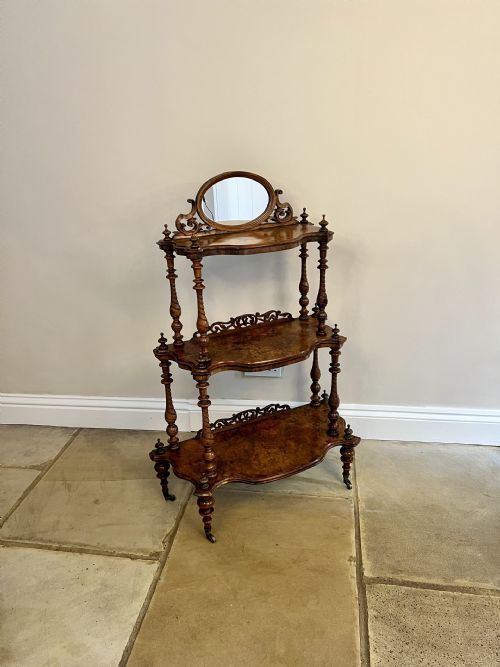
Quality rests in timber selection, the crispness of turned supports and the integrity of inlaid decoration. Finer pieces demonstrate careful grain matching, particularly on burr walnut or rosewood surfaces where veneer placement dictates the visual appeal.
Construction depth separates standard production from exhibition pieces, visible in the weight of the timber tiers, the precision of barley twist turnings and the refinement of brass hardware. The integration of mirrored backs or detailed carving elevates certain examples above plain utilitarian shelving.
Edwards & Roberts
The Corner Shelf Unit Glossary
- Etagere
- A set of open shelves for displaying small objects or ornaments. This French term often appears interchangeably with whatnot.
- Burr walnut
- Wood taken from a walnut tree growth where the grain has grown in a deformed manner, producing intricate patterns. Cabinetmakers sliced this wood into veneers for high-end furniture.
- Barley twist
- A type of turned wooden column resembling a twisted rope. It appears frequently as structural supports on nineteenth-century tiered stands.
- Tambour
- A flexible sliding shutter formed of narrow strips of wood glued to canvas. It conceals storage compartments in cupboards and cabinets.
Corner Shelf Unit: Frequently Asked Questions
What is a corner shelf unit?
A corner shelf unit is a piece of furniture designed to fit specifically into the ninety-degree angle of a room. These items provide vertical display or storage without encroaching on central floor space.
They appear as open tiered structures, hanging cupboards or enclosed cabinets. The design allows rooms to utilise awkward corners effectively.
How were whatnots used historically?
Whatnots served as prominent display furniture in nineteenth-century parlours and drawing rooms. Owners placed decorative ceramics, small sculptures and books upon the tiers.
They functioned primarily as showcase items rather than heavy storage. The multiple levels permitted an organised arrangement of decorative objects.
Are these units freestanding or wall-mounted?
The selection includes both freestanding multi-tier stands and hanging cupboards designed to attach directly to walls. Freestanding versions rest securely in room angles on legs or plinths.
Hanging variants attach via brackets or integrated fixings. Both configurations utilise corner angles efficiently.
How do I identify a Victorian piece?
Victorian pieces often feature darker timbers like mahogany and burr walnut, alongside turned barley twist supports. Stylistic markers include deep mouldings, applied carving and sometimes mirrored backs.
Construction during this era prioritised decorative display. The presence of multiple tiers with intricate wood grain points towards this period.