


Corner Display Shelving
Corner display shelving comprises tiered stands and cabinets designed to fit domestic angles, offering practical vertical storage for ornaments and books.
Corner Display Shelving
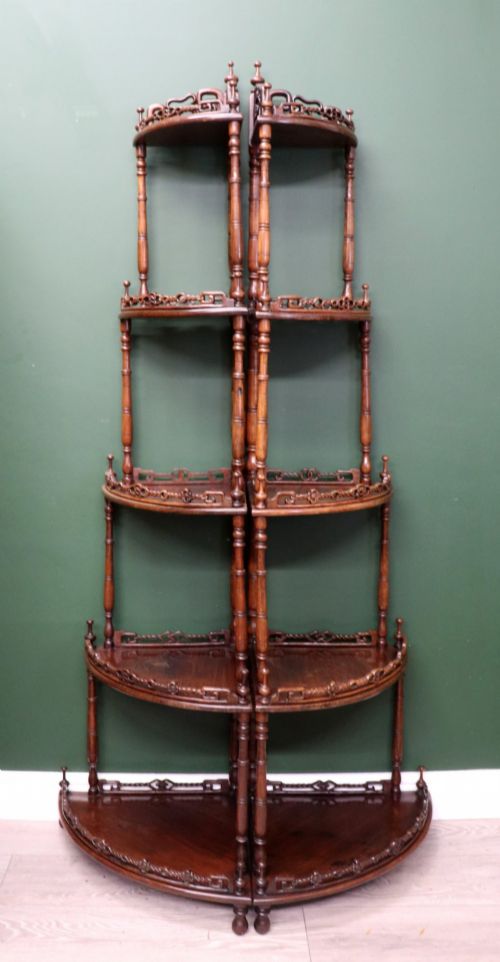
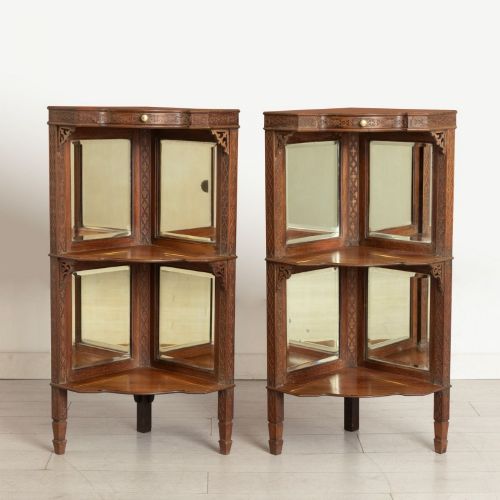
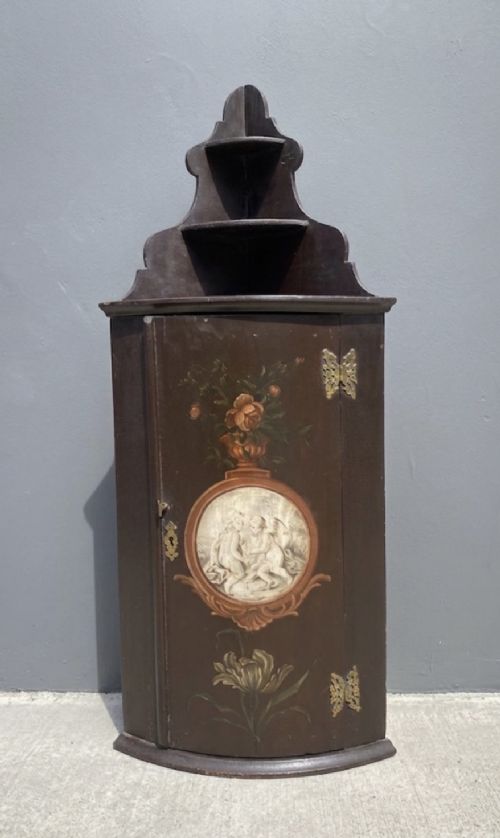
When you search for corner display shelving, you encounter a specialised form of furniture designed to utilise awkward room angles effectively. These pieces range from open multi-tiered stands to glazed cabinets and hanging cupboards.
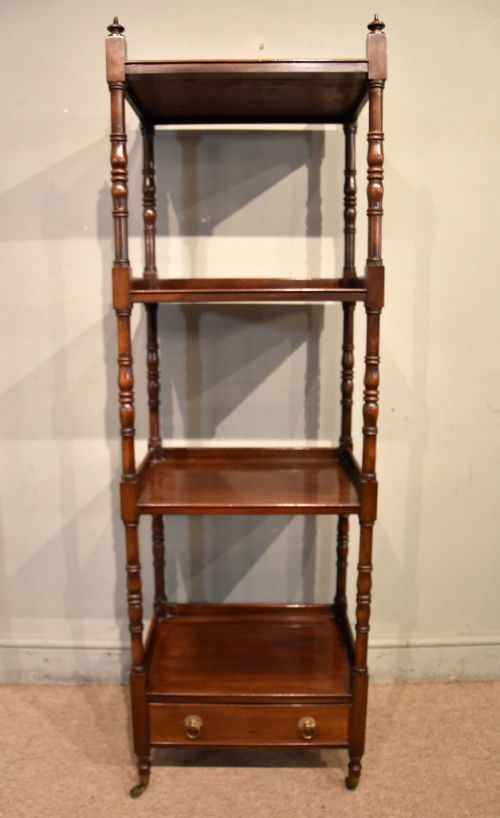
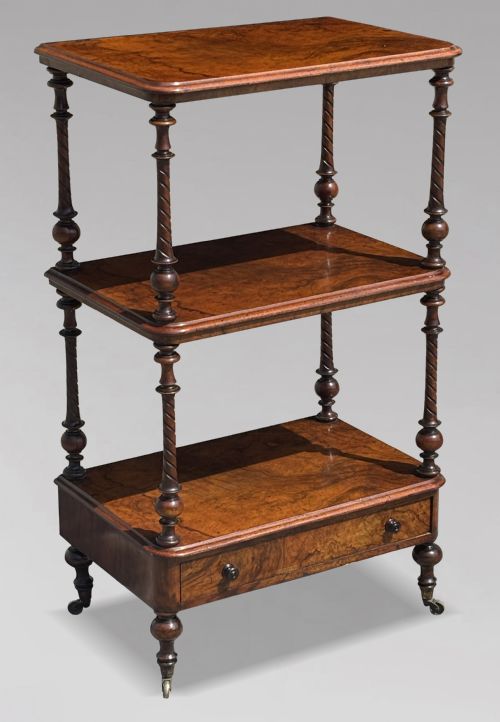
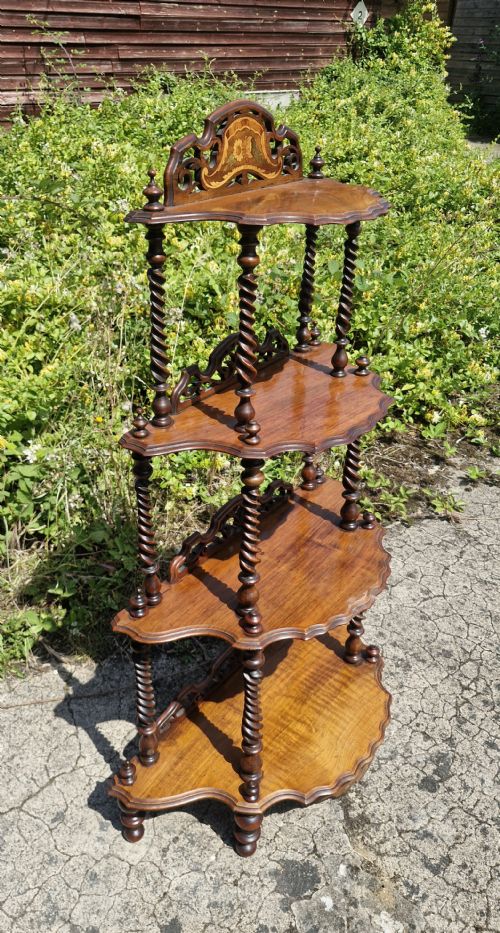
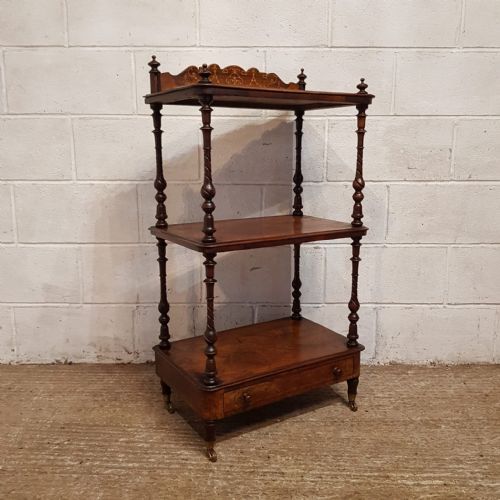
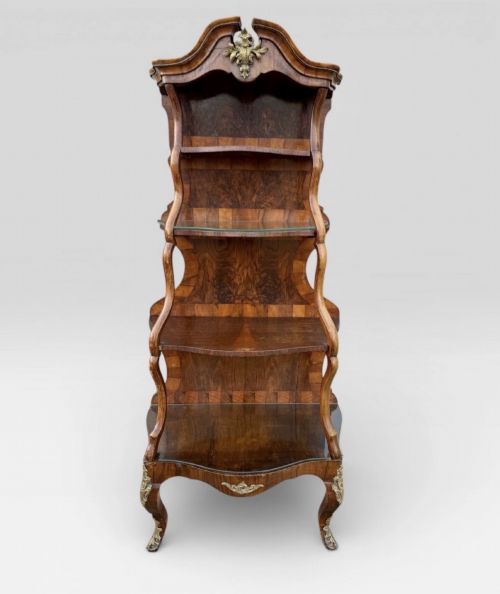
The selections on this page lean heavily towards nineteenth-century examples, with Victorian and Georgian pieces dominating the forms. Mahogany, walnut, and burr walnut form the primary timber choices across these multi-tiered structures.
Open whatnots and etageres sit alongside enclosed corner cupboards, providing distinct methods for exhibiting objects. The forms vary from modest three-tier units to substantial six-tier stands built with tapering profiles.
How they were made
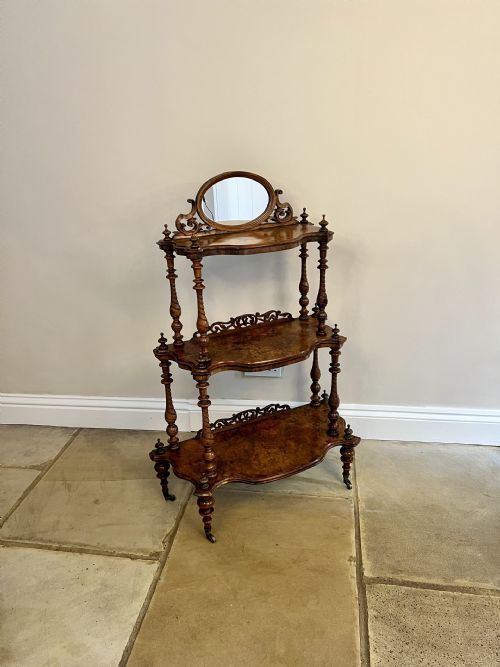
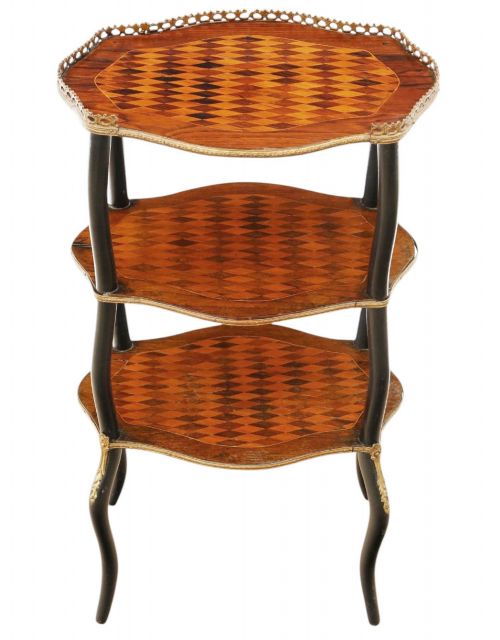
Cabinet makers utilised dense hardwoods such as mahogany, rosewood, and walnut for structural integrity and rich surface grain. Burr walnut veneers and parquetry inlay appeared on finer examples, adding decorative complexity to flat panels and shelves.
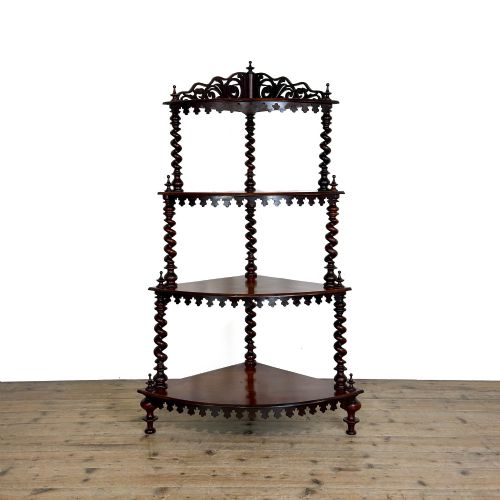
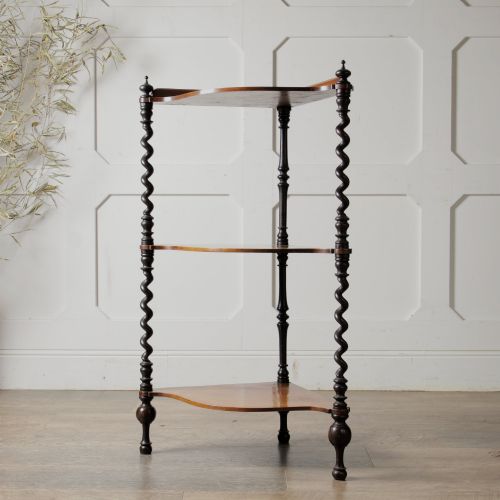
Supporting columns frequently featured turned details, including barley twist members, alongside brass or gilt metal mounts. Painted finishes, ebonised surfaces, and bamboo construction also occur in specific nineteenth-century contexts.
Listings feature eighteenth-century Georgian items alongside Victorian burr walnut whatnots and bamboo aesthetic period pieces.
What varies in quality
The distinction between ordinary utility items and exceptional pieces rests upon timber selection and decorative nuance. Figures in burr walnut veneers, precise parquetry, and fine brass detailing elevate the status of a tier stand.
Structural refinement also defines the better examples, visible in the turning of columns, the snugness of corner joints, and the balance of tapering proportions. Well-known makers introduce elevated craftsmanship through superior joinery and balanced design.
Gillows·Edwards and Roberts·Goodhall Lamb and Heighway
The Corner Display Shelving Glossary
- Whatnot
- A piece of furniture consisting of a set of open shelves for displaying small objects. They originated in the eighteenth century and gained immense popularity during the Victorian period.
- Etagere
- A piece of furniture with a series of open shelves for displaying ornaments. The term often overlaps with whatnot in nineteenth-century nomenclature.
- Parquetry
- Geometric mosaic woodwork used for floors and furniture decoration. It relies on contrasting timbers to create patterns.
- Barley twist
- A type of turning resembling a rope wound around a cylinder. This decorative technique appears frequently on nineteenth-century supports.
- Burr walnut
- Timber taken from a walnut tree growth featuring swirling grain patterns. Cabinet makers prized this material for high-status veneer work.
Corner Display Shelving: Frequently Asked Questions
What is a corner whatnot?
A corner whatnot is an open-shelved tiered stand shaped to fit neatly into the corner of a room. It serves to display ceramics, books, and decorative objects.
These pieces emerged in the Georgian period and evolved through the Victorian era into elaborate tiered structures utilising walnut, mahogany, and rosewood.
How do I use corner display shelving?
These units suit unused room angles, turning dead space into functional display areas for collections. Open tiers hold ornaments, while corner cabinets keep contents enclosed behind glass or timber doors.
Placement works best in drawing rooms, dining spaces, or studies where vertical display adds depth without blocking walkways.
How do I tell Victorian from Georgian pieces?
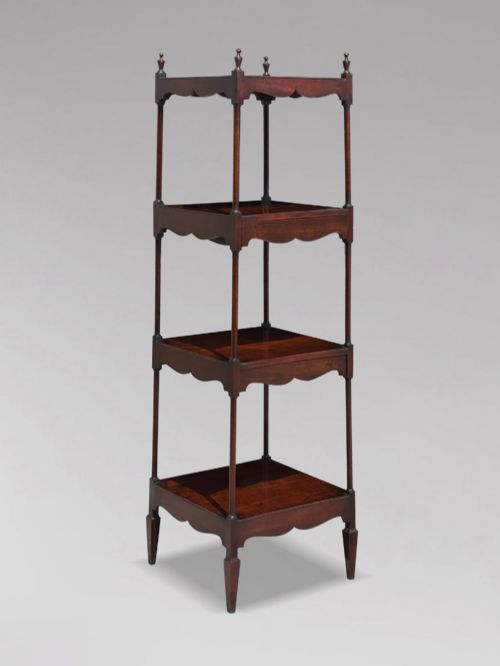
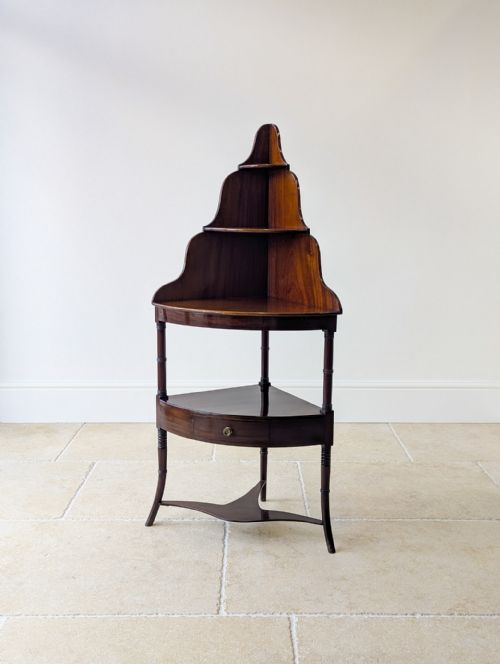
Georgian pieces tend to display restrained classical proportions, often executed in solid mahogany with simpler structural lines. Gillows stands from the late eighteenth century exemplify this balanced approach.
Victorian examples frequently introduce busier decorative elements, including burr walnut veneers, inlaid parquetry, ebonised surfaces, and turned barley twist columns.
Are these shelves sturdy enough for heavy books?
Most corner shelving units are built to support decorative ornaments, ceramics, and lighter volumes rather than heavy reference libraries. The tiers rely on slender vertical supports and corner fixing points.
Heavier items sit best on the bottom tier of a sturdy mahogany or walnut whatnot, while upper tiers suit lighter decorative pieces.