


Copper Tea Samovar
A copper tea samovar brings warmth and historical weight to a room, standing as a grand vessel for hot water.
Copper Tea Samovar
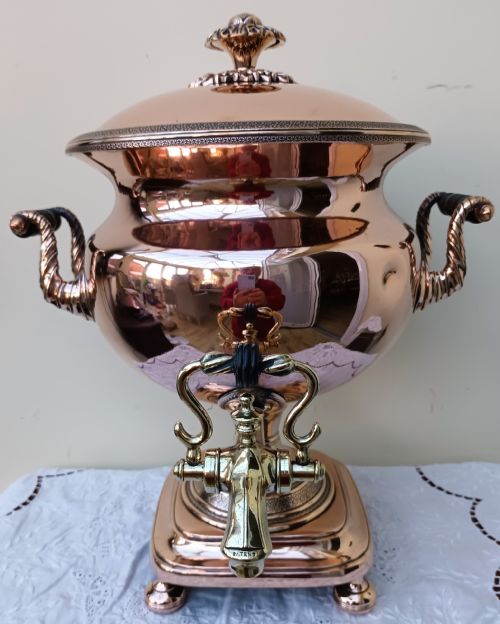
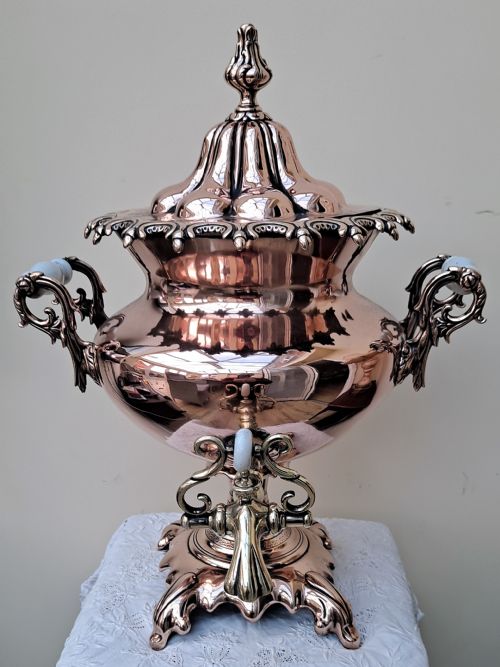
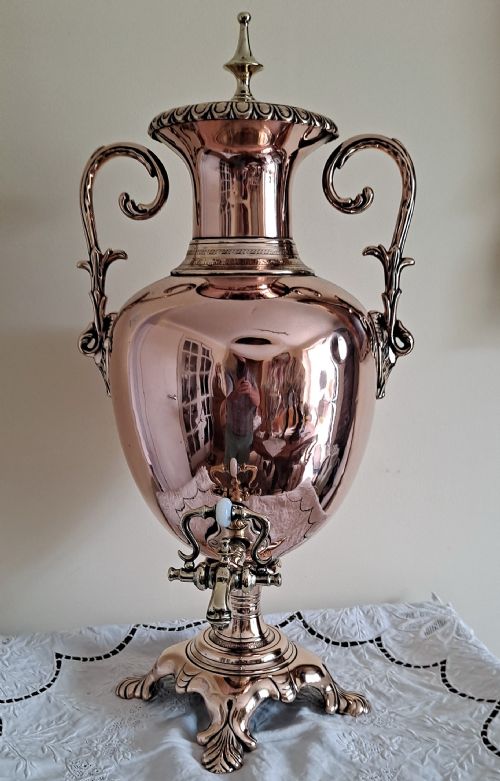
A copper tea samovar is a traditional hot water vessel designed for hospitality and table service. When you search for a copper tea samovar, you encounter pieces originating from the Georgian, Regency, and Victorian periods.
The most common examples on this page date from the nineteenth century and Victorian eras, often taking the form of tea urns or water urns. These vessels range from small Regency designs to large Victorian pieces made in England.
Makers and retailers such as Benetfink and Co and Benham and Sons appear among these nineteenth-century items. The forms span from classical urn shapes to hanging water urns and kettle samovars.
How they were made
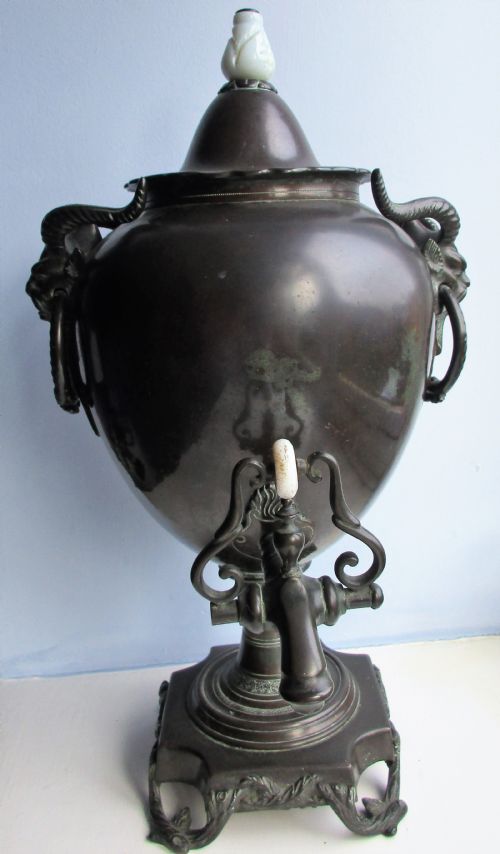
The primary material is copper, frequently paired with brass for handles, spigots, and fittings. Other materials recorded include bell metal, bronze, bone, ceramic, wood, ebonised wood, patinated metal, and iron.
Surface finishes involve patinated metal or japanned finishes such as Pontypool Ware. Construction relies on metalworking techniques of the eighteenth and nineteenth centuries, incorporating original fittings where preserved.
Several samovars come equipped with original fittings, ensuring the historical spigots and handles remain matched to their vessels.
What varies in quality
Quality shows in the weight of the metal and the crispness of the casting on brass handles and spigots. Ornate detailing and the presence of original fittings elevate certain examples above standard utility pieces.
The integration of contrasting materials, such as bone or ebonised wood handles, indicates higher execution. Pieces bearing maker or retailer stamps also demonstrate distinct commercial origins.
Benetfink and Co·Benham and Sons
The Copper Tea Samovar Glossary
- Samovar
- A heated metal container traditionally used to boil and heat water in Russia and Britain. These vessels feature an internal internal heating tube or spigot system.
- Pontypool Ware
- A type of japanned metalware produced in Wales and England. It is known for its glossy, lacquered surface finish.
- Bell Metal
- An alloy of copper and tin used historically for casting hardware and fittings. It yields a resonant sound when struck.
- Japanned
- A European imitation of East Asian lacquerwork applied to metal or wood surfaces. The finish involves multiple layers of heat-cured varnish.
- Spigot
- A tap or faucet fitted near the base of the urn to dispense hot water. Original spigots form an integral part of the vessel's mechanism.
Copper Tea Samovar: Frequently Asked Questions
How do you use a copper tea samovar?
A copper tea samovar was traditionally filled with water and heated to provide a constant supply for tea service. The water is dispensed through the lower spigot into cups as needed.
In historic settings, these vessels sat on tea tables or sideboards during gatherings. They functioned both as practical heating devices and as decorative centrepieces.
What is the difference between George III and Victorian samovars?
George III samovars generally date from the late eighteenth or early nineteenth century, displaying neoclassical urn proportions. They often feature restrained lines and fine brass or bronze mounts.
Victorian samovars from later in the nineteenth century tend to be larger and heavier in construction. They frequently incorporate mixed metals, japanned finishes like Pontypool Ware, and more ornate decorative elements.
Are all samovars made entirely of copper?
While copper forms the main body of these vessels, makers incorporated other materials for structural and decorative reasons. Brass appears routinely for spigots, handles, and trim.
Additional elements include bone, ceramic, wood, and iron components. Some examples also utilise bell metal or bronze for specific fittings.
How should I display a copper tea samovar at home?
A copper tea samovar works well placed on a sturdy sideboard, table, or mantel surface. Its reflective metal surface contrasts effectively with wood furniture and ceramic objects.
Keep the vessel away from damp environments to preserve the metal finish. Regular light dusting helps maintain the natural patina of the copper and brass.