


Copper Jam Pot
A copper jam pot is a sturdy domestic vessel forged for fruit preserving, prized by collectors for its honest metalwork and glowing hearthside presence.
Copper Jam Pot
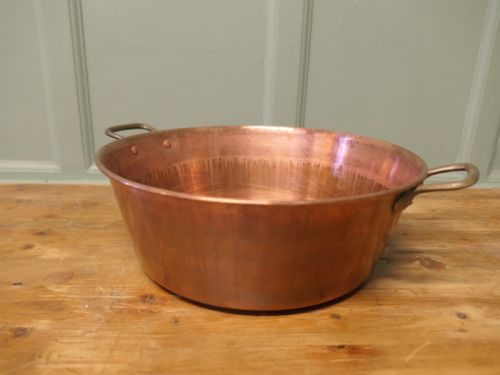
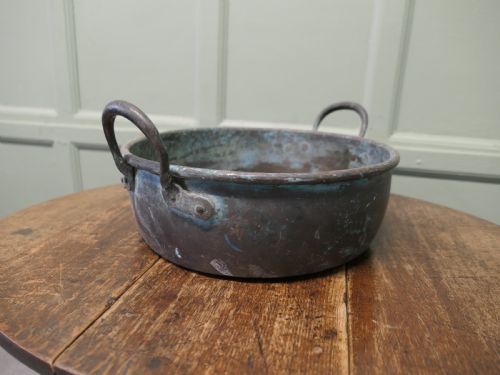
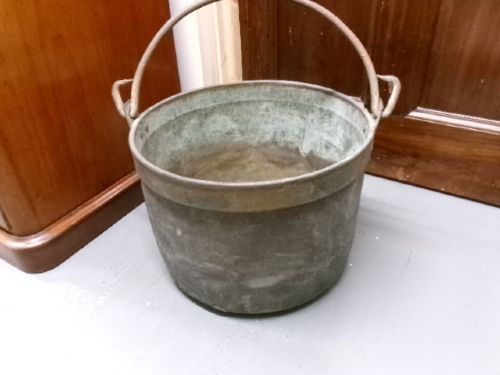
A copper jam pot encompasses heavy preserving pans, cauldrons, and cooking vessels designed for utilitarian kitchen use across the eighteenth and nineteenth centuries. Buyers searching for a copper jam pot encounter substantial George III and Victorian examples shaped for heat distribution over an open fire or stove.
The domestic forms appearing on this page span large double-handled pans, swing-handled cauldrons, and cream setting vessels. Most examples date from the nineteenth century, reflecting an era when copper formed the backbone of functional British kitchenware.
How they were made
Makers shaped these vessels primarily from heavy sheet copper, hammering the metal to achieve strength and resilience under high heat. Iron, brass, and wrought iron appear in the handles and attachments, riveted securely to the body.
Vessels often feature visible riveted construction and sturdy swing handles designed to bear heavy loads of fruit and sugar. Tin linings frequently coated the interior to prevent chemical reaction with acidic foods.
What varies in quality
The thickness of the metal sheet dictates the substance and durability of the vessel, with heavier pans offering greater structural integrity. Superior examples display careful hand-beating and robust handle fixings that withstand heavy daily use.
Maker marks or stamps add distinction to certain pieces, separating anonymous utility items from identifiable workshop production. The balance of the vessel and the smoothness of the hammered surface also indicate the maker's level of skill.
Hodges & Sons·Liptons
The Copper Jam Pot Glossary
- Preserving pan
- A wide, open vessel designed for boiling fruit and sugar. Its shallow depth allows moisture to evaporate quickly during jam making.
- Swing handle
- A movable metal handle attached to the sides of a pot by lugs or ears. Wrought iron and brass serve as common materials for these fittings.
- Riveted
- A method of joining metal plates using metal pins hammered flat at the ends. This technique secures handles and repairs seams on antique copperware.
- Cauldron
- A large round pot with a curved base and a handle for suspension over a hearth. Nineteenth-century versions often sit flat on modern surfaces.
Copper Jam Pot: Frequently Asked Questions
Can I use an antique copper jam pot for cooking?
While these vessels were built for food preparation, modern usage requires checking the interior tin lining for integrity and safety. Many collectors prefer to display them as decorative objects rather than subjecting them to daily heat.
Acidic foods can react with exposed copper if the protective lining has worn away over centuries of service.
How do I clean a copper jam pot?
Gentle washing with warm soapy water removes dust and dirt without damaging the historical surface. Specialised metal cleaners restore the bright metallic finish if a polished look is desired.
Many owners prefer to leave a dark natural patina undisturbed to preserve the authentic age of the metal.
How do I date a copper preserving pan?
Stylistic clues such as handle attachments, hammering marks, and shape help narrow down the period of manufacture. George III pans often display distinct eighteenth-century proportions, while Victorian pieces show later industrial techniques.
Stamped maker marks provide the most direct evidence for dating individual workshops.
What is the difference between a pan and a cauldron?
Pans generally feature wide, open tops and flat bases intended for stovetop or tabletop preserving. Cauldrons possess deeper, rounded bodies historically suspended over open fires by arched handles.
Both forms utilise heavy copper construction suited to culinary tasks.