



Copper Fireplace Accessories
Copper fireplace accessories bring warmth and rich metal tones to a hearth, combining practical fuel storage with decorative craftsmanship.

Copper Fireplace Accessories
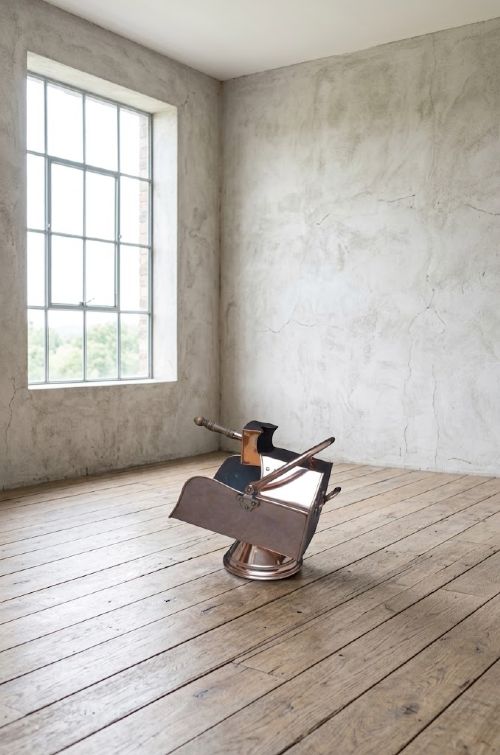
Copper fireplace accessories comprise functional hearth vessels and implements designed for solid fuel management. When searching for copper fireplace accessories, buyers encounter coal scuttles, coal buckets, log bins, hearth plates, fenders, firescreens, and companion sets. These objects originate across the nineteenth and early twentieth centuries, spanning the Georgian, Victorian, and Edwardian periods.
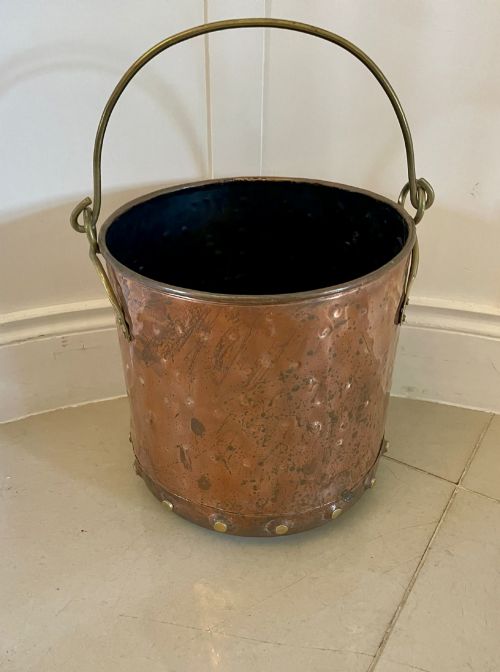
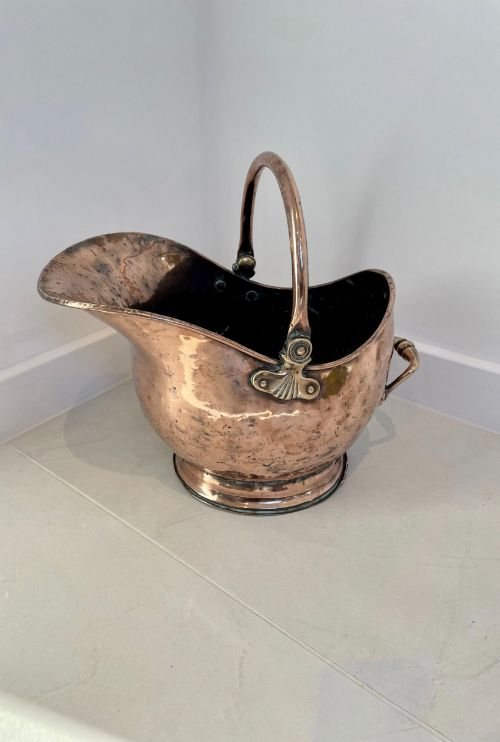
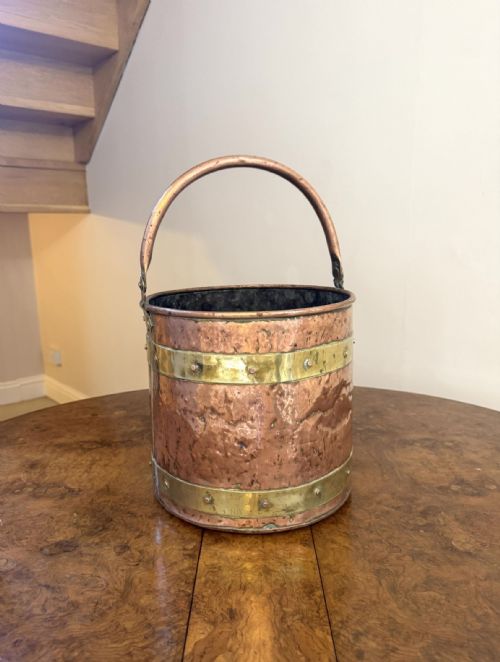
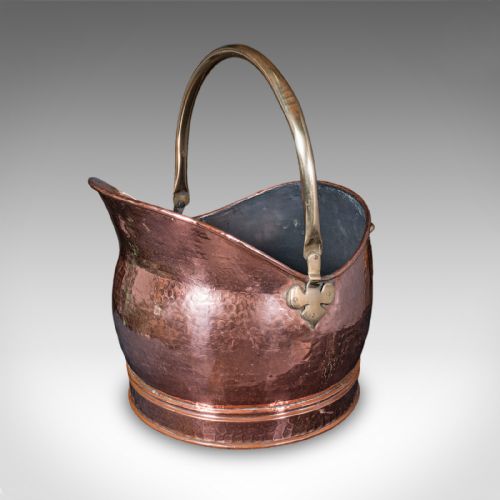
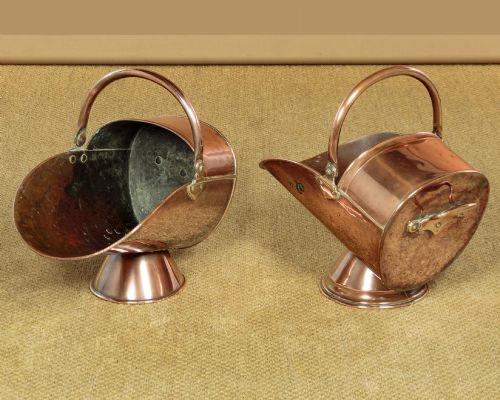
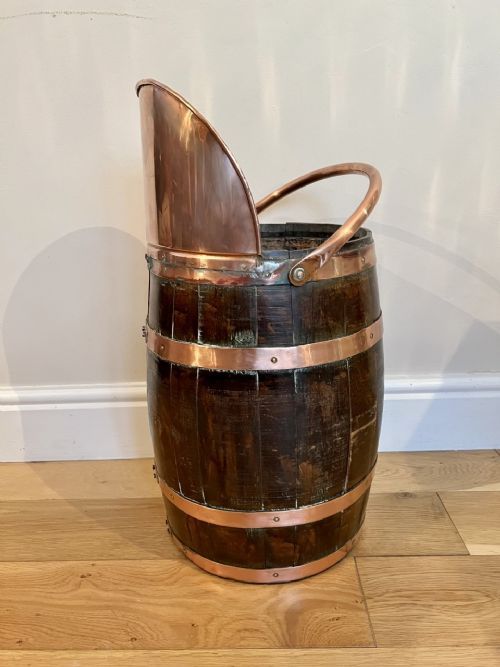
The most common version met on this page is the helmet-shaped coal scuttle or bucket, frequently paired with brass mounts or handles. Victorian and Arts and Crafts examples dominate the selections, alongside items utilising oak, wrought iron, and steel alongside the primary metal. Larger log bins and hearth plates also appear to serve hearths of various proportions.
How they were made
Maker techniques rely on heavy sheet metal manipulation, incorporating hand-beaten finishes, riveting, and embossed ornamentation. Smiths and metalworkers joined copper bodies to brass handles, feet, and bands using robust mechanical fixings.
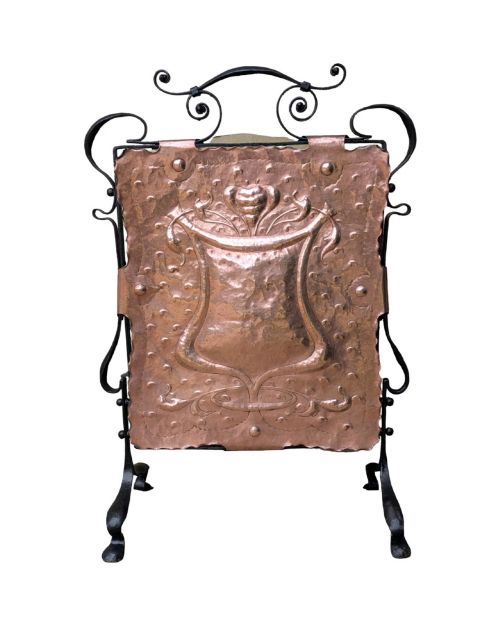
Secondary materials such as oak frames and wrought iron provide structural support for wooden-bodied coal buckets and firescreens. Painted metal and inlaid designs supplement the predominant polished and hammered copper surfaces.
Copper Fireplace Accessories Retail Price Guide 2026
Typical asking prices for copper fireplace accessories among the pieces listed under this phrase on Sellingantiques today, from the lower quarter to the upper quarter. They describe what is for sale here now, not the wider market.
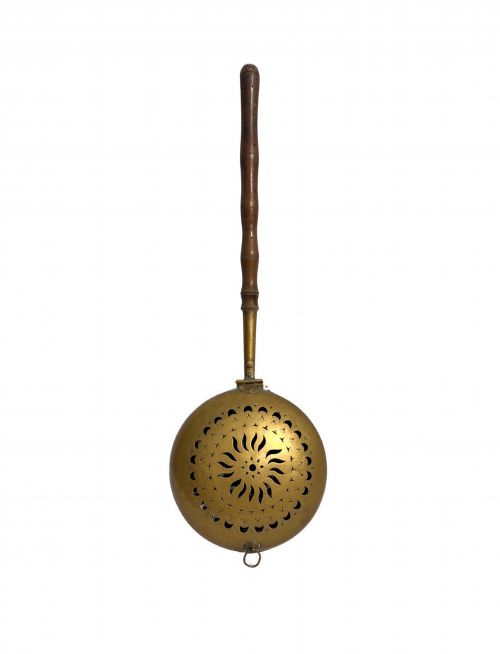
A revolving fireplace toaster with copper inlaid hearts ensures that breakfast preparation remains an entirely romantic domestic endeavor.
What varies in quality
Distinctions in quality rest upon the weight of the metal and the integrity of the construction. Heavier gauge copper sheets maintain their structural form better over decades of hearth service.
Artisanal detail distinguishes standard utility items from finer decorative pieces, visible in the precision of hand-beaten hammering, embossed motifs, and secure riveting. The integration of solid brass mountings and robust oak framing elevates the standard of manufacture.
The Copper Fireplace Accessories Glossary
- Coal scuttle
- A container designed to hold coal for a fireplace, typically featuring a sloping rim or helmet shape for easy pouring. Many examples include a sturdy swing handle and a matching shovel.
- Log bin
- A large vessel utilised for storing firewood beside the hearth. These containers often incorporate metal banding or riveted construction.
- Fender
- A low metal guard placed around the hearth to contain embers and ash. They often feature beaten copper or brass decorative panels.
- Firescreen
- A decorative panel placed before the fireplace when not in use. Arts and Crafts variants frequently showcase framed copper panels with hand-beaten details.
- Companion set
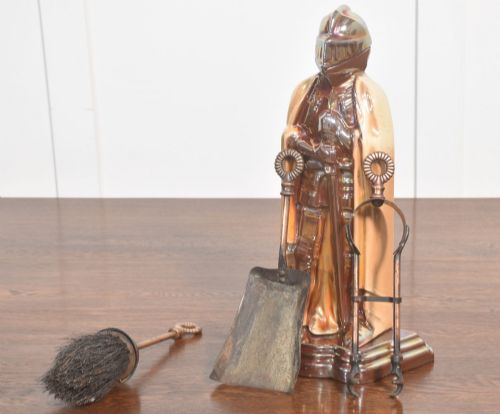
- A collection of fireplace tools, such as pokers and tongs, housed together. Sets often incorporate cast metal elements or decorative stands.
Copper Fireplace Accessories: Frequently Asked Questions
How do I clean antique copper?
Antique copper benefits from gentle dusting and occasional cleaning with a specialist metal polish if removal of tarnish is desired. Many collectors prefer to leave an undisturbed historical patina on older pieces.
Avoid abrasive scourers that scratch the softer metal surfaces and strip away the character accumulated over centuries of domestic use.
Are these items suitable for daily use?
Most copper fireplace accessories remain structurally robust enough for everyday hearth duties. Lined buckets and scuttles easily accommodate logs or coal without compromising the exterior metal.
Care should be taken with delicate hand-beaten or embossed decorative panels to prevent accidental dents during fuel loading.
How do I date a copper coal bucket?
Dating relies upon stylistic markers, construction techniques, and prevailing design movements. Georgian pieces display simpler, heavier proportions, while Victorian items often feature ornate embossing and bright brass contrast.
Edwardian and Arts and Crafts examples introduce distinct hammered textures and geometric strapwork.