




Copper Candle Holders
Copper candle holders bring warmth and metallic glow to a room, spanning tactile Arts and Crafts designs to formal Georgian telescopic pairs.
Copper Candle Holders
Copper candle holders encompass practical lighting devices and decorative pieces produced across multiple centuries, featuring prominently in domestic interiors. When exploring copper candle holders, buyers encounter domestic lighting ranging from modest taper sticks to monumental altar forms and wall-mounted sconces.
The selection on this page draws primarily from the nineteenth and twentieth centuries, with particular strength in Arts and Crafts, Art Nouveau, and Aesthetic Movement examples. Alongside pure copper, these pieces frequently incorporate brass, silver plate, and copper alloy to achieve contrasting tones and textures.
Form follows function across various object types, including standard candlesticks, chamber sticks, spill boxes, and multi-light candelabra. Pieces originate from English, Dutch, French, and German workshops, reflecting regional preferences in metalworking and domestic illumination.
Materials and construction methods
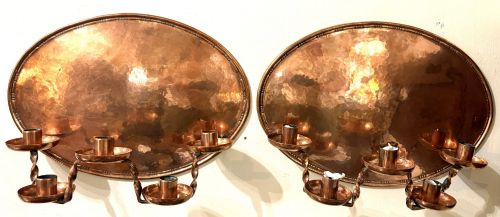
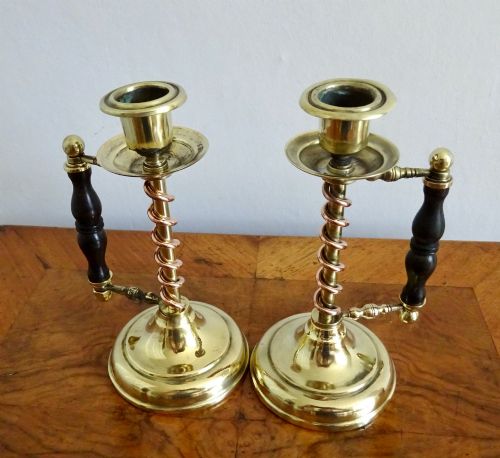
Metalworking techniques combine sheet metal forming, spinning, and casting depending on the period and desired form. Arts and Crafts items often display hand-hammered surfaces with visible rivet construction, showing the direct touch of the maker.
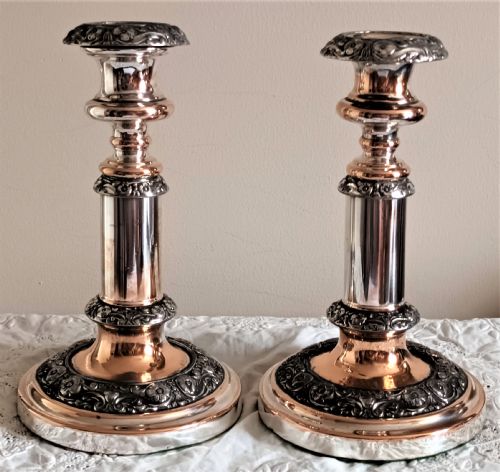
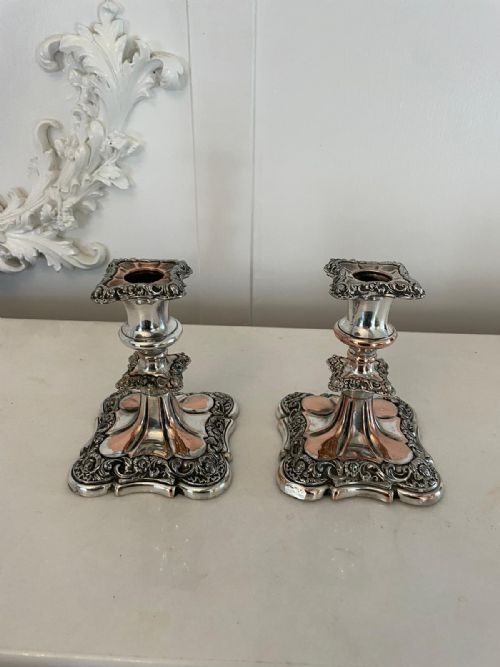
Earlier Georgian and Victorian pieces frequently utilise copper as a base metal combined with Old Sheffield Plate or silver plating, creating durable domestic objects with bright reflective highlights. Brass components appear alongside copper for structural stability, functional threads in telescopic stems, and decorative detailing.
Forms include domestic candlesticks, wall mirrors, spill boxes, and large pricket altar lights reflecting Dutch, English, French, and German origins.
Assessing craftsmanship and design
Quality rests in the heaviness of the gauge, the crispness of the hand-beaten texture, and the integrity of the structural joints. Superior examples exhibit deliberate proportion, balanced weight, and thoughtful integration of mixed metals like brass or silver.
Design ambition distinguishes exceptional workshop output from routine domestic items. Signed pieces, documented stylistic influences, and sophisticated execution within movements like the Amsterdam School or Arts and Crafts elevate the standing of an individual pair.
Dr Christopher Dresser·Birmingham Guild of Handicraft
The Copper Candle Holders Glossary
- Telescopic candlestick
- A lighting device with a sliding inner shaft that adjusts the height of the candle nozzle. This mechanism proved particularly popular in nineteenth-century Sheffield plated designs.
- Pricket candlestick
- A spike-topped holder designed to impale a candle rather than accept it into a socket. These forms frequently appear on larger altar and sanctuary lighting.
- Old Sheffield Plate
- A composite material formed by fusing a thin sheet of silver to a thicker copper base. It predates electroplating and reveals faint traces of copper along cut edges.
- Spill box
- A wall-mounted or freestanding container designed to hold wooden matches or thin tapers used for lighting fires and candles. They often double as decorative wall fixtures.
- Paktong
- An alloy of copper, nickel, and zinc originating in China, prized for its bright silver-like appearance and resistance to corrosion. It was utilised by eighteenth-century European metalworkers for high-end candlesticks.
Copper Candle Holders: Frequently Asked Questions
How do I polish antique copper safely?
Polishing antique copper requires a gentle cream designed specifically for metals to preserve the underlying patina and hand-worked surface texture. Avoid harsh abrasive compounds that strip away historical character and thin silver plate.
Apply the cleaner with a soft cloth using light circular motions, then buff gently with a clean microfibre cloth. Regular dusting is often sufficient for stable indoor pieces.
What is the difference between brass and copper?
Copper is a pure metallic element with a distinct warm reddish-orange hue, while brass is an alloy composed primarily of copper and zinc with a brighter yellow tone. Many antique items combine both metals for decorative contrast.
Over time, both metals develop distinct patinas when exposed to air and handling, though copper darkens to deeper brown and russet tones compared to the greenish-gold oxidation of brass.
How do I date an antique candle holder?
Dating relies on observing manufacturing techniques, material combinations, and stylistic markers associated with specific design movements. Hand-hammered surfaces and riveted joints typically point toward late nineteenth and early twentieth-century Arts and Crafts production.
Conversely, heavy cast bases, multi-component construction, and Old Sheffield Plate indicate eighteenth or nineteenth-century Georgian origins. Comparing the form against documented examples helps narrow the production window.
Were these holders used for lighting?
These pieces served as the primary source of portable artificial illumination in homes and public buildings before the widespread adoption of gas and electric lighting. Chamber candlesticks with wide drip pans were specifically carried down hallways and up staircases.
Taller candlesticks and candelabra remained stationed on tables, mantelpieces, and altars to illuminate specific rooms. Today they function primarily as decorative decorative objects and ambient lighting.