


Copper Brass Pan
These copper brass pan examples offer enduring utility and warmth, prized for their rich metallic tones and historic kitchen credentials.
Copper Brass Pan
Most items you meet here date from the nineteenth century, reflecting utilitarian domestic practices in English and European country settings. Alongside functional cookware, you find related fireplace accessories and decorative vessels combining brass and copper with iron or turned wood handles.
How they were made
Smiths hammered and joined sheets of copper and brass, frequently incorporating riveted seams and sturdy iron or brass handles to withstand heavy domestic use. Many vessels feature contrasting materials, pairing polished copper bodies with turned wood grips or forged iron mounts.
Makers finished these metal goods by hand, leaving visible hammer marks and dovetailed joints that evidence traditional workshop methods. Internal surfaces were often tinned to render the cookware safe for food preparation.
Object forms range from cookware like fish kettles and preserving pans to fireplace accessories and bed warmers.
What varies in quality
Quality rests in the thickness of the metal gauge, the integrity of the riveted joints, and the crispness of any maker stamps or decorative hand-beating. Heavy, thick-walled vessels designed for serious preserving or cooking command greater regard than lighter decorative pieces.
The survival of original turned wooden handles, matching brass fixtures, and uncompromised structural proportions distinguish finer examples from heavily restored or diluted specimens.
Hodges and Sons·Nader
The Copper Brass Pan Glossary
- Preserving pan
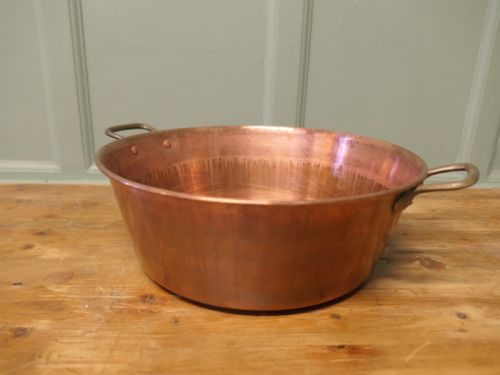
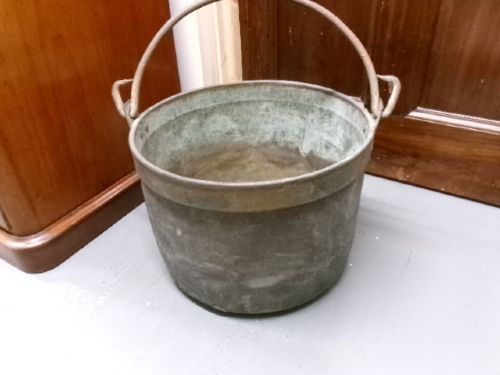
- A wide, deep vessel designed for boiling fruit and sugar, usually featuring a swing handle for easy lifting. These domestic workhorses typically show heavy copper construction.
- Fish kettle
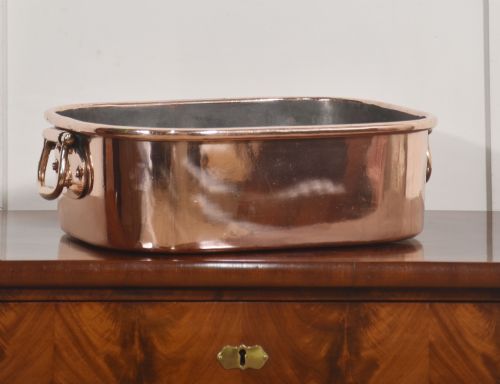
- An elongated metal vessel with a fitted lid and internal draining rack, built for poaching whole fish. They demonstrate specialised nineteenth-century kitchen engineering.
- Bed warming pan
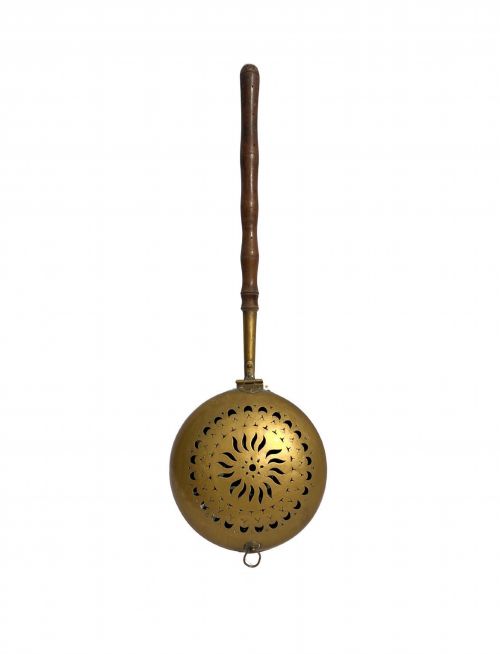
- A covered metal pan on a long wooden handle, filled with hot coals to warm sheets before sleeping. The brass lids often display punched or engraved star and floral motifs.
- Bain-marie
- A heated water bath used in cooking to keep foods warm or gently melt delicate ingredients. Table top versions utilise polished copper finishes.
Copper Brass Pan: Frequently Asked Questions
How were copper preserving pans used?
Cooks utilised these wide vessels over hearths or stoves to boil down fruit jams and preserves evenly. The high thermal conductivity of copper prevented scorching during long simmering processes.
Today, these pans serve as practical kitchenware or hearthside storage vessels for logs and kindling.
What is a bed warming pan?
These long-handled vessels held hot embers from the fire and were swept between cold bedsheets. The pierced brass lids allowed gentle heat to radiate without scorching the fabric.
Collectors generally hang them by the fireplace as decorative wall pieces.
How do I date a copper pan?
Dating relies on observing construction details such as hand-beated surfaces, dovetailed seams, and the style of iron or brass fixings. Georgian and early Victorian pieces tend to feature heavier gauges and hand-forged attachments.
Later Victorian and Edwardian examples often display machine stamping and brighter polished finishes.
Are these pans safe for cooking?
Historic pans intended for food require an intact interior tin lining to prevent direct contact between food and copper. Many surviving pieces function purely as decorative items unless retinned.
Checking the interior coating determines whether a piece remains suitable for culinary use.