
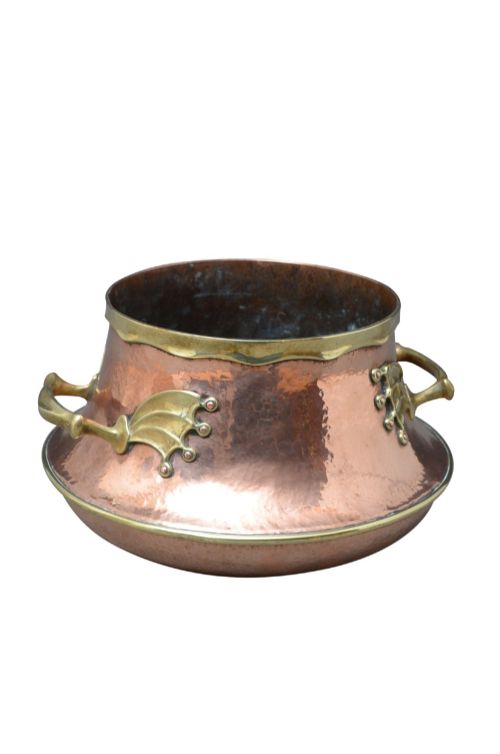
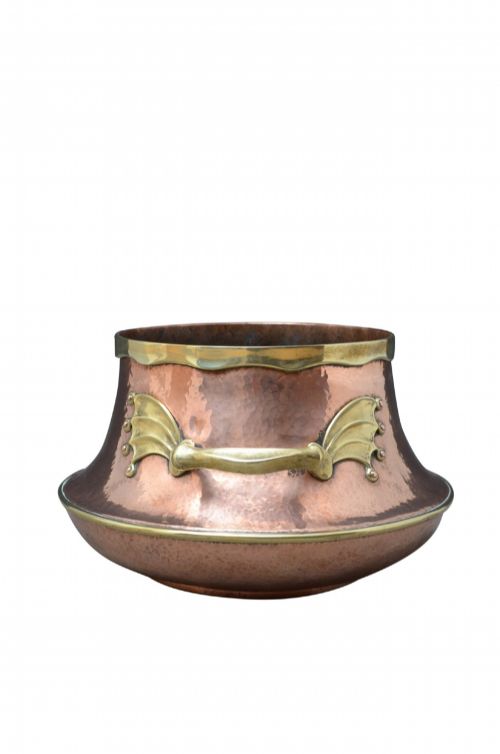


Copper Brass Jardiniere
A copper brass jardiniere brings rich metallic warmth and texture to an interior, housing potted plants or serving as a decorative vessel.
Copper Brass Jardiniere
A copper brass jardiniere is a decorative vessel designed to hold plants, flowers, or logs, combining warmth of tone with functional utility. The examples found here span the Victorian, Edwardian, and eighteenth-century periods, alongside distinct styles such as Arts and Crafts, Art Nouveau, and French Chateau.
Most pieces combine copper bodies with brass mounts, handles, or feet, though some incorporate walnut, ebonised wood, or tin. Common forms include oval or round planters, cauldrons, log buckets, and wine coolers.
Buyers will encounter vessels featuring brass lion paw feet, lion mask handles, or hammered surfaces. These objects function equally well as traditional plant containers or as striking focal points in a room.
How they were made
Makers shaped sheet copper into cylindrical, oval, or bucket bodies, often joining the metal with visible seams and reinforcing the rims with brass bands. Many vessels incorporate repoussé work, where designs are hammered into the metal from behind to create raised surface patterns.
Handles, feet, and decorative mounts cast in brass are securely attached to the main copper body using rivets or screws. Some items utilise coopered wood construction, binding staves of walnut or oak with brass hoops to form the vessel.
Several pieces double as Gladstone bags, tea stoves, or casual resting spots for logs by the fireplace.
What varies in quality
Quality rests in the weight of the metal and the crispness of decorative details such as repoussé work or cast brass lion feet. Thicker gauge copper maintains its structural integrity and resists denting over time.
The harmony between the copper body and the applied brass elements indicates thoughtful design and skilled assembly. Superior examples display patination that reflects genuine age rather than artificial ageing.
The Copper Brass Jardiniere Glossary
- Jardiniere
- An ornamental pot or stand for holding plants or flowers. It derives from the French word for gardener.
- Repoussé
- A metalworking technique where a malleable metal is hammered from the reverse side to create a low relief design. This adds decorative texture to the surface of the copper.
- Coopered
- Made by assembling narrow staves of wood held together by circular metal bands, similar to barrel construction. This technique appears in wooden planters and buckets.
- Patina
- The surface sheen and colour acquired by metal or wood through age, handling, and oxidation. A natural patina indicates uncompromised historical depth.
- Cauldron
- A round, deep metal vessel with a rounded bottom, often supported by feet. In these listings, it describes a specific bulbous planter form.
Copper Brass Jardiniere: Frequently Asked Questions
How do I use a jardiniere safely?
Place a protective plastic saucer or liner inside the metal vessel to catch excess water and prevent moisture damage to the interior base.
Avoid planting directly into unlined copper or brass, as damp soil and fertiliser can accelerate corrosion on the inner surface.
Can these be used outdoors?
Most antique jardinieres are designed for indoor use as decorative planters, table centrepieces, or log bins in sheltered living spaces.
Exposing antique brass and copper to harsh outdoor weather elements will cause rapid oxidation and degrade the historical surface finish.
How do I clean the metal?
Dust the surface regularly with a soft, dry cloth to remove surface particles without disturbing the accumulated historical patina.
Refrain from using harsh abrasive metal polishes, which strip away the aged character and dull the warm tones of the copper.
What styles are available?
The selection includes Victorian, Edwardian, and eighteenth-century pieces alongside distinct aesthetic movements like Arts and Crafts and Art Nouveau.
Designs range from plain polished copper bodies to highly decorative vessels featuring brass lion masks, paw feet, and hammered repoussé patterns.