



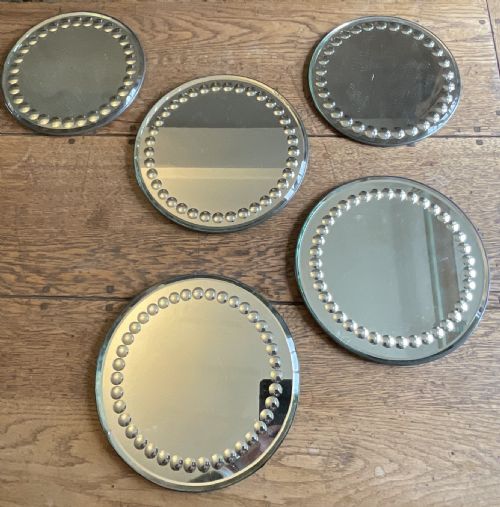


Convex Glass Mirror
A convex glass mirror bends the light of a room into a rounded, continuous sphere.
Convex Glass Mirror
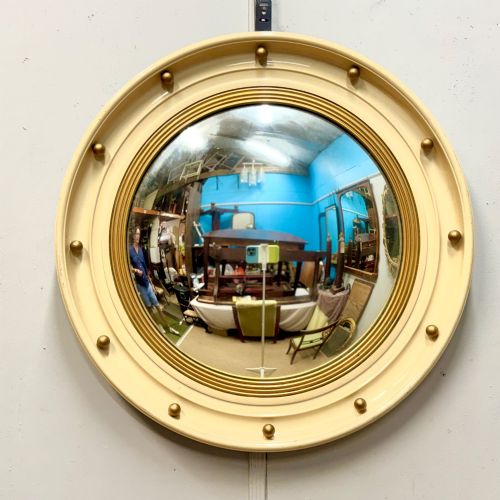
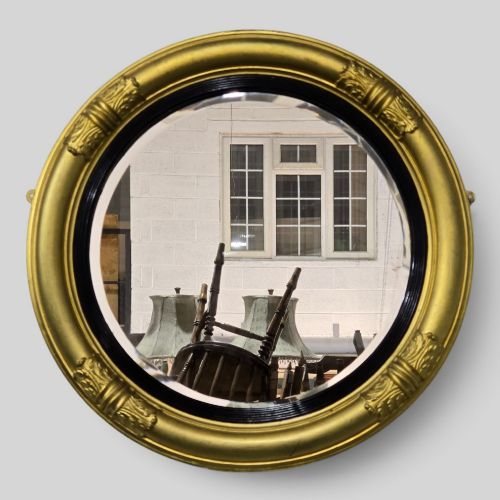
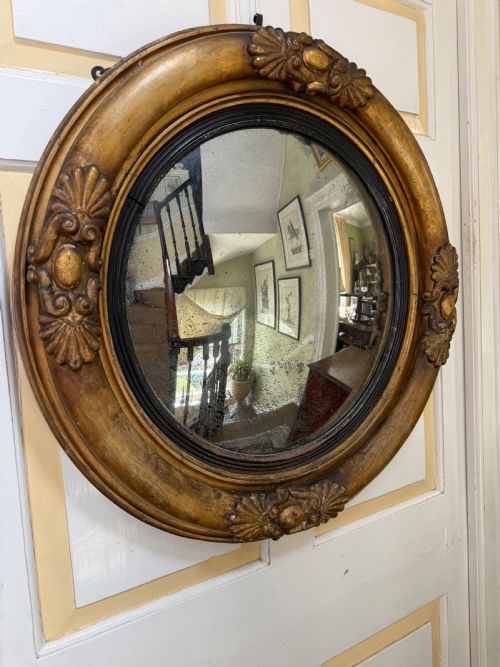
A convex glass mirror presents a rounded, bulging surface that captures a wide, panoramic view of an entire interior. These circular wall hangings appear most frequently in Regency and Victorian designs, alongside later revivals.
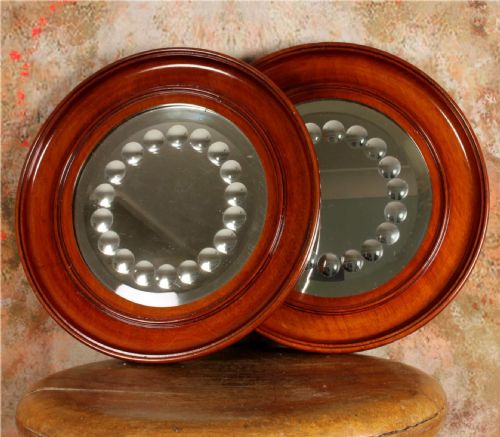
The evidence shows forms ranging from giltwood frames with ball details to velvet-backed wall pieces and round butler or witch mirrors. Wheel barometers containing inset circular mirrors also feature across the nineteenth century.
Buyers encounter period pieces spanning the Regency era up to mid-century fairground and Art Deco examples. Giltwood frames and timber structures dominate the current selection alongside occasional metal or ebonised wood mounts.
Materials and construction
Makers shaped timber, mahogany, and giltwood to form the heavy circular frames that support the curved plates. Gold leafing and paint applied over gesso create the characteristic bright surfaces seen on Regency and Victorian examples.
The distinctive curved mirror plate requires specialised glass-blowing techniques to achieve an even, distortion-free bubble. Velvet inserts and ebonised wood accents provide contrast within the frame construction of nineteenth-century pieces.
Listings feature pieces spanning the Regency period through the Victorian era up to 1930, utilising mahogany, giltwood, and velvet.
Distinctions in quality
The clarity and depth of the original glass plate determine much of the visual character in older pieces. Hand-carved detail on giltwood frames separates standard production from finer cabinet work.
The preservation of original gilding and the integrity of the timber framing influence the overall presentation. Well-proportioned mouldings and intact ball-bearing appliques maintain the balance intended by the original maker.
Coalbrookdale·W.E. Pain of Cambridge·J C Moretti of King's Lynn
The Convex Glass Mirror Glossary
- Convex glass
- Curved mirror plate that bulges outward to reflect a wide-angle view of the surrounding space.
- Giltwood
- Timber frame coated with a thin layer of gold leaf applied over a prepared gesso ground.
- Plateau mirror
- Low, circular looking glass traditionally used as a table centrepiece to reflect candlelight.
- Ebonised wood
- Timber stained or painted black to imitate the appearance of expensive ebony.
- Wheel barometer
- Household instrument featuring a circular dial combined with an inset convex mirror.
Convex Glass Mirror: Frequently Asked Questions
How do I hang a heavy convex mirror?
These pieces require secure wall fixings due to the substantial weight of the timber frame and thick glass plate. Heavy-duty picture hooks attached directly to structural wall studs provide the necessary support.
Position the hanging wire or integrated mounting brackets carefully to ensure the frame remains level. Professional installation is often advisable for larger nineteenth-century examples.
What is the difference between a witch mirror and a butler mirror?
Both terms describe round convex mirrors, but they carry different historical associations. Butler mirrors were traditionally placed to allow staff to monitor a dining room discreetly.
Witch mirrors often refer to similar curved plates historically believed to ward off evil spirits. In practice, makers produced identical circular forms for both domestic and decorative functions.
How should I clean antique mirror glass?
Clean the curved surface gently using a soft, lint-free cloth and mild soapy water. Avoid spraying liquid directly onto the glass to prevent moisture seeping behind the plate.
Keep moisture away from the frame edges, particularly on giltwood and ebonised surfaces. Harsh chemical cleaners can damage fragile nineteenth-century silvering and original gilding.
Why does the reflection appear warped?
The outward curve of the glass compresses a wide field of view into a smaller circular area. This optical property creates a distinct fish-eye effect that distinguishes convex mirrors from flat plates.
Period manufacturing methods often resulted in minor natural imperfections within the glass. These subtle distortions contribute to the authentic character of antique examples.