
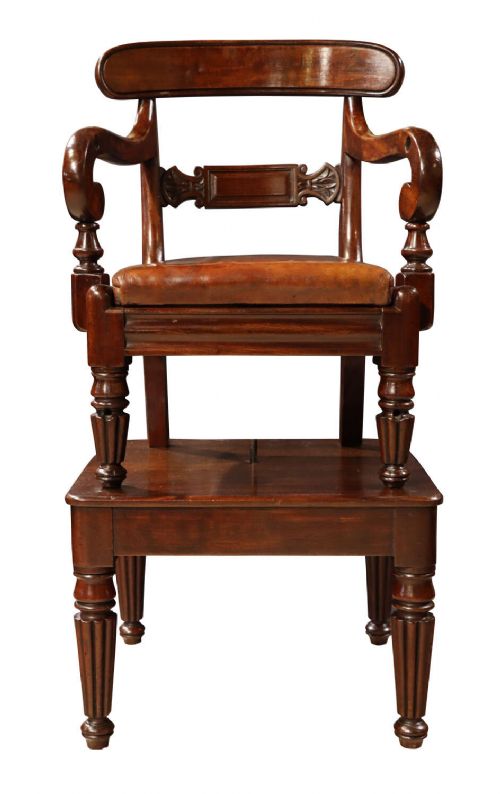


Convertible Child Chair
These convertible child chair pieces are adaptable domestic seats from past centuries, offering clever transformation into low play tables or separate chairs for everyday use.
Convertible Child Chair
When you search for a convertible child chair, you encounter adaptable domestic seating designed to serve multiple functions in historical households. These pieces alter their configuration to function either as a raised highchair for dining or as a lower chair combined with a matching stand or table. Such dual-purpose furniture reflects the practical ingenuity applied to domestic children's seating across several historical eras.
The versions you are most likely to meet on this page span the Georgian, Regency, William IV, and Victorian periods, alongside Scandinavian country examples. Many of these historical items utilise mahogany as their primary timber, while other variants incorporate beech, painted pine, and cane. Formations range from simple tub highchairs to sophisticated metamorphic designs that detach from or pivot upon wooden stands.
How they were made
Cabinetmakers constructed these metamorphic items primarily using solid mahogany, alongside beech and painted pine for regional or country variations. Timber frames were joined using traditional woodworking techniques to ensure stability while supporting a seated child through multiple configurations.
Secondary materials played an essential structural and decorative role, with brass hardware facilitating the mechanical pivots or hinges required for transformation. Caning, fabric, leather, tapestry, and iron components appear across various examples to provide seating support and operational stability.
Listings feature mahogany, brass, cane, fabric, leather, iron, tapestry, and painted pine across Georgian, Regency, William IV, and Victorian periods.
What varies in quality
The distinction between standard domestic utility pieces and finer examples often lies in the sophistication of the metamorphic mechanism and the choice of primary timber. Finer pieces employ dense, well-figured mahogany and intricate joinery that conceals operational joints while maintaining robust daily functionality.
Execution and proportion also define the upper tier of these items, where carved details on stands or arms reflect the prevailing stylistic idiom of the Georgian or Regency eras. Simpler provincial or Scandinavian country pieces rely on straightforward painted pine construction, prioritising utility over decorative cabinetwork.
The Convertible Child Chair Glossary
- Metamorphic
- Furniture designed to transform from one functional form into another, such as a highchair converting into a low chair and table combination. This engineering allowed households to maximise space and utility.
- High chair
- A raised seat designed to elevate a young child to table height during meals. Historical variants frequently incorporated detachable bases or stands.
- Caned
- A seating surface woven from rattan or split cane material. This technique offered a lightweight and resilient support for children's chairs.
- Mahogany
- A durable tropical hardwood widely utilised by cabinetmakers during the eighteenth and nineteenth centuries. Its stability made it suitable for intricate domestic seating.
- Stand
- A separate base frame or table structure upon which a child's chair is secured during elevated use. Detaching the chair from this element creates a lower seating option.
Convertible Child Chair: Frequently Asked Questions
How do these convertible chairs work?
These adaptable items typically feature a detachable stand or a pivoting wooden frame that allows the upper seat portion to separate from a low table base. By lifting or reorienting the seating component, the furniture transitions from a raised dining position to a low chair paired with a play table.
This mechanical versatility provided households with two distinct nursery furnishings within a single footprint. The integration of brass hinges or slotting tenons ensured the transformation remained secure during daily use.
What periods do these chairs date from?
The examples available span several distinct historical eras, ranging from the eighteenth century through the Georgian, Regency, and William IV periods into the Victorian age. Regional pieces from Scandinavian country traditions also appear among these dates.
Stylistic indicators such as leg turning, backrail shaping, and timber selection help distinguish between an eighteenth-century piece and a later nineteenth-century interpretation.
Which woods were commonly used?
Mahogany is the predominant timber found across these listings, valued by period cabinetmakers for its strength and rich grain. Beech and painted pine are also utilised, particularly in country or provincial workshops.
The choice of material often reflects the workshop origin, with dense hardwoods reserved for formal urban commissions and painted softwoods appearing in regional domestic settings.
How should I care for a historic child chair?
Maintenance requires gentle dusting with a dry or slightly damp cloth, avoiding modern chemical polishes that might damage aged wood finishes or historic wax. Maintaining stable indoor humidity prevents timber shrinkage and protects cane or fabric elements.
Because these items were built for active domestic use, regular handling of moving joints should be done with care to preserve original mechanical components.