





Continental Walnut Bureau
A continental walnut bureau brings the warmth of figured timber and the practical craft of the writing desk into any room.
Continental Walnut Bureau
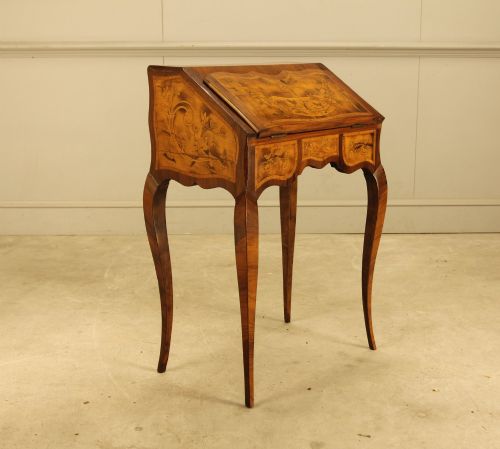
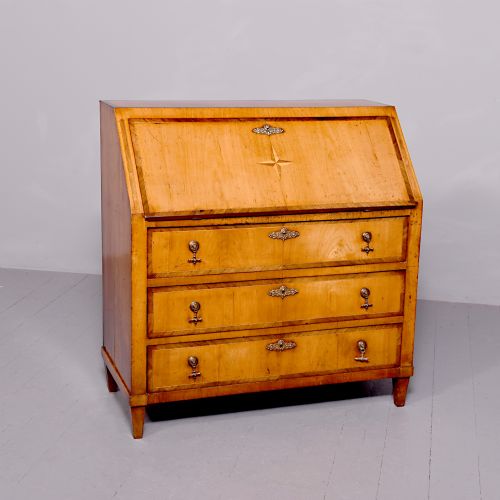
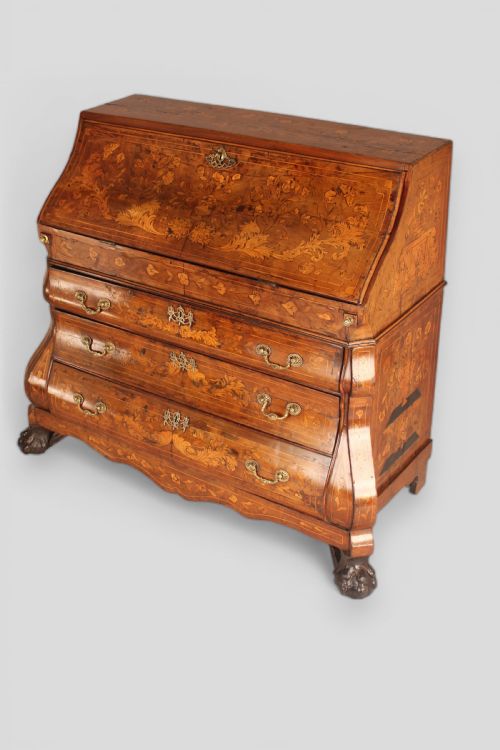
A continental walnut bureau provides a dedicated writing surface combined with secure storage for papers and correspondence, typically taking the form of a drop-front desk or a fall-front secretaire. These pieces originate from various European centres outside Britain, often showcasing regional furniture traditions through distinct structural forms.
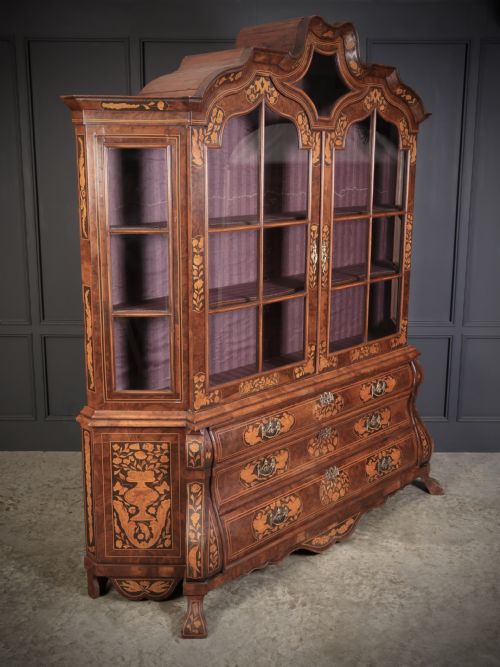
The versions most commonly met on this page include walnut bureaux from the eighteenth and nineteenth centuries, alongside taller bureau bookcases and occasional bombe-shaped examples. Surviving pieces frequently display the decorative techniques favoured in regions such as Germany, Italy, and the Netherlands during the baroque and neoclassical periods.
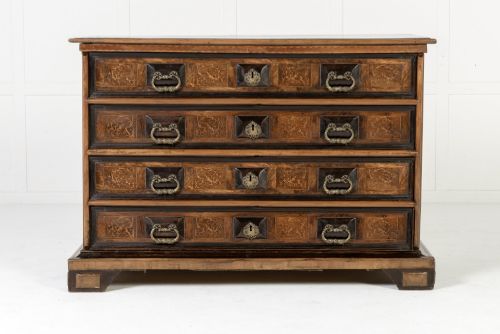
Makers across Europe constructed these desks using rich cabinet woods, applying veneers and marquetry inlay to create striking visual depth on sloping falls and drawer fronts. Whether configured as a compact tabletop cabinet or a large bureau cabinet on stand, each piece combines utility with elaborate continental styling.
Materials and construction
Makers relied on solid walnut and decorative veneers, particularly burr walnut, to cover structural carcases made from secondary woods. These timber surfaces were frequently enhanced with intricate wood inlay and marquetry, utilising contrasting light and dark botanical motifs.
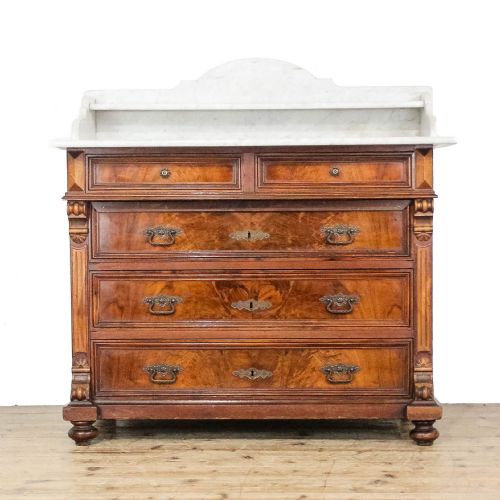
Brass hardware, including cast escutcheons and drawer pulls, served a functional purpose while punctuating the dark grain of the wood. Glass panels appeared in the upper doors of taller bureau bookcases to display books or porcelain behind glazed doors.
Some tabletop writing cabinets conceal a revolving tabernacle inside, ready for confidential dispatch.
What separates the finest examples
The quality of a continental walnut bureau rests upon the selection and matching of the timber veneer, where continuous grain patterns flow smoothly across the fall front and drawers. Superior examples display meticulous marquetry and inlay work that remains crisp and precisely aligned across complex curved or bombe surfaces.
Internal arrangement and secondary drawer construction further distinguish the standard of work, revealing hand-cut dovetails and carefully fitted pigeonholes within the writing compartment. The integration of structural elements, such as fitted cabinet stands or balanced drop fronts, dictates the structural integrity and long-term survival of the piece.
The Continental Walnut Bureau Glossary
- Bombé
- A swelling, outward-curving profile found on drawer fronts and cabinet sides. This bulging contour requires advanced woodworking skill to shape and veneer accurately.
- Marquetry
- Decorative patterns formed by fitting together thin pieces of wood veneer and other materials. Artisans arrange these contrasting elements to create pictorial or geometric designs across the surface.
- Secretaire
- A writing cabinet or desk containing a folding or drop-down writing surface. The term often describes fall-front writing furniture designed for domestic correspondence.
- Bureau bookcase
- A writing desk combined with an upper shelving or cabinet section enclosed by doors. This tall form houses both a workspace and display or storage capacity.
- Escritoire
- A small writing desk or cabinet equipped with drawers and compartments for writing materials. These compact pieces often feature tabletop designs or revolving internal elements.
Continental Walnut Bureau: Frequently Asked Questions
How do I date a continental walnut bureau?
Dating relies on observing structural characteristics, timber preparation methods, and stylistic markers such as baroque curves or neoclassical symmetry. Regional variations in hardware and veneering techniques also help place a piece within the eighteenth or nineteenth century.
Examining the secondary woods inside the drawers provides further evidence of the period and geographic origin. Comparing the decorative marquetry styles to known continental traditions narrows down the era of manufacture.
How should I care for walnut veneer?
Walnut veneer requires protection from direct sunlight and extreme humidity fluctuations to prevent the wood from fading or lifting. Maintaining a stable indoor climate keeps the timber stable and preserves the historical finish.
Cleaning should involve only a soft, dry cloth without the application of silicone polishes or heavy waxes. Periodic gentle dusting prevents particulate buildup on the intricate marquetry surfaces.
Where were most continental walnut bureaux made?
Production centred in major European furniture-making regions, with notable output from workshops in Germany, Italy, and the Netherlands. Each area developed distinct regional interpretations of baroque and neoclassical design.
German makers often produced substantial bureau bookcases, while Dutch cabinetmakers specialised in intricate floral marquetry and bombe forms. Italian workshops frequently incorporated rich walnut timber and architectural details.