



Serpentine Chest Bureau
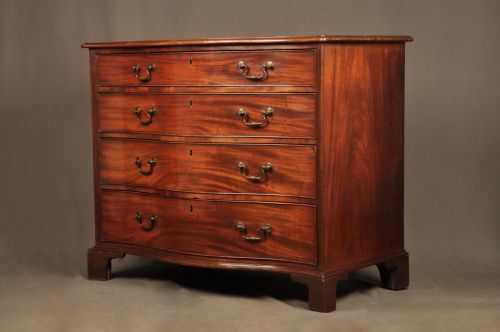
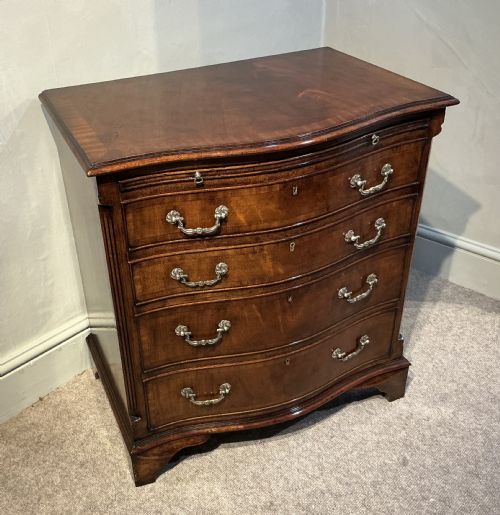
A serpentine chest bureau brings together undulating drawer fronts and a fitted writing compartment, offering a refined solution for practical storage.
Serpentine Chest Bureau
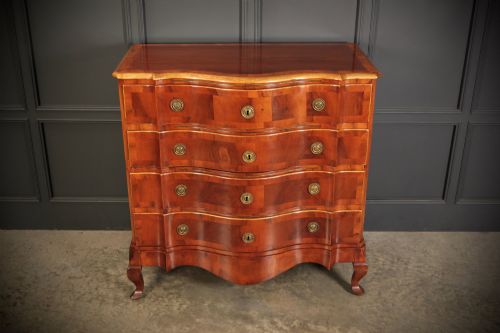
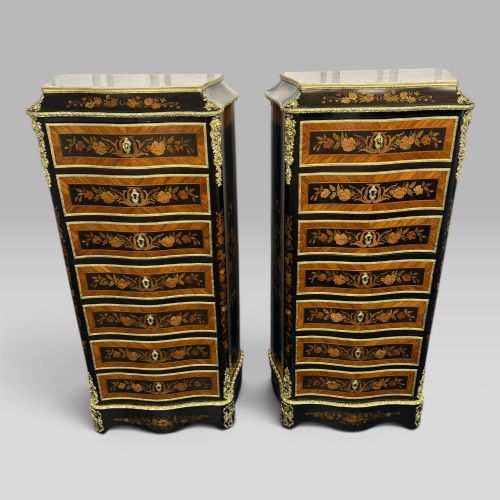
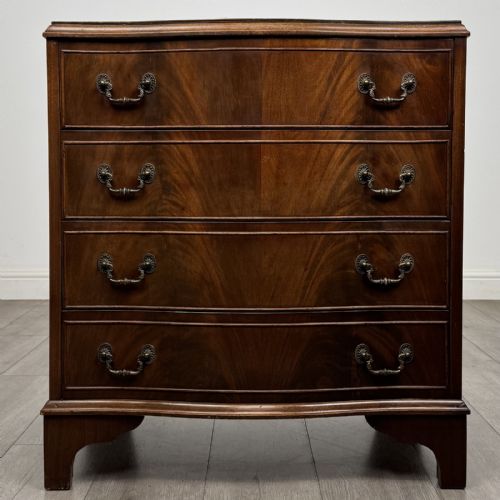
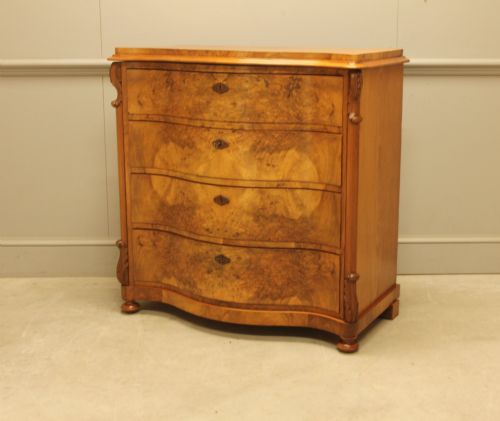
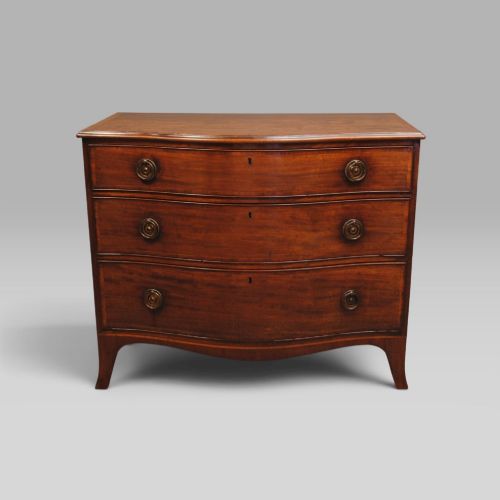
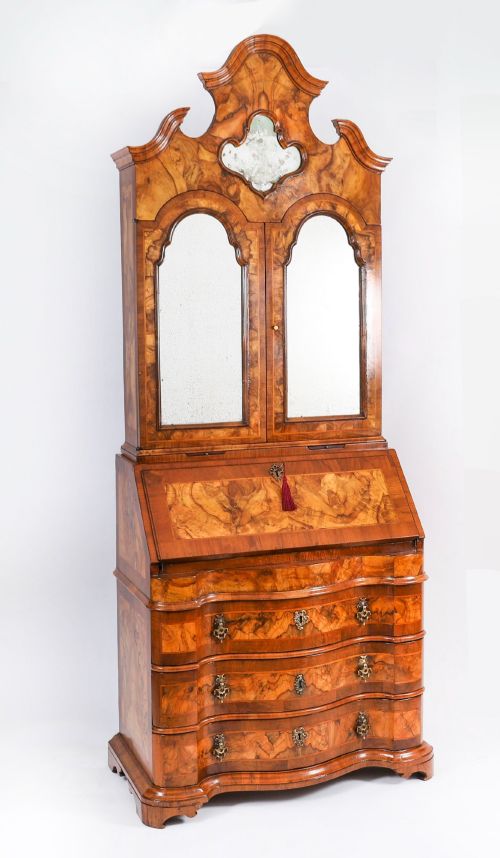
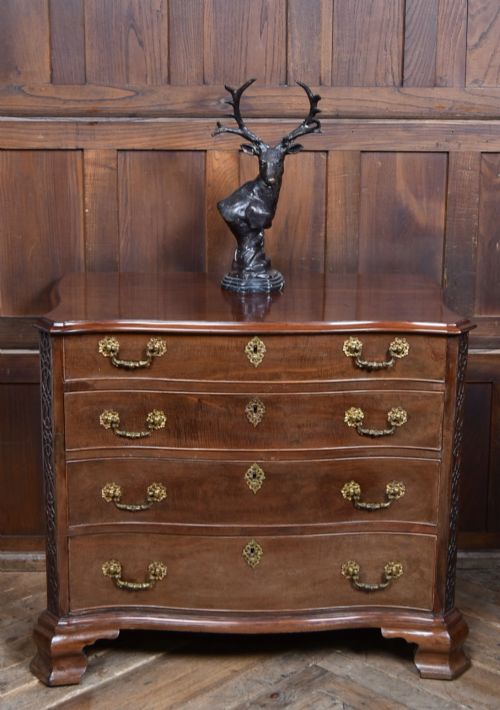
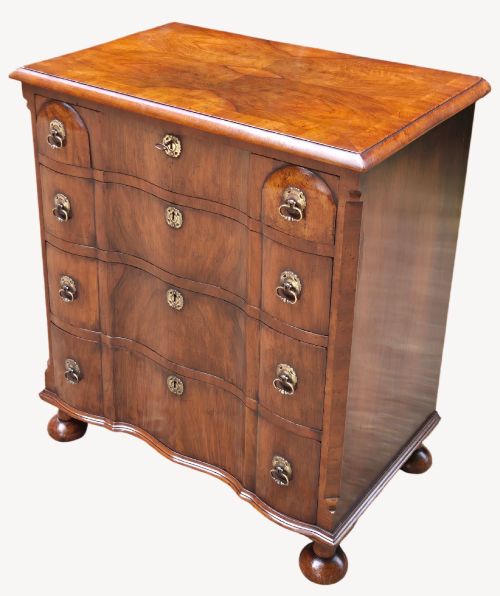
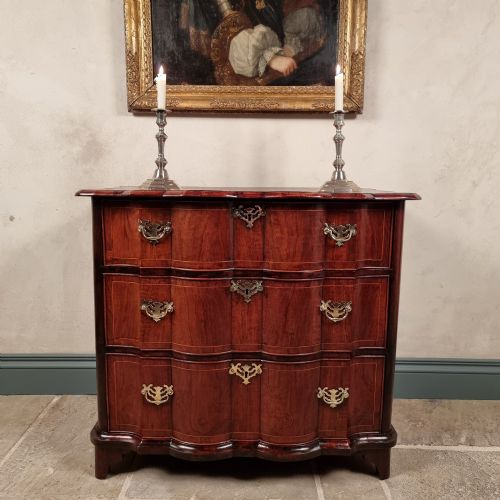
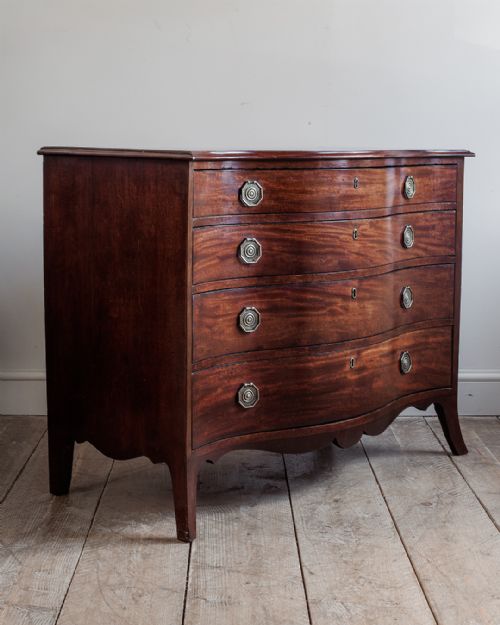
A serpentine chest bureau combines the curving, multi-contoured drawer fronts typical of serpentine chests of drawers with an integrated writing section, often appearing as a bureau bookcase or secretaire bookcase. The pieces in this collection span several periods, most notably the Georgian era alongside later 19th Century, Edwardian, and 20th Century examples.
The form encompasses various related regional and stylistic variants, including Dutch Baroque, Venetian Rococo, French Provincial, and Swedish designs alongside standard British cabinet-making traditions. Buyers encounter everything from compact knee-hole desks and dressing chests to towering bureau bookcases housing glass-fronted upper sections.
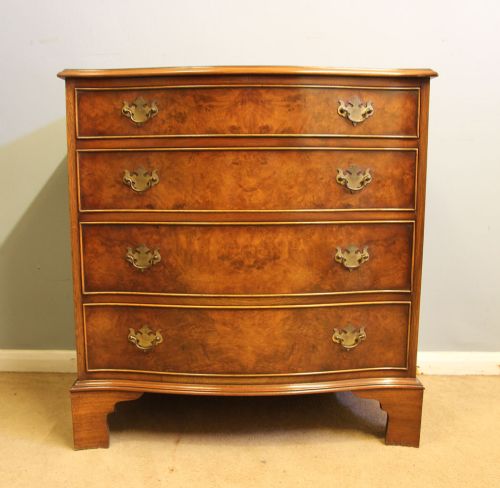
Mahogany remains the dominant timber across the selection, accompanied by walnut, burr walnut, oak, rosewood, and Dutch elm. Details such as crossbanded tops, boxwood inlay, fiddleback grain patterns, and brass hardware frequently distinguish the individual pieces.
Materials and construction methods
Cabinet-makers relied heavily on solid mahogany and walnut, frequently applying fine veneers such as burr walnut onto secondary support woods to create richly figured drawer fronts. Selected pieces incorporate decorative stringing and boxwood inlay to accentuate the sweeping curves of the serpentine profile.
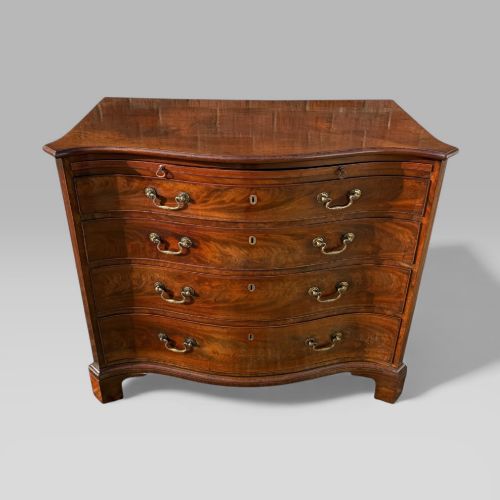
Constructing a true serpentine curve required precise timber selection and joinery, as the wood had to be shaped carefully across the front without compromising structural integrity. Brass handles, escutcheons, and sliding brushing slides completed the functional assembly of these desks and chests.
Serpentine Chest Bureau Retail Price Guide 2026
Typical asking prices for serpentine chest bureau among the pieces listed under this phrase on Sellingantiques today, from the lower quarter to the upper quarter. They describe what is for sale here now, not the wider market.
Several chests hide clever sliding brushing trays just beneath their top surfaces, built for a quick polish of the waistcoat.
Distinguishing quality in cabinet-making
The precision of the undulating serpentine curve dictates the architectural success of the piece, requiring harmonious proportions from the centre sweep to the outer corners. Superior examples display tightly figured timber veneers, such as fiddleback mahogany or burr walnut, matched symmetrically across the drawer fronts.
Internal construction standards differentiate standard cabinet-making from exceptional workshop output, seen in the choice of secondary woods, the dovetailing of drawer carcasses, and the preservation of original brass hardware and sliding writing surfaces.
Maple & Co
The Serpentine Chest Bureau Glossary
- Serpentine
- A front contour characterised by a convex centre flanked by concave curves, creating a gentle undulating wave shape. This profile requires advanced carpentry skills to execute successfully on solid timber or veneered drawer fronts.
- Crossbanding
- A narrow strip of veneer laid around the border of a tabletop or drawer front with the grain running perpendicular to the central panel. It provides a neat contrasting frame to the main timber surface.
- Brushing slide
- A pull-out shelf positioned above the top drawer, traditionally used for dusting garments or writing short notes before full desks became necessary. These slides often feature leather or baize inserts.
- Secretaire
- A desk form featuring a drop-front drawer that conceals a fitted interior of small drawers and pigeonholes. It merges the storage capacity of a chest of drawers with dedicated writing facilities.
- Fiddleback
- A type of wood figure, most commonly found in mahogany, exhibiting overlapping horizontal ripples reminiscent of the back of a violin. This desirable grain pattern catches the light from different angles.
Serpentine Chest Bureau: Frequently Asked Questions
What is a serpentine chest bureau?
A serpentine chest bureau is a piece of furniture featuring curved, undulating drawer fronts combined with a writing compartment or desk surface. These items merge the display and storage aspects of a chest with practical workspace functionality.
They appear in various forms throughout this collection, ranging from compact bedside or dressing chests to tall bureau bookcases featuring glass-fronted upper shelving.
How do I identify a Georgian piece?
Georgian examples typically feature solid mahogany or carefully laid veneers, restrained boxwood inlay, and high standards of cabinet-making joinery. The proportions are balanced, and original hardware such as brass swan-neck handles provides period context.
Makers during the 18th Century and Georgian revival periods utilised distinct regional styles, including Scottish and Lancashire variations alongside standard English designs.
Where were these pieces used historically?
Historically, these items served dual purposes in principal rooms, functioning as bedroom storage for clothing alongside private desks for managing correspondence and household accounts. Bureau bookcases allowed owners to store writing equipment below while displaying leather-bound books above.
Dressing chests and knee-hole desks were similarly placed in private chambers or studies where space efficiency and discreet storage mattered.
How should I care for antique wood?
Antique mahogany and walnut surfaces benefit from stable room environments away from direct heat sources and strong sunlight, which can dry out timber and fade veneers. Regular dusting with a soft, dry cloth helps maintain the polish without building up chemical residues.
Avoid applying modern silicone polishes, opting instead for traditional beeswax applied sparingly when the wood appears dry.