


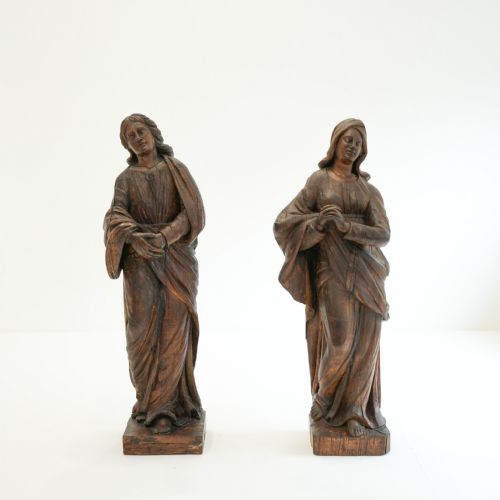


Continental Saint Statue
These continental saint statue pieces bring centuries of devotional art into your interior, offering carved figures rich in historical presence.
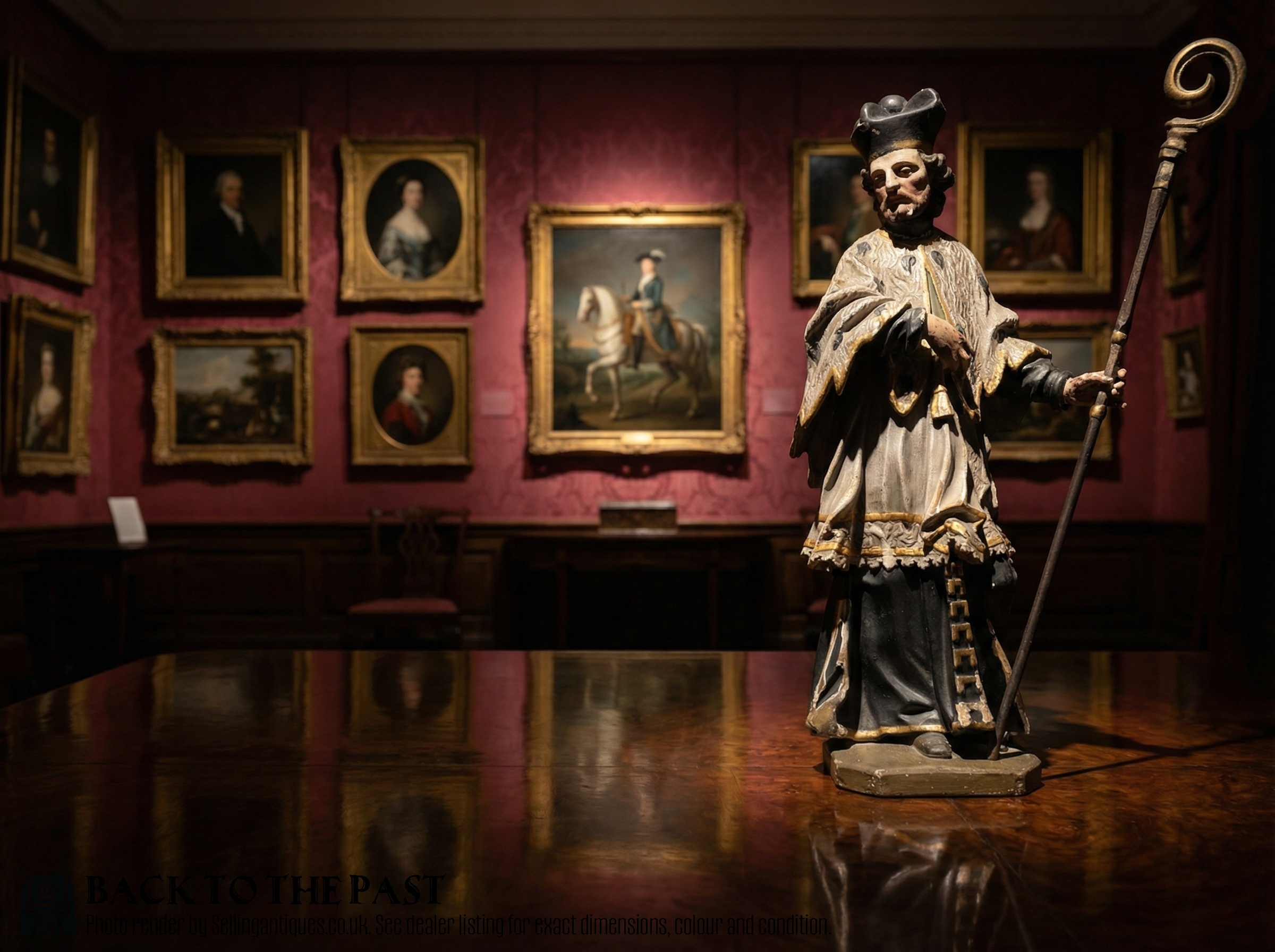
Continental Saint Statue
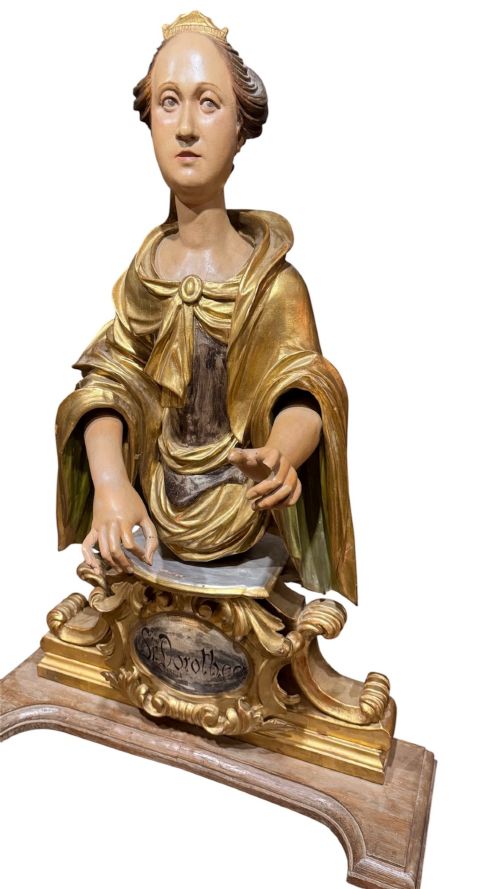
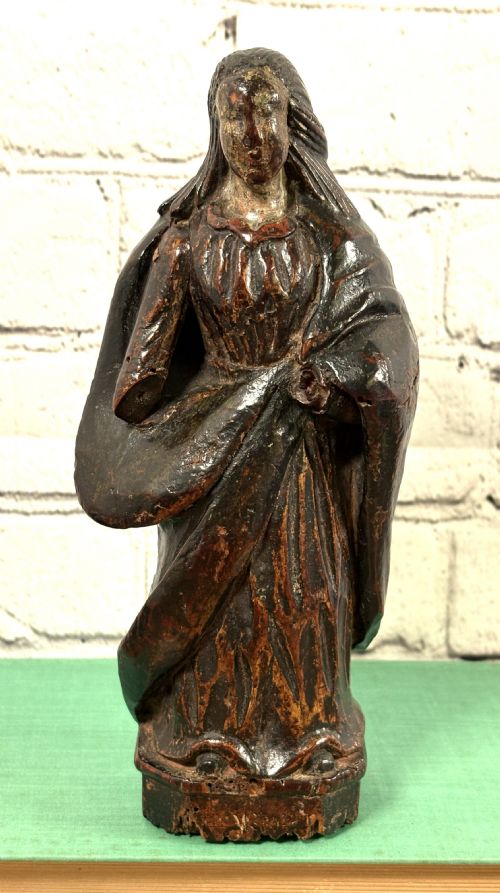
A continental saint statue captures centuries of religious devotion through carved wood representations spanning the sixteenth to the nineteenth centuries. You find figures depicting specific revered individuals like Saint Jerome, Saint Barbara, and Saint Francis, alongside representations of the Virgin Mary and Child.
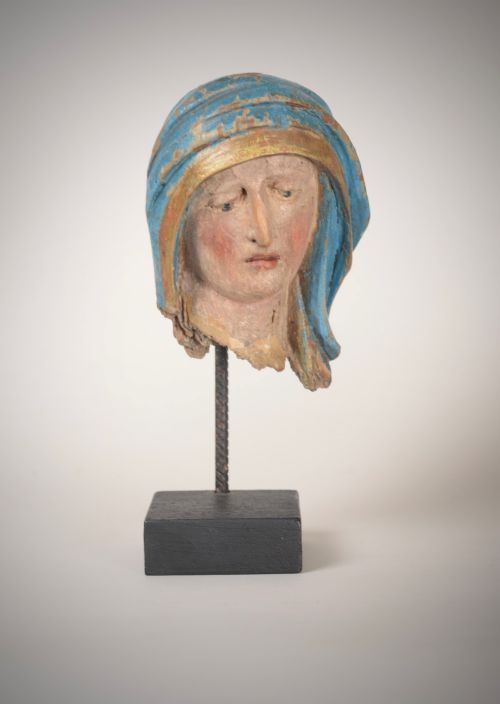
The pieces on this page originate from various European traditions, including German, Italian, and Croatian workshops, reflecting distinct regional carving styles. Forms range from full-length standing figures and pairs of saints to fragments, acolyte candlestick figures, and ecclesiastical sculptures.
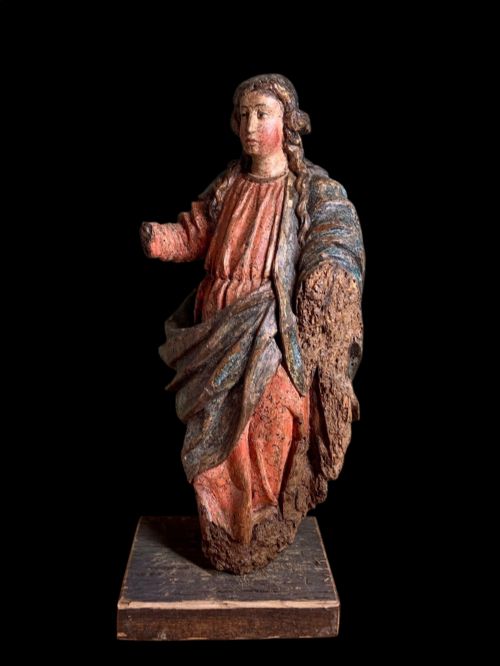
Most examples you encounter date from the seventeenth and eighteenth centuries, executed in the Baroque style with dynamic drapery and expressive postures. Earlier late medieval and Renaissance periods also appear, showing more restrained postures and simpler execution.
Materials and methods of construction
Surfaces were frequently finished with gesso to provide a smooth ground for subsequent decoration. Craftsmen then applied polychrome paint and gold leaf, achieving rich colour and shimmering gilded highlights that enhanced the visual drama of the sculpture.
Listings feature carved wood figures predominantly from the seventeenth and eighteenth centuries, alongside sixteenth-century Renaissance and late medieval examples.
Differentiating quality across examples
The preservation of original surface treatments dictates much of the visual merit. Figures retaining substantial portions of their original polychrome paint and gold leaf offer greater authenticity than those stripped to bare wood or heavily repainted.
The Continental Saint Statue Glossary
- Polychrome
- Decorated in multiple colours. This technique brought statues to life with painted garments and flesh tones.
- Gesso
- A plaster mixture applied to wood surfaces as a preparation for gilding or painting. It created a smooth base for fine detail work.
- Limewood
- A fine-grained timber favoured by carvers for its uniform texture. It allowed artisans to cut intricate details without splitting the grain.
- Baroque
- An artistic style characterised by exaggerated motion and clear detail. It produced dramatic, theatrical figures with swirling drapery.
- Giltwood
- Wood that has been covered with thin gold leaf. This finish provided a luxurious and luminous appearance to religious furnishings.
Continental Saint Statue: Frequently Asked Questions
Where were these statues originally placed?
These figures stood in churches, private chapels, and roadside shrines across continental Europe, serving as focal points for prayer and veneration.
Many larger statues occupied niches on altarpieces, while smaller figures formed part of domestic devotional displays.
How do I identify the subject of a statue?
Saints are typically identified by specific attributes, such as books, palm branches, or animals associated with their traditional stories.
Inscriptions on the base or distinctive costume elements also help determine the identity of the figure.
How should I display a wooden figure?
Position statues away from direct sunlight and heat sources to prevent the wood from drying out and the polychrome surface from flaking.
Stable indoor humidity levels ensure the preservation of both the timber base and the historic paint layers.
How can I tell the period of a carving?
Stylistic indicators such as Baroque movement or Renaissance restraint provide initial clues to the date of execution.
Tool marks, wood type, and the composition of underlying gesso layers further assist in determining the age.