
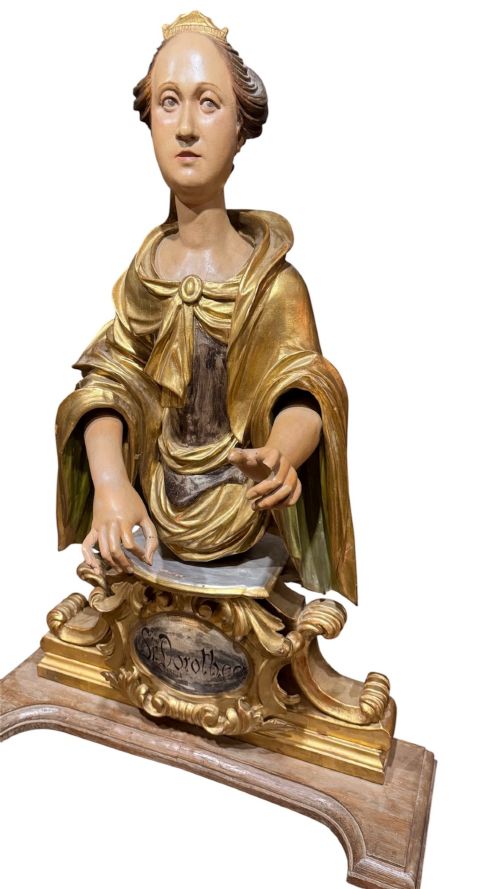
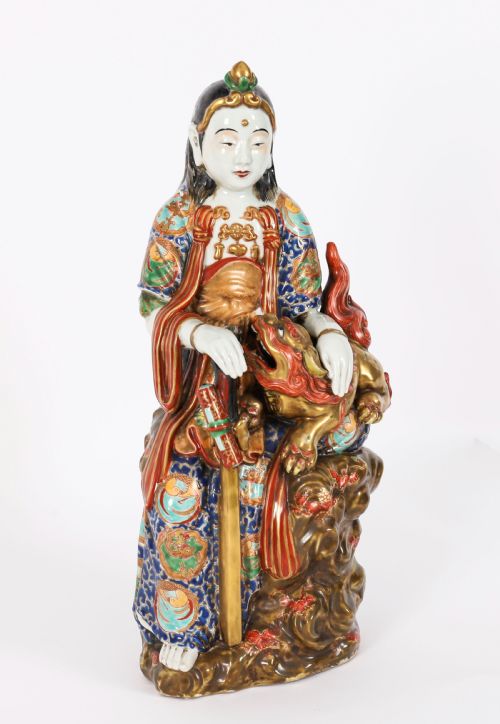
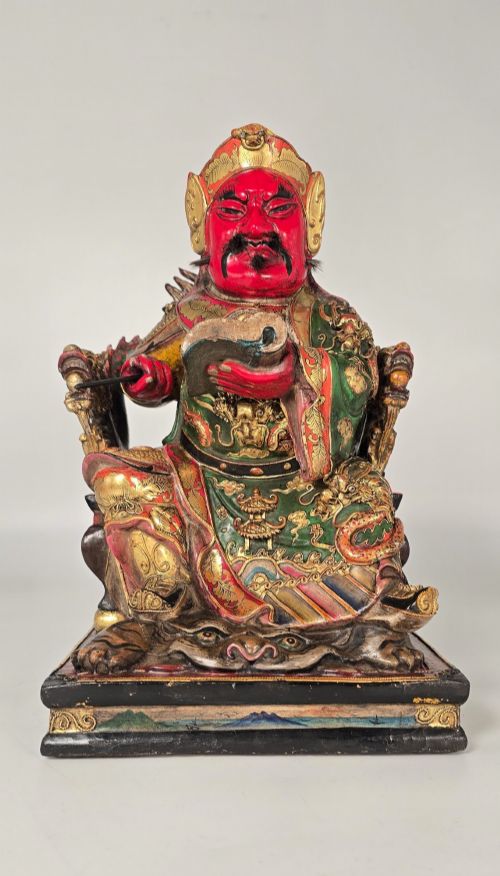


Gilt Polychrome Statue
These gilt polychrome statue examples bring together rich metallic leaf and hand-painted colour across European and Asian traditions.
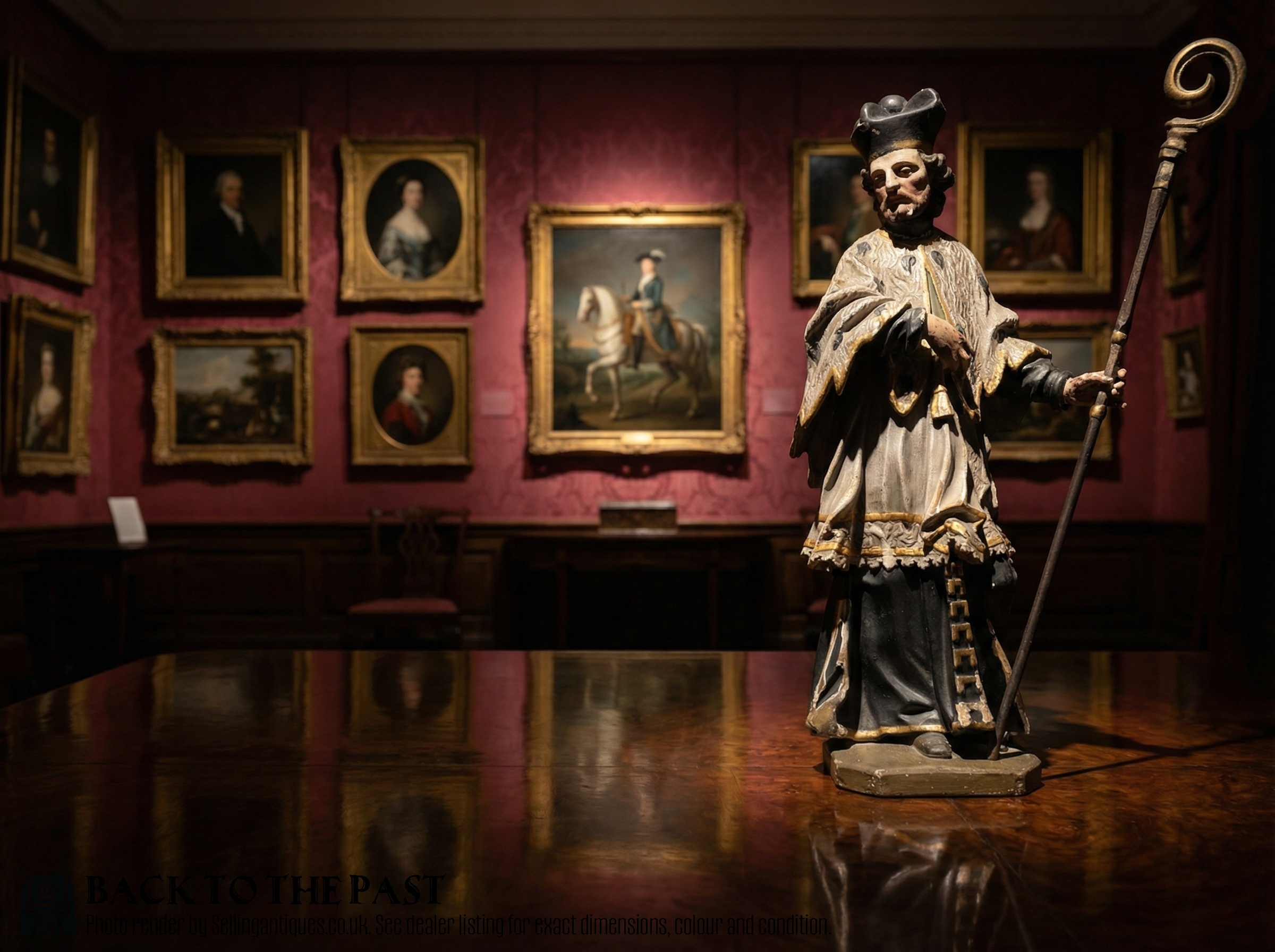
Gilt Polychrome Statue
A gilt polychrome statue combines metallic leaf with painted pigments on a carved or modelled core. When you search for this phrase, you encounter figures ranging from European porcelain shepherdesses to large carved temple guardians.
The most common examples on this page span the eighteenth and nineteenth centuries, including English porcelain figures, Venetian stands, and carved East Asian deities.
Forms vary from delicate tabletop figures to monumental carved wood guardian figures and floor-standing pieces.
Materials and construction
Makers utilised carved wood, gesso, and porcelain as foundations for their work. Wood sculptures received layered gesso before application of gold leaf and vibrant pigments.
Porcelain pieces utilised enamel painting combined with parcel-gilt detailing, fired in kilns to fix the colours permanently to the ceramic body.
Listings feature eighteenth and nineteenth century porcelain figurines alongside carved wood temple statues from China and Japan.
Judging quality in painted and gilded sculpture
The precision of the hand-painting and the preservation of the original gilding dictate the standard of the piece. Crisp facial expressions and delicate brushwork distinguish superior workshops from ordinary production.
Original surfaces retain their historic layers without heavy modern repainting, showing natural wear that confirms age.
Letu and Mauger Paris·Makuzu Kozan II·Samson of Paris·Royal Capodimonte Factory
The Gilt Polychrome Statue Glossary
- Gilt
- Covered thinly with gold leaf or gold paint. This technique adds reflective highlights to carved garments and architectural details.
- Polychrome
- Painted in several colours. The term describes the vibrant pigments applied to wood and porcelain surfaces.
- Okimono
- A Japanese decorative figurine designed for display. These carvings often depict traditional figures with intricate surface decoration.
- Biscuit
- Unglazed porcelain with a matte, porous texture. It provides a smooth surface for detailed sculptural modelling before painting.
- Gesso
- A plaster mixture used as a base for paint and gold leaf on wood. It creates a smooth ground for fine decorative work.
Gilt Polychrome Statue: Frequently Asked Questions
What periods do these statues come from?
The pieces span the eighteenth, nineteenth, and early twentieth centuries. They originate from European and Asian workshops.
Victorian, Georgian, and Meiji period examples appear frequently in the listings.
How were wooden figures prepared?
Artisans carved the wooden core and applied layers of gesso. This created a smooth foundation for the gold leaf and paint.
Temple figures and decorative statues relied on this traditional layering method.
How do I care for a painted statue?
Keep pieces away from direct sunlight to protect the fragile pigments and gold leaf. Dust them gently with a soft, dry brush.
Avoid liquid cleaners that can damage the historic surface layers.
Are these figures made of porcelain or wood?
The selection includes both ceramic and wooden examples. Porcelain figures range from English factory pieces to continental groups.
Wooden sculptures include temple guardians and Venetian decorative figures.