
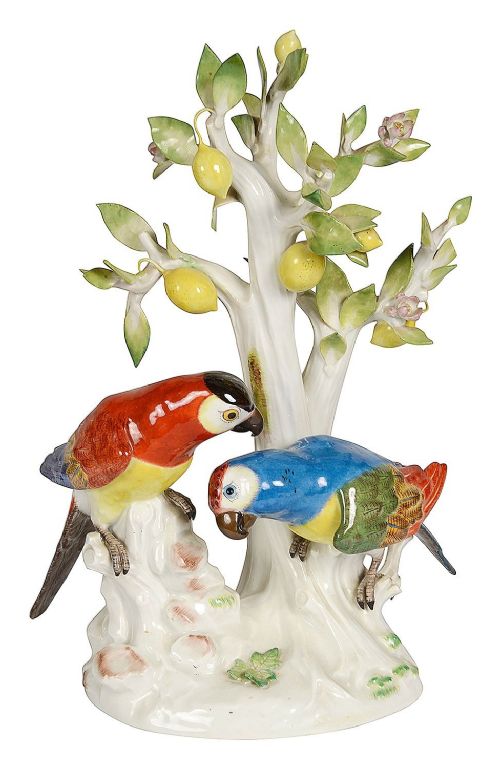


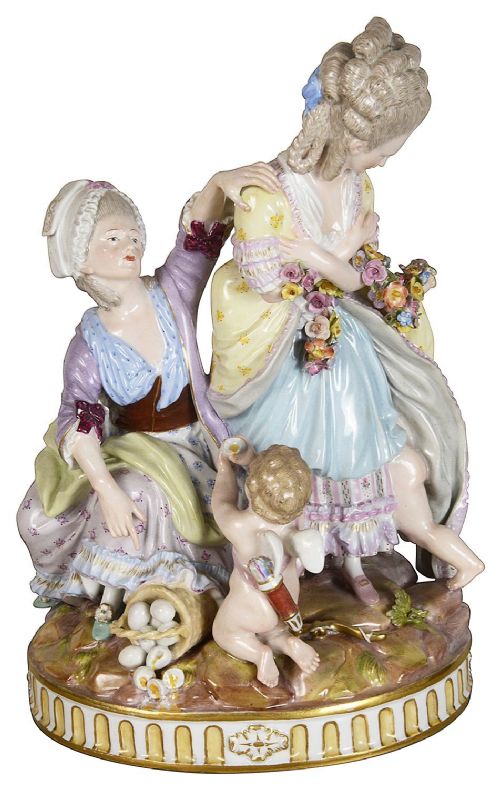
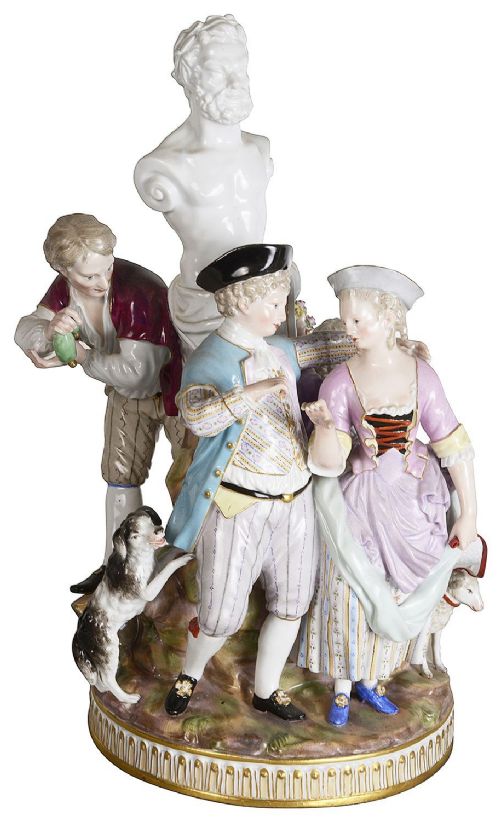


Continental Porcelain Figure Group
These continental porcelain figure groups capture elaborate figural scenes in hard-paste porcelain, offering collectors finely modelled historical and pastoral narratives.
Continental Porcelain Figure Group
A continental porcelain figure group presents multi-figure arrangements modelled in hard-paste porcelain, depicting pastoral scenes, courting couples, and classical subjects. These sculptural groups often function as elaborate centrepiece bowls or freestanding decorative figurines for a mantel or table.
The pieces on this page span from eighteenth-century models to Victorian interpretations, with nineteenth-century German and French examples appearing frequently. Buyers encounter subjects ranging from mythological figures like Venus and Cupid to children in gardens and satirical scenes.
Workshops across Europe produced these works in distinct regional styles, encompassing Rococo Revival tastes and French Empire aesthetics. Collectors select them to bring narrative complexity and intricate ceramic artistry into traditional interiors.
How they were made
Potters shaped these complex compositions using hard-paste porcelain, firing the clay at high temperatures to achieve a dense and durable body. Bisque porcelain also appears, leaving the ceramic unglazed to emphasise the crispness of the modelling.
Artisans applied polychrome enamel painting by hand to clothe the figures and render naturalistic details on foliage and architectural elements. Gold leaf and gilding highlight rococo scrollwork and garment trims, applied before a final low-temperature fixative firing.
Listings feature hard-paste porcelain and bisque porcelain, decorated with enamel and gold leaf across eighteenth- and nineteenth-century periods.
What varies in quality
The delicacy and precision of the hand-modelling distinguish superior figure groups from standard production wares, particularly in facial expressions and hand gestures. Finer examples retain crisp details in modelled lace, foliage, and secondary background elements without softening from worn moulds.
Painting execution dictates visual hierarchy, where skilled brushwork on enamel colours and restrained application of gilding elevate the artistic merit. Earlier eighteenth-century models and pieces from leading manufactories demonstrate superior spatial arrangement and structural stability within the multi-figure composition.
Meissen·Samson Paris·Niderviller·Volkstedt·Ludwigsburg·Eugene Clauss
The Continental Porcelain Figure Group Glossary
- Hard-paste porcelain
- A vitrified ceramic composed of kaolin and petuntse fired at very high temperatures. This material yields a brilliant white body that resists scratching and accepts bright enamel colours.
- Bisque porcelain
- Unglazed fired porcelain that possesses a matte, marble-like texture. It allows modellers to showcase fine anatomical details and facial expressions without glaze obscuring the surface.
- Enamel
- Opaque glass-based paints applied to the fired porcelain surface before a subsequent kiln firing. These colours provide the rich palette seen on garments and natural settings.
- Marcolini Period
- The tenure of Count Marcolini as director of the Meissen factory from the late eighteenth century. Pieces from this era often feature specific blue enamel factory marks.
- Rococo Revival
- A nineteenth-century design movement that revived the asymmetrical scrolls, C-curves, and naturalistic motifs of the mid-eighteenth century. It heavily influences the bases and framing of many Victorian figure groups.
Continental Porcelain Figure Group: Frequently Asked Questions
What is the difference between Meissen and Meissen style?
Pieces attributed directly to Meissen originate from the historic German manufactory and typically carry period-appropriate factory marks beneath the glaze. Items described in the Meissen style are later interpretations or copies produced by other European factories working in the eighteenth-century aesthetic.
Collectors differentiate them by examining paste consistency, painting technique, and the authenticity of the underglaze crossed swords mark. Genuine historic pieces command distinct attention from scholars compared to later revival items.
Where were these figure groups displayed historically?
Owners placed these sculptural groupings on dining tables as elaborate centrepiece displays or arranged them across mantelpieces in formal reception rooms. They served as conversation pieces that reflected the owner's cultural literacy and taste for theatrical pastoral narratives.
In modern settings, collectors house them within glass-fronted cabinets to protect fragile porcelain extremities from accidental contact. Proper placement ensures adequate lighting highlights the fine enamel painting and modelled details.
Are bisque porcelain figures different from glazed ones?
Bisque porcelain is fired without a final glossy glaze, resulting in a matte, tactile surface that resembles white marble. This finish was favoured for neoclassical subjects and intimate domestic scenes because it emphasises sculptural form over bright colour.
Glazed figures receive a glassy coating before firing, creating a reflective surface that protects painted enamel details underneath. Both types require careful handling, but bisque surfaces can be more susceptible to absorbing environmental stains if left unprotected.