




French Ceramic Statuette
A french ceramic statuette brings the elaborate modelling of nineteenth-century Paris workshops and factories directly to a mantelpiece or side table.
French Ceramic Statuette
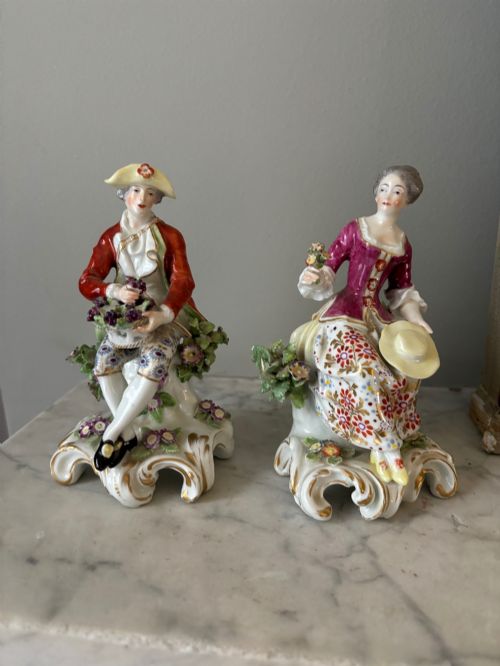
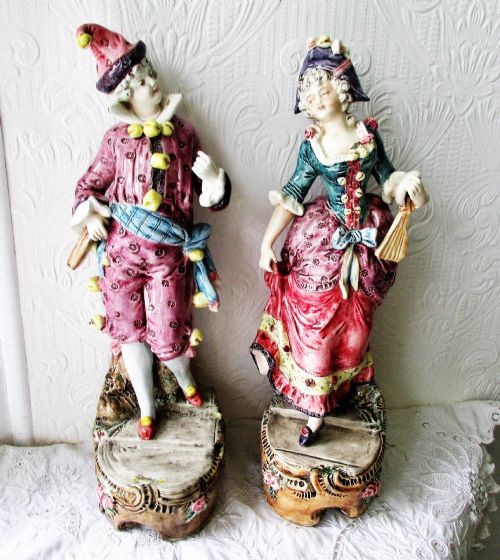
A french ceramic statuette encompasses glazed porcelain, biscuit porcelain, and earthenware figures originating from nineteenth-century France and Victorian workshops. Buyers searching for a french ceramic statuette typically encounter pairs of decorative figures, allegorical groups, and single characters modelled after earlier Derby and Chelsea styles.
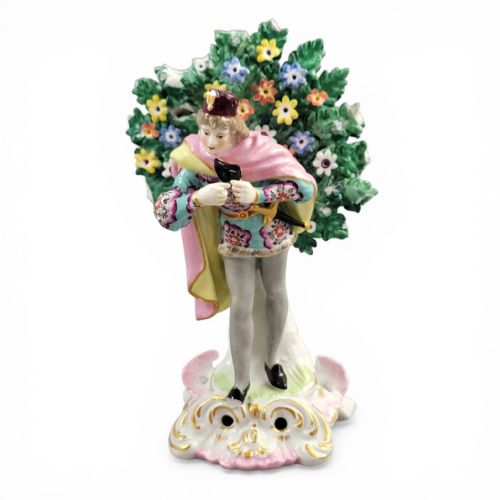
The selection ranges from large painted porcelain pairs and bocage figures to unglazed bisque studies and earthenware carnival subjects. Figures of musicians, actors, putti, and mythological subjects dominate the forms available in this category.
Most examples date from the nineteenth century, spanning periods from the 1850s through to later Victorian interpretations and Art Deco animal studies. Makers such as Samson of Paris, Vion and Baury, and the La Coutille factory populate the broader tradition behind these sculptures.
Materials and production methods
Makers utilised hard-paste porcelain, earthenware, terracotta, and unglazed bisque porcelain to model these figures. Surface decoration frequently involved hand-painted enamels, gilding, and applied gold leaf to accentuate garments and bases.
Many nineteenth-century pieces employed intricate moulding techniques, often incorporating detailed bocage foliage backgrounds or complex multi-figure arrangements. Artisans combined glazed elements with matte bisque finishes to create textural contrast within a single piece.
Object forms include paired decorative figures, portrait busts, animal studies, and table lamps.
Distinguishing quality in the range
The sophistication of the hand-painting and the crispness of the modelled details separate the finest examples from standard production pieces. Superior figures display delicate facial expressions, precise brushwork on polychrome enamels, and carefully applied gilding.
The ambition of the composition also dictates distinction, moving from simple single figures to large paired groups with elaborate bocage or architectural bases. The reputation of the manufacturing house, such as Samson or Vion and Baury, influences the standing of individual works.
Edme Samson·Vion and Baury·Letu and Mauger·Eugene Clauss·Georges Morin
The French Ceramic Statuette Glossary
- Bisque porcelain
- Unglaved white porcelain fired to a matte, tactile finish that resembles marble. This material gained widespread popularity in nineteenth-century France for figurative sculpture.
- Bocage
- An ornamental background of applied foliage, leaves, and flowers surrounding a ceramic figure. It frequently appears in pieces influenced by eighteenth-century English factories.
- Hard-paste porcelain
- A durable ceramic composition fired at high temperatures using kaolin and petuntse. It provides a bright, vitreous body ideal for detailed figure modelling.
- Gilding
- The application of gold leaf or gold paint to highlight architectural elements, clothing edges, or bases. This finish adds a reflective quality to painted ceramic surfaces.
- Hard-paste
- A dense, vitrified ceramic material that resists scratching and supports intricate sculptural forms. It forms the structural core of many Parisian decorative figures.
French Ceramic Statuette: Frequently Asked Questions
How do I identify a Samson figure?
Samson pieces often imitate earlier Chelsea or Derby styles while carrying nineteenth-century Parisian manufacturing characteristics. Look closely at the paste quality and painted details for clues to their true Victorian origin.
Many bear imitation marks of earlier factories, which collectors recognise as the signature practice of the Samson workshop in Paris rather than genuine eighteenth-century production.
Where were these figures displayed?
Nineteenth-century households placed these decorative objects on mantelpieces, consoles, and drawing-room side tables to demonstrate taste and refinement. Pairs were often arranged symmetrically to frame a clock or candelabra.
Larger figural groups and sculptural lamps served as conversational centerpieces within Victorian parlours and formal reception rooms.
How should I clean my ceramic statuette?
Dust the surface gently with a soft, dry brush to prevent the accumulation of particles in delicate crevices and bocage foliage. Avoid using water or chemical cleaners, particularly on unglazed bisque or gilded areas.
Keep the piece away from direct sunlight and fluctuating temperatures to protect painted enamels and prevent stress on older ceramic bodies.