


Continental Painted Commode
A continental painted commode brings vibrant colour and regional charm to a room, offering practical storage disguised as art.
Continental Painted Commode
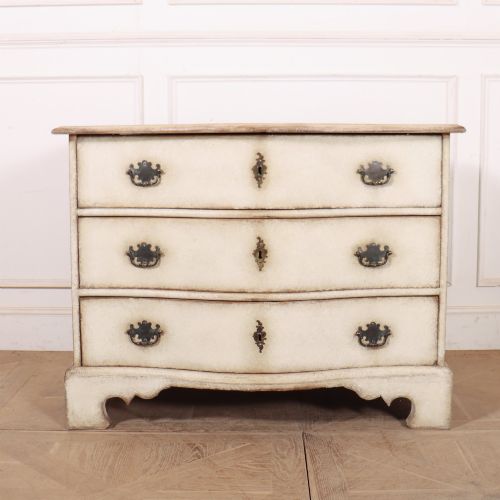
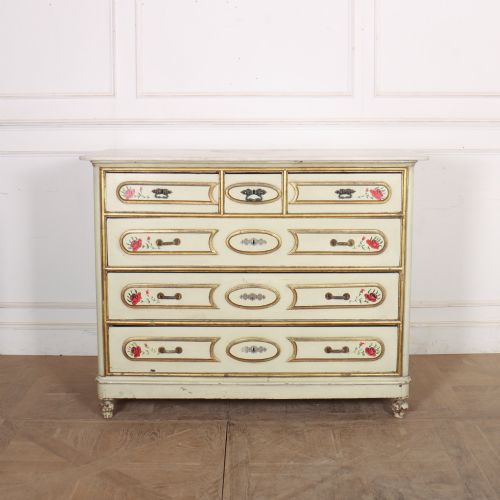
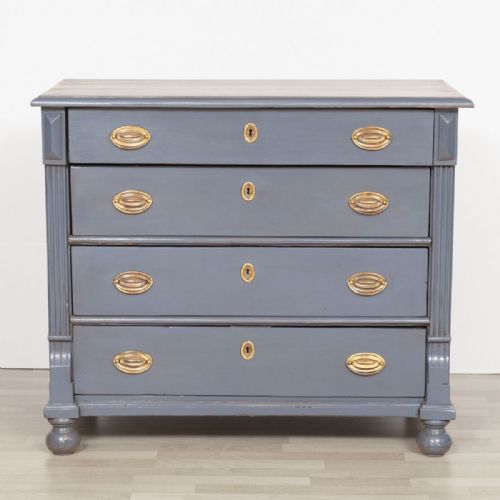
A continental painted commode is a distinct form of chest of drawers, built in various European regions from the eighteenth century onwards. These pieces serve as functional storage units while displaying rich decorative painting characteristic of their geographic origins.
Buyers will encounter several regional interpretations within this group, particularly Dutch, Italian, German, Spanish, Austrian, and Scandinavian pieces. Forms range from straight-fronted chests to serpentine shapes and bombe profiles, occasionally appearing alongside related items such as cupboards.
The materials span from traditional hardwoods like oak and walnut to softer pine and painted wood surfaces finished with gesso and brass hardware. Dating primarily from the eighteenth and nineteenth centuries, these items reflect both elite court styles and simpler folk art traditions.
Materials and construction methods
Carpenters constructed the carcase using timber such as pine, oak, and occasionally bleached walnut, shaping the fronts into serpentine or bombe contours where desired. Surfaces were then prepared with gesso before receiving layers of decorative paint.
Hardware details typically incorporate cast brass handles and escutcheons, while some grander examples feature carved wooden elements or marble tops. The integration of paintwork with structural woodwork defines the physical character of each piece.
Continental Painted Commode Retail Price Guide 2026
Typical asking prices for continental painted commode among the pieces listed under this phrase on Sellingantiques today, from the lower quarter to the upper quarter. They describe what is for sale here now, not the wider market.
Current listings feature eighteenth and nineteenth-century pieces alongside items dated around nineteen hundred and nineteen-twenty.
Assessing quality and craftsmanship
Quality rests in the harmony between the structural joinery of the chest and the preservation of its decorative surface. Pieces exhibiting crisp serpentine or bombe shaping alongside intact original paintwork sit at the higher end of the scale.
The finesse of the regional painting and the integration of period brass fittings or marble tops further distinguish finer examples from standard provincial work.
The Continental Painted Commode Glossary
- Bombe
- A swelling, bulging outward profile characteristic of certain baroque and rococo furniture forms. This convex shaping requires advanced woodworking skill to execute.
- Serpentine
- A furniture front curved in a wave-like shape, turning outward at the ends and inward at the centre. It adds dynamic movement to the piece.
- Gesso
- A plaster mixture applied to wood surfaces as a base for painting or gilding. It provides a smooth, uniform ground for decorative work.
- Provincial
- Describing furniture made in the regions rather than the capital city. These designs often adapt metropolitan fashions using local materials and vernacular techniques.
Continental Painted Commode: Frequently Asked Questions
Where were these commodes made?
These pieces originate from various European workshops across countries such as Italy, Germany, the Netherlands, Denmark, Austria, Spain, and Portugal.
Each region developed distinct stylistic traits, ranging from Italian neoclassical elegance to Dutch bombe forms and Scandinavian folk art traditions.
How do I care for painted wood?
Keep painted furniture away from direct sunlight and extreme temperature fluctuations to prevent the wood and gesso from cracking.
Dust gently with a dry, soft cloth and avoid chemical cleaning agents that might damage the historical surface.
Are marble tops original?
Some continental commodes, particularly Italian examples from the later nineteenth century, were manufactured with fitted marble tops.
These heavy stone surfaces offered a durable, decorative finish suited to grand interiors.