



Continental Landscape Painting
Continental landscape painting captures the scenic vistas and urban views of Europe, drawing collectors who value historic artistry and atmospheric depth.
Continental Landscape Painting
A continental landscape painting represents scenic views, townscapes, and architectural settings originating from various European regions across multiple centuries. Buyers navigating this selection encounter works spanning from the seventeenth century through to the mid-twentieth century, with nineteenth-century examples appearing frequently.
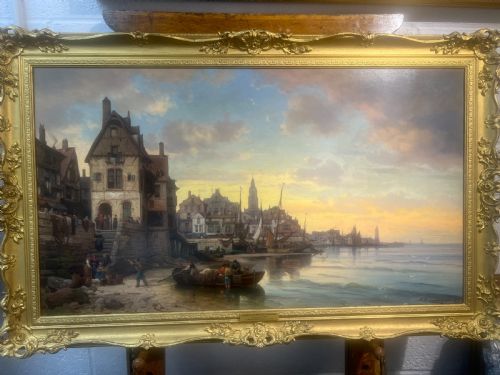
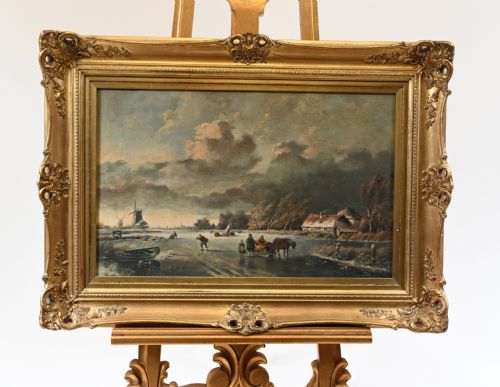
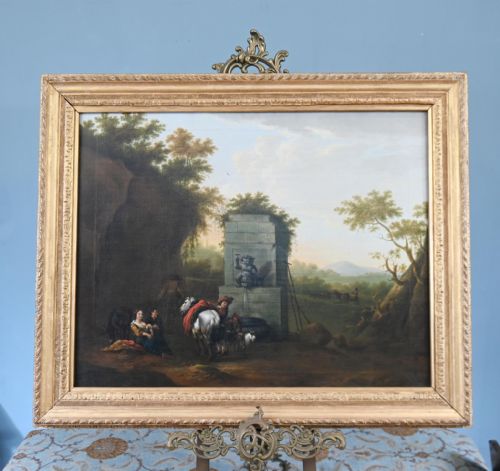
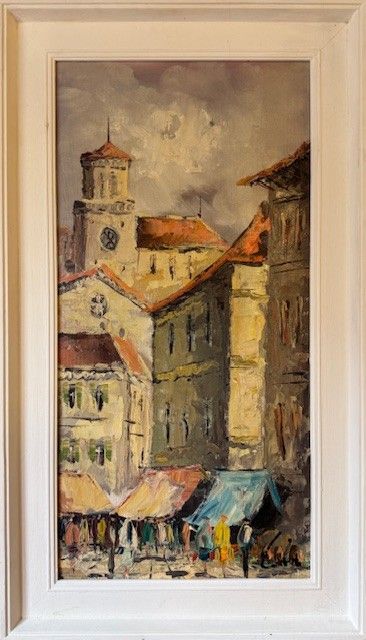
The assortment includes oil paintings on canvas, wood panels, and board alongside watercolours and pencil drawings. Subjects range from tranquil rural scenes with figures and animals to bustling European harbours, markets, and frozen winter quays.
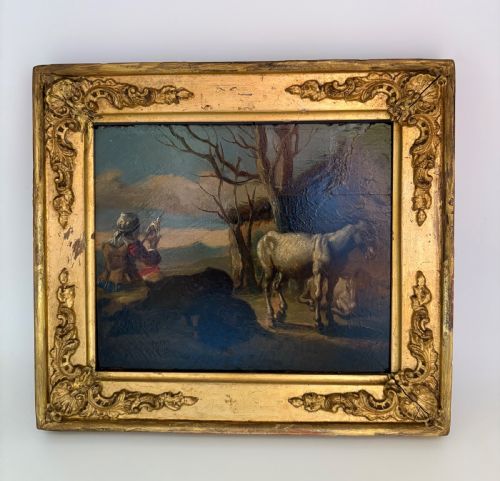
Pieces frequently arrive housed within original gilt frames, gesso mouldings, or carved wood surrounds. These works reflect diverse regional movements, encompassing Dutch school traditions, Italianate scenes, French market squares, and mid-century impressionism.
Materials and methods
Artists painted primarily with oil or watercolour pigments applied to prepared canvas, sturdy wood panels, or paper supports. Canvases and panels provided durable foundations for layered oil glazes, while watercolours captured lighter atmospheric effects on paper.
Frames and decorative elements utilised wood, gesso, and gold leaf or giltwood to create ornate borders. Craftsmen applied gesso layers to wood frames before gilding them, producing the textured metallic finishes seen on many period pieces.
Continental Landscape Painting Retail Price Guide 2026
Typical asking prices for continental landscape painting among the pieces listed under this phrase on Sellingantiques today, from the lower quarter to the upper quarter. They describe what is for sale here now, not the wider market.
Several artists clearly enjoyed painting frozen rivers, providing enduring proof that indoor painters loved a good excuse to imagine being somewhere bracingly cold.
Evaluating quality
Quality rests upon the precision of the brushwork, the management of light and shadow, and the depth of the composition. Superior examples display confident handling of perspective and atmospheric perspective, particularly in complex architectural townscapes and mountainous backdrops.
The harmony between the artwork and its period frame influences the overall integrity of the piece. Intricate original giltwood and gesso frames that complement the painting without overwhelming the canvas indicate higher craftsmanship.
Charles Euphraisie Kuasseg·T Bergman·Philipp Peter Roos·E A Minardo·J W Hogley·R Palnay·William George Meadows·Lewis J Wood·William Raymond Dommersen·Armand Guillaumin·Karel Frans Philippeau·Ludwig Hermann·Allan Douglass Mainds·Christiaan Pieter Snyders·Henry Schafer·George Jones·William Noble Hardwick·Thomas Colman Dibdin·David Roberts·Samuel Prout
The Continental Landscape Painting Glossary
- Continental School
- A term used to describe artists working in mainland Europe rather than Britain. It groups together regional styles from countries such as France, Germany, Italy, and the Netherlands.
- Gesso
- A plaster mixture applied to wood frames or panels as a base for paint or gold leaf. It creates a smooth, durable surface for subsequent decoration and moulding.
- Giltwood
- Wood that has been treated with gold leaf or a metallic substitute. This material was widely utilised for ornate picture frames throughout the nineteenth century.
- Oil on Canvas
- A technique involving pigment suspended in drying oils applied directly to stretched woven fabric. This medium allowed artists to achieve rich colour saturation and subtle tonal gradations.
Continental Landscape Painting: Frequently Asked Questions
What is a continental landscape painting?
These works depict European scenery, including rural valleys, rivers, mountains, and busy urban townscapes. They serve as historical windows into past environments and architectural landmarks.
Created primarily by European artists across several centuries, the category encompasses diverse regional traditions from Dutch winter scenes to sunny Italian harbours.
How do I identify the period?
Dating relies on stylistic clues, framing techniques, and the medium employed by the artist. Nineteenth-century works often feature detailed realism or romantic compositions within ornate gilt frames.
Earlier seventeenth-century pieces frequently utilise wood panels, while later twentieth-century examples embrace impressionistic brushwork and lighter palettes.
Where were these paintings displayed?
Historical collectors showcased these artworks within formal drawing rooms, parlours, and galleries of country houses. They provided urban dwellers with romantic views of distant European travel destinations.
Today, they suit traditional and eclectic interiors alike, functioning as focal points above mantelpieces or within study walls.
Are watercolours different from oils?
Watercolours utilise pigment mixed with a water-soluble binder applied to paper, producing luminous, transparent washes. They typically require protective glass framing to prevent moisture damage.
Oil paintings utilise viscous mediums on canvas or panel, offering greater textural depth and longevity without the necessity of immediate glass covering.