




Continental Inlaid Chest Drawers
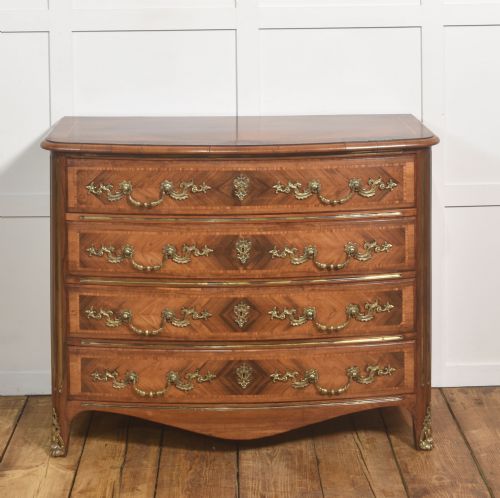
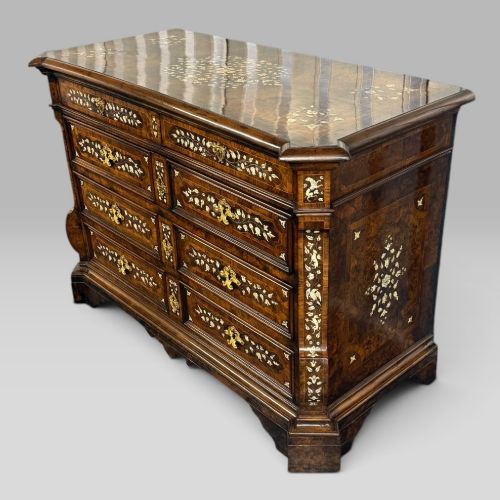
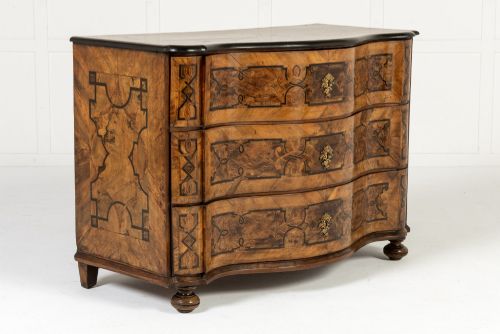
Continental inlaid chest drawers bring striking marquetry and sculptural serpentine forms into a room, offering both generous storage and sophisticated European craft.
Continental Inlaid Chest Drawers
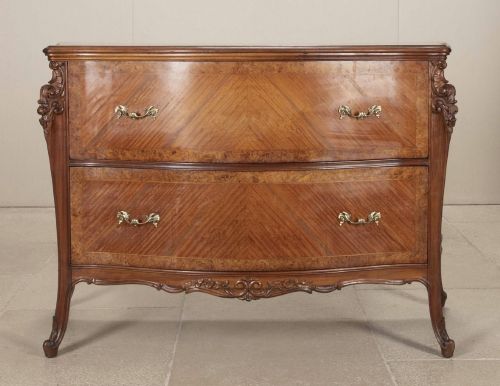
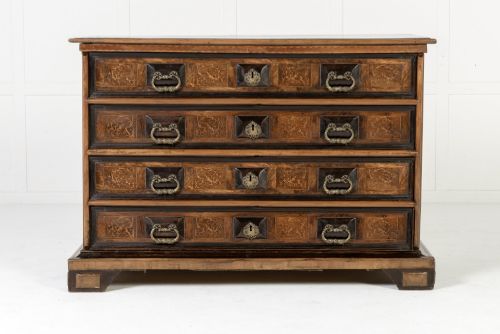
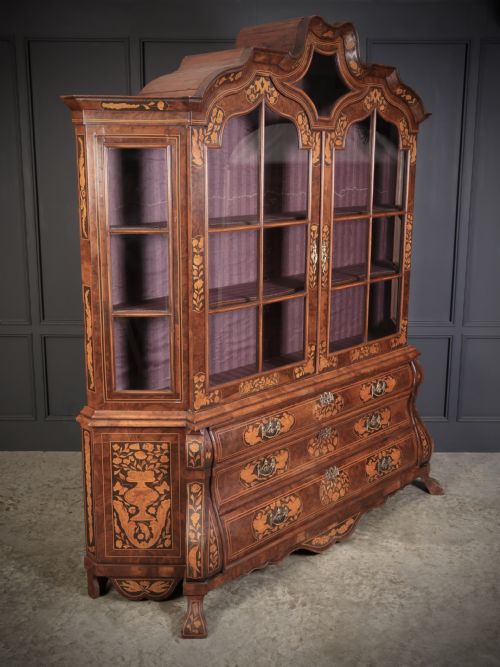
When you search for continental inlaid chest drawers, you encounter substantial storage pieces ranging from 17th century baroque cabinets to 19th century commodes. The selection spans distinct European origins, including Italian, German, French, and Dutch workshops.
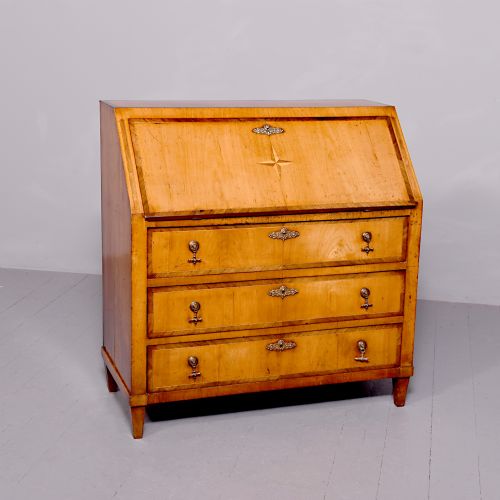
The chest of drawers form dominates the selection, appearing alongside related bureau, commode, and bombe shapes. These pieces serve as focal points in a bedroom or hallway, combining deep storage drawers with elaborate decorative surfaces.
Walnut is the primary timber met on this page, accompanied by fruitwood, rosewood, satinwood, and burr walnut. Many examples incorporate marquetry or parquetry patterns that define the continental aesthetic.
How they were made
Cabinetmakers constructed carcass frames in woods like oak and walnut before applying fine veneers and intricate marquetry details. The surface decoration utilises contrasting timbers such as fruitwood, satinwood, and kingwood to build pictorial or geometric designs.
Listings feature pieces spanning from the 17th century through to 1920, incorporating walnut, fruitwood, marble, and ormolu.
What varies in quality
The refinement of the marquetry design and the precision of the veneer matching separate standard storage pieces from exceptional examples. Finer cabinets display complex floral or geometric inlays executed with diverse timber species across curved surfaces.
Structural complexity, such as pronounced bombe shaping or serpentine drawer fronts, demands greater joinery skill than flat-fronted carcases. The integration of high-status materials like ormolu mounts and heavy marble tops also indicates the ambition of the original commission.
The Continental Inlaid Chest Drawers Glossary
- Commode
- A low chest of drawers or cabinet, frequently associated with 18th century French and Italian styles. These pieces often feature decorative veneer work and marble tops.
- Marquetry
- The art of applying decorative pieces of veneer to a structure to form ornamental patterns or pictures. Craftsmen cut different coloured woods to fit together precisely.
- Bombe
- A swollen, bulging contour found on the sides and fronts of certain continental case pieces. This curved profile requires advanced woodworking techniques to achieve.
- Parquetry
- A geometric mosaic of wood pieces used for decorative floors and furniture surfaces. It creates repeating patterns like squares, triangles, and checkerboards.
- Ormolu
- Gilded bronze mounts and decorative hardware applied to furniture. This material provides metallic contrast against dark walnut and exotic wood veneers.
Continental Inlaid Chest Drawers: Frequently Asked Questions
What is a commode?
A commode is a low chest of drawers, often featuring ornate marquetry and a marble top. These decorative storage pieces originated in France and spread across European workshops.
They function well as statement pieces in living areas or bedrooms, offering surface display space alongside functional drawer storage.
How do I identify bombe furniture?
Bombe furniture is distinguished by its outward-swelling, curved sides and drawer fronts. This distinctive bulging shape requires skilled cabinetmaking to shape the wood veneers accurately.
Such pieces are typically associated with baroque and rococo continental designs from the 18th century.
What woods were used?
Cabinetmakers utilised walnut as the primary structural and decorative timber, supplemented by burr walnut, fruitwood, rosewood, and satinwood. Oak frequently appears as a secondary wood within drawer linings and carcases.
Contrasting timbers allowed artisans to create detailed marquetry and parquetry patterns across the drawer fronts.
Where were these chests made?
These pieces originate from various European regions, with specific representation from Italy, Germany, France, Austria, and the Netherlands. Each region developed distinct stylistic traits, from Dutch marquetry to Italian baroque commodes.
Regional workshops adapted local timbers and prevailing artistic movements into their furniture production.