


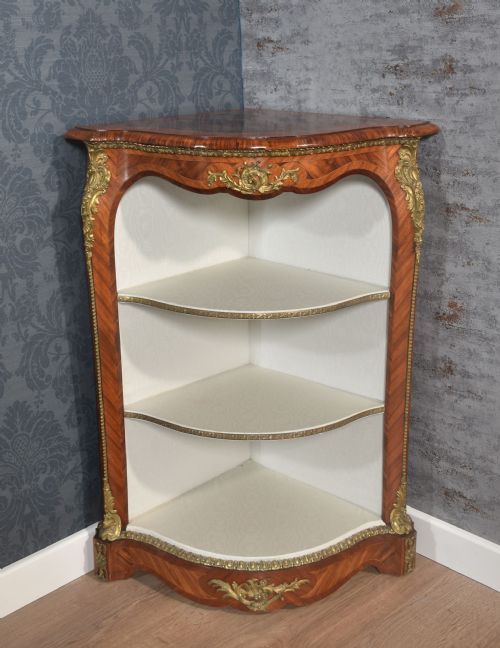


Continental Corner Cupboard
A continental corner cupboard solves difficult room layouts while bringing period craftsmanship into dead space.
Continental Corner Cupboard
A continental corner cupboard is a fitted or freestanding cabinet designed specifically to occupy the ninety-degree angle of a room. The selections here span the eighteenth and nineteenth centuries, taking the form of wall-mounted cabinets, hanging cupboards, and taller side cabinets.
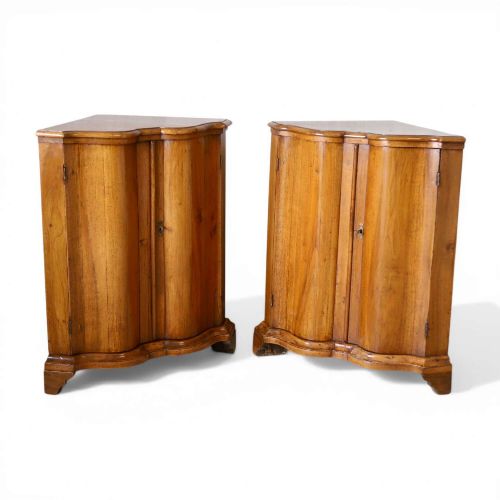
You will encounter regional variations ranging from Italian walnut and Dutch painted surfaces to Biedermeier mahogany and North European oak. These pieces utilise corner space efficiently while providing display or storage behind hinged doors.
The architectural presence of a continental corner cupboard depends on its period, with Italian Baroque, French Rococo, and Grand Regency styles appearing alongside simpler provincial forms. Walnut and painted wood dominate the recorded items.
Materials and construction
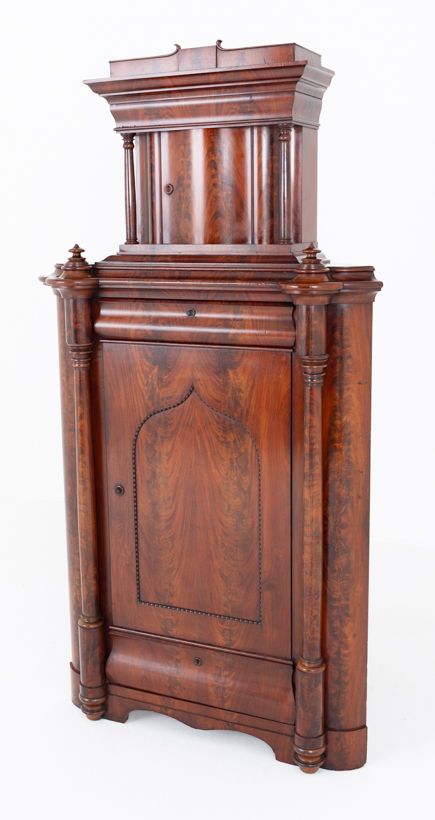
Cabinet makers utilised dense hardwoods such as walnut, mahogany, and oak for carcass construction, often applying marquetry inlay or gilt and ormolu mounts for decoration. Figured veneers provide striking grain patterns across the primary door panels.
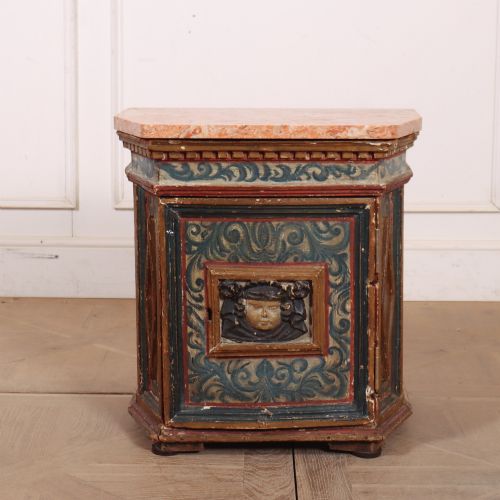
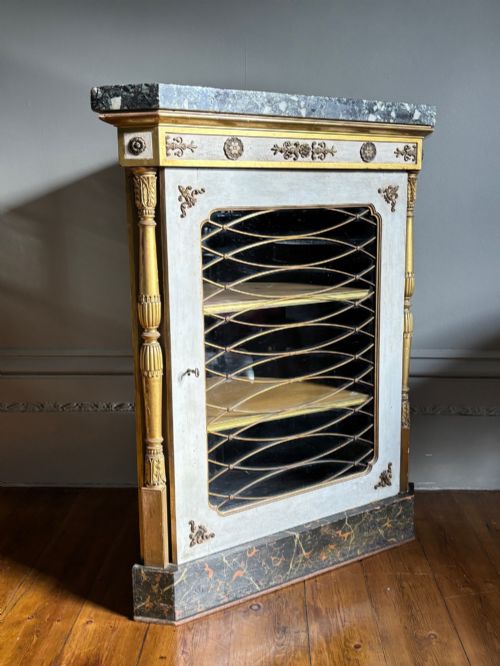
Painted wood finishes appear frequently, often on pieces originating from Italy or the Netherlands, where floral or architectural motifs decorate the surface. Glass panels are integrated into vitrine doors for the display of tableware or curiosities.
Brass hardware, including hinges and escutcheons, secures the doors and corners, while select examples incorporate marble tops or carved crests. Joinery methods rely on pegged mortise and tenon frames suited to hanging or floor-standing weights.
Styles in the archive range from Biedermeier and Italian Baroque to Dutch Rococo and Continental Empire influences.
Judging quality and character
The distinction between standard provincial joinery and high workshop production rests in the crispness of the carving, the selection of figured veneer, and the integration of decorative elements like ormolu mounts. Matching pairs and original painted surfaces command stronger visual presence.
Proportion and execution define the better examples, where cornices and panel mouldings follow classical architectural rules rather than hurried assembly. The retention of original brasswork and glass panels elevates the integrity of the piece.
The Continental Corner Cupboard Glossary
- Vitrine
- A glass-fronted cabinet designed for the display of porcelain, glassware, or small objects. These pieces often feature interior shelving and glazed doors.
- Marquetry
- Decorative veneer work where thin pieces of wood are assembled in geometric or pictorial patterns. This technique embellishes drawer fronts and cabinet doors.
- Ormolu
- Gilded bronze mounts applied to furniture for decorative effect. The metal is cast and chased before receiving a gold amalgam finish.
- Biedermeier
- A Central European style spanning the nineteenth century focusing on clean lines, utilitarianness, and minimal ornamentation. Woods with prominent grain are favoured over heavy carving.
- Escutcheon
- A protective plate surrounding a keyhole. These fittings are often cast from brass and contribute to the decorative scheme of the door.
Continental Corner Cupboard: Frequently Asked Questions
What rooms suit a corner cupboard?
These cabinets fit neatly into unused room angles, making them practical for dining rooms, hallways, and drawing rooms where floor space is limited. Their triangular footprint allows them to turn a blank corner into a display area.
Wall-mounted versions free up the floor entirely, while larger side cabinets anchor the corner at ground level.
How do I identify the period?
Dating relies on stylistic clues such as the sweeping curves of Rococo forms, the geometric simplicity of Biedermeier design, or the heavy moulding of Baroque pieces. Wood selection also points to eras, with walnut favoured in the eighteenth century and mahogany rising later.
Examining the internal construction and backboards provides further clues regarding age and regional origin.
Were they used for display or storage?
Continental corner cupboards served both functions depending on their build. Solid timber doors concealed household goods, while glazed vitrine doors allowed owners to exhibit porcelain and glassware.
Many surviving pieces combine enclosed lower cupboards with upper display shelves.
How do I care for wood surfaces?
Maintenance requires avoiding direct sunlight and maintaining stable room humidity to prevent veneer splitting and wood movement. Regular dusting with a dry cloth keeps the polished finish intact.
Wax should be applied sparingly to unpainted timber surfaces to nourish the grain.