


Biedermeier Storage Cabinet
These pieces are a biedermeier storage cabinet, offering clean architectural lines and rich wood veneers that bring quiet elegance to any room.
Biedermeier Storage Cabinet
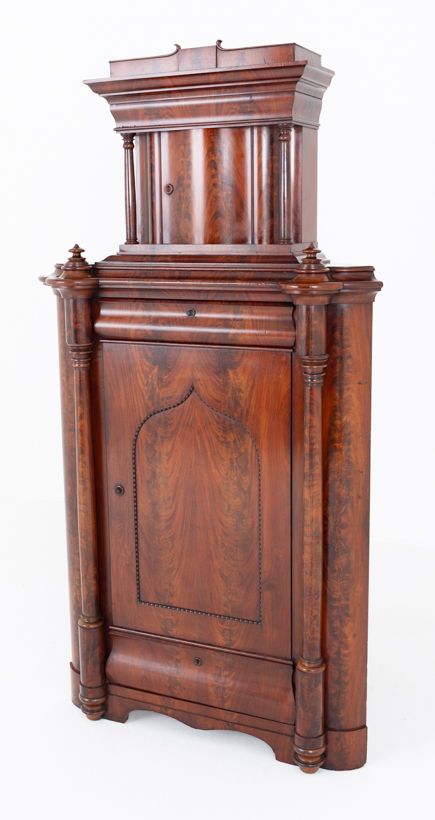
A biedermeier storage cabinet encompasses a range of functional wooden furniture pieces designed to keep rooms orderly while displaying the natural beauty of timber. When exploring this selection, buyers encounter various forms including corner cabinets, secretaire chests of drawers, cupboards, sideboards, and commodes.
Originating largely from Scandinavian and continental workshops, these items span the nineteenth century alongside later revival periods such as the early twentieth century. The typical piece balances utility with restrained ornamentation, reflecting the domestic comfort favoured during the period.
Materials and construction
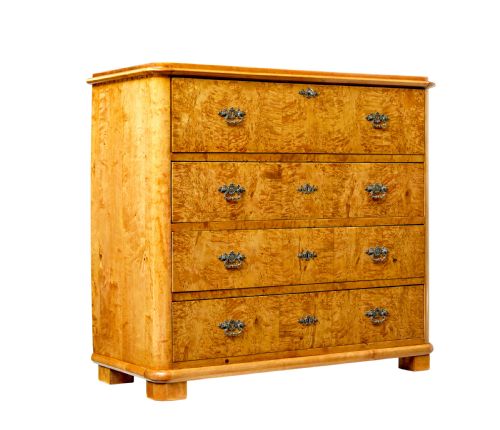
Makers utilised native and exotic timbers, frequently applying flame mahogany veneer, burr birch, satin birch, and walnut over secondary woods like pine. These carefully selected veneers create striking grain patterns across flat drawer fronts and cabinet doors.
Metal mounts in brass occasionally accent the timber framework, whilst specialised internal fittings such as secretaire drawers provide multi-functional storage. The construction relies on solid joinery designed to support heavy timber structures over generations.
Several pieces include secret compartments hidden behind drop-front writing flaps, ready to guard small treasures.
Assessing quality and execution
Superior examples demonstrate meticulous matching of wood veneers across a facade, ensuring grain patterns mirror or flow continuously from one drawer to the next. The choice of timber also dictates the visual depth, with highly figured burr or flame veneers commanding greater attention.
The refinement of the silhouette, from simple rectilinear cupboards to serpentine shapes and fitted interiors, marks the distinction between standard utilitarian items and masterworks of the style.
The Biedermeier Storage Cabinet Glossary
- Secretaire
- A desk form featuring a drop-front writing flap that conceals small drawers and pigeonholes inside. This clever inclusion allows a cabinet to serve dual purposes for storage and correspondence.
- Veneer
- A thin layer of figured wood applied over a stable base timber to create decorative surfaces. Master craftsmen selected burr and flame cuts to maximise visual impact.
- Commode
- A low chest of drawers or cabinet designed for domestic storage. These pieces often feature prominent grain patterns and restrained proportions.
- Serpentine
- A gently undulating curved shape applied to the front of a cabinet or chest. This contour requires skilled woodworking to achieve smooth, flowing lines.
Biedermeier Storage Cabinet: Frequently Asked Questions
What is a biedermeier storage cabinet?
A biedermeier storage cabinet is a nineteenth-century or revival wooden furnishing characterised by clean lines, minimal carving, and prominent wood veneers. These pieces prioritize domestic utility and natural timber beauty over excessive ornamentation.
They appear in various forms, including corner cupboards, sideboards, and secretaire chests, making them adaptable for modern living spaces.
How do I use one at home?
These cabinets provide practical storage for dining rooms, hallways, or living areas while serving as strong focal points. The flat tops and surface areas also accommodate lamps, mirrors, or decorative objects.
Interior compartments, such as those in fitted cupboards and secretaire chests, help organise paperwork, glassware, or tableware efficiently.
Which woods were commonly used?
Builders relied heavily on birch, mahogany, and walnut, frequently utilising striking veneers like flame mahogany or burr birch. Secondary woods such as pine often formed the internal framework and drawer linings.
Some examples incorporate contrasting brass mounts or bleached bird's eye maple to highlight the timber grain.
How do I distinguish different periods?
Nineteenth-century originals reflect the primary Biedermeier and Scandinavian country aesthetics, focusing on unadorned structural clarity and rich wood figuring. Later pieces from the early twentieth century often draw upon Empire revival styles, utilising brighter bleached woods or classical brass accents.
Examining the construction methods, interior fittings, and veneer types helps clarify the era of manufacture.