





Continental Carved Saint
A continental carved saint brings centuries of devotional devotion and master woodcarving directly into a modern room.
Continental Carved Saint
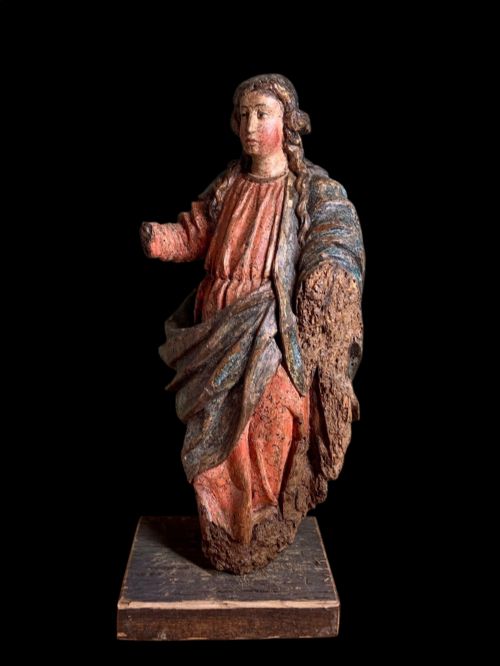
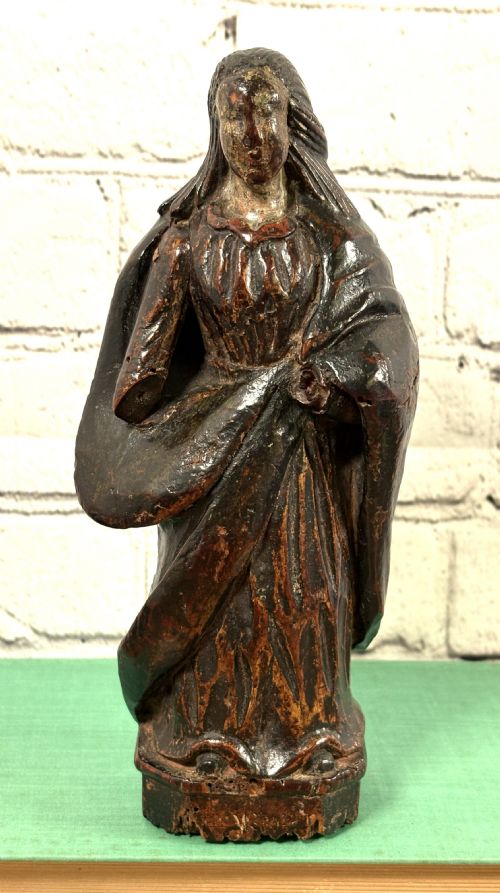
A continental carved saint represents religious figures from various European traditions, spanning from the late medieval period through the nineteenth century. These sculptures depict specific holy figures such as Saint Jerome, Saint Barbara, Saint Francis, and the Virgin Mary with Child.
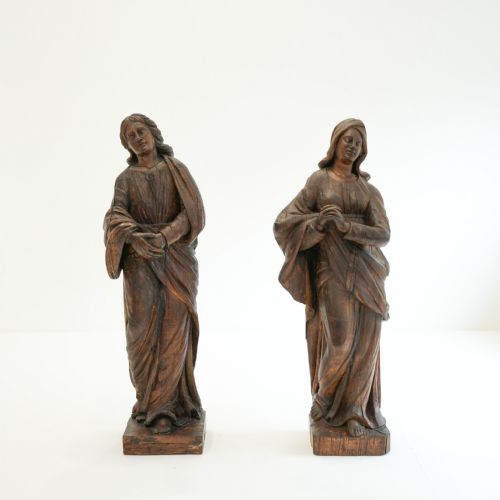
Originating across continental workshops, these pieces encompass distinct regional styles from Baroque expressions to Gothic Revival and Renaissance aesthetics. Collectors encounter both standalone statues and paired figures originating from churches, domestic shrines, and private chapels.
How they were made
Surface decoration frequently involved applying gesso as a ground layer before adding polychrome paint and gold leaf. This combination of carved wood, pigment, and metallic leaf created rich visual depth and lifelike presence for liturgical settings.
Listings feature oak, limewood, and applewood substrates finished with gesso, polychrome paint, and gold leaf.
What varies in quality
The caliber of a carving depends largely on the anatomical confidence of the sculptor and the expressiveness achieved in the hands, face, and drapery folds. Superior pieces display dynamic movement and nuanced detailing, whereas simpler works remain rigid and formulaic.
The preservation of original surface finishes, including authentic polychrome paint and gold leaf, significantly elevates the standing of a piece. Later overpainting or stripped surfaces alter the visual integrity and historical character of the sculpture.
The Continental Carved Saint Glossary
- Polychrome
- Painted in several colours. This surface treatment brings depth and realism to carved wooden figures.
- Giltwood
- Wood that has been decorated with gold leaf or gold paint. It reflects candle light effectively in sacred spaces.
- Limewood
- A fine-grained timber favoured by European woodcarvers. It allows for crisp, detailed undercut work without splitting easily.
- Gesso
- A plaster mixture used as a smooth base for painting and gilding. It adheres firmly to wood surfaces.
- Baroque
- An ornate artistic style prominent in the seventeenth and eighteenth centuries. It emphasises drama, movement, and rich ornamentation.
Continental Carved Saint: Frequently Asked Questions
How were these figures used originally?
These figures stood in churches, monastic chapels, and domestic shrines as focal points for private prayer and public liturgy. They inspired devotion and commemorated specific holy patrons.
Smaller examples and miniatures also served travellers or decorated private household altars across European regions.
How do I care for a wooden saint?
Keep wooden sculptures away from direct heat sources and sudden temperature fluctuations to prevent the wood from splitting. Maintain stable indoor humidity levels.
Dust gently with a soft, dry brush and avoid applying modern liquid polishes or cleaning agents to historic painted surfaces.
How can I tell the period?
Dating relies on stylistic clues such as the theatrical drapery of the Baroque era or the restrained folds of earlier gothic traditions. Tool marks and the ageing process of the underlying timber also offer evidence.
Examining the composition of the gesso and pigment layers helps confirm the historical context of the finish.
Are these figures always painted?
Many figures retain traces of their original polychrome paint or gold leaf, but others were left as exposed natural wood. Oak and limewood pieces often display the bare grain depending on regional preferences and later conservation.
Some sculptures were stripped of their paint during subsequent centuries, altering their original appearance.