


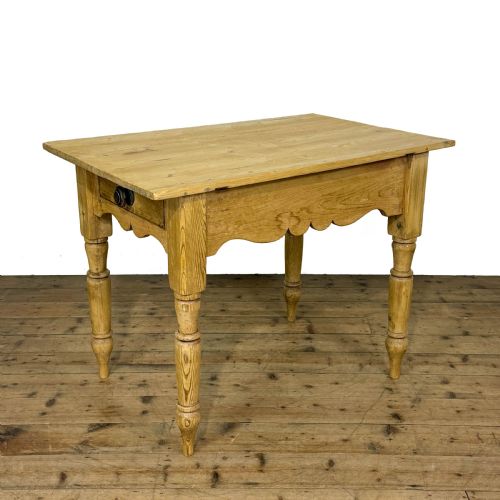
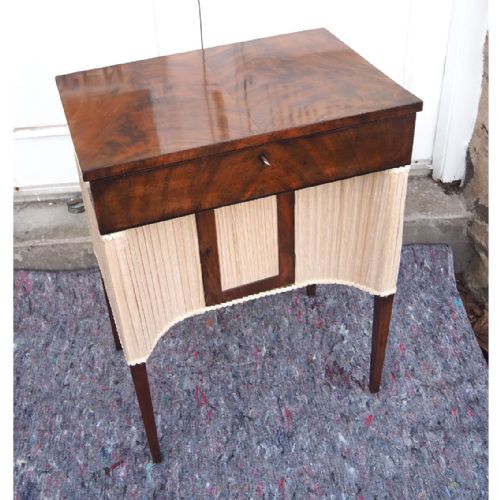
Compact Wooden Table
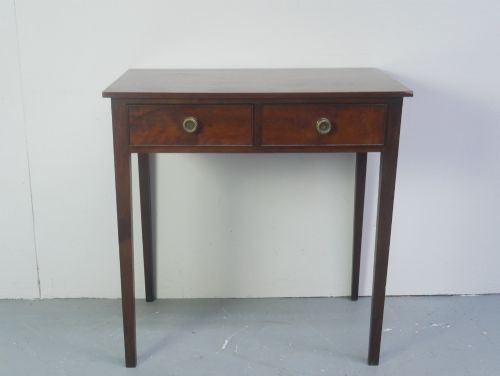
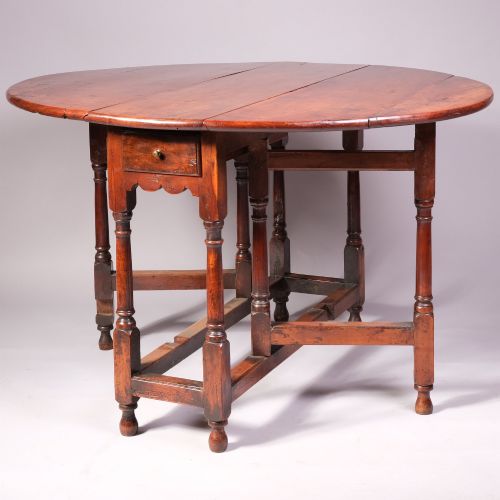
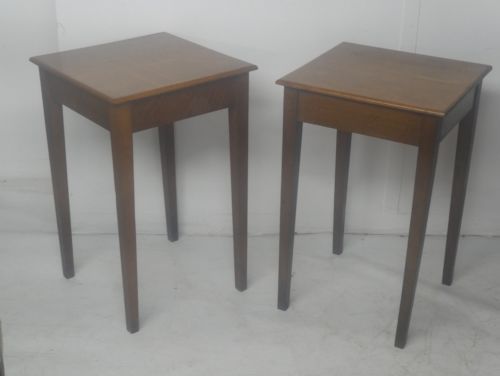
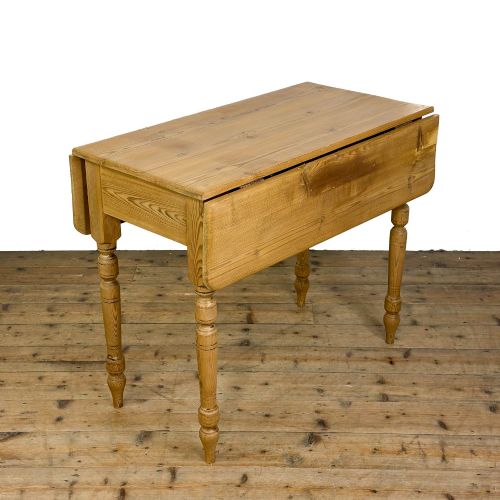
These compact wooden table examples offer clever surface space and folding leaves suited to smaller rooms across multiple past periods.
Compact Wooden Table
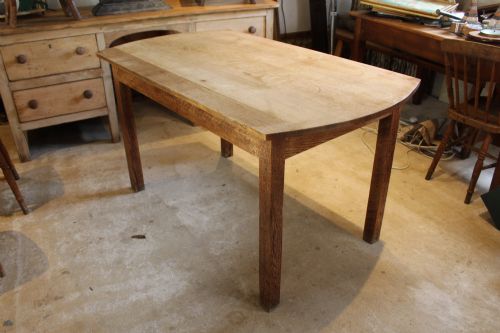
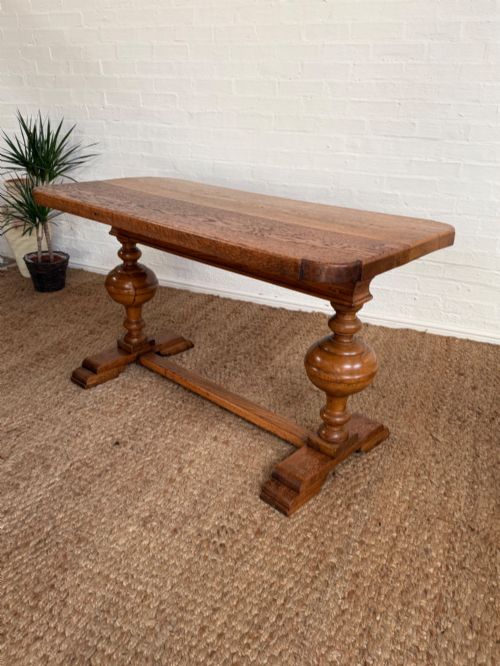
A compact wooden table solves the demand for surface area in restricted spaces through intelligent engineering like drop leaves, gateleg actions, and nests. When you search for a compact wooden table, you meet a range of historical designs that prioritise smaller proportions without losing functional utility.
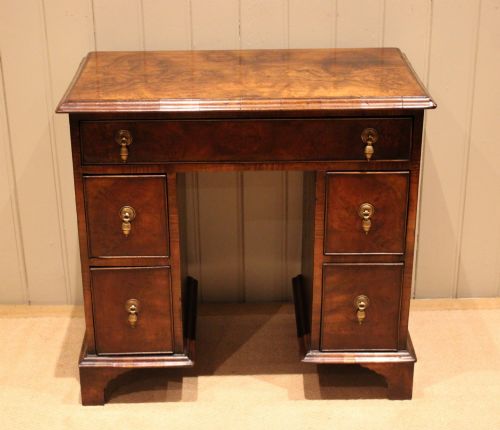
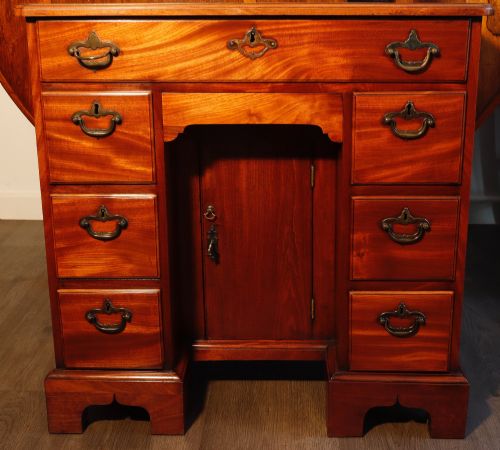
The selections span distinct historical eras, most notably the Victorian, Edwardian, and Georgian periods. Formats range from Sutherland and Pembroke tables with folding leaves to occasional tables, small writing desks, and gateleg versions in various timbers.
How they were made
Cabinet makers utilised dense hardwoods such as mahogany, oak, walnut, and yew wood to ensure stability despite narrow frames and folding leaves. Drawer linings, backing timbers, and secondary supports often incorporated pine, while brass fittings provided durable hinges and castor mounts.
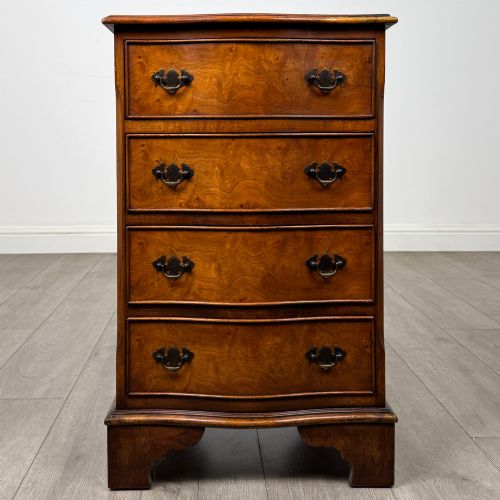
Joinery techniques relied on traditional methods including dovetailing for drawers, pegged mortise and tenon joints for frames, and pivoted hinge mechanisms for drop leaf surfaces. Timber selection often highlighted distinct grain patterns like burr walnut or flame mahogany to add visual depth to smaller surface areas.
Listings feature compact wooden tables spanning the 18th, 19th, and early 20th centuries, utilising mahogany, oak, walnut, and pine across drop leaf and occasional forms.
What varies in quality
The standard of a piece rests heavily on timber selection and the precision of the joinery within folding mechanisms and drawer construction. Superior examples feature well-figured wood veneers, matching grain directions across leaves, and seamless movement in drop leaf hinges and gateleg swings.
Proportion and structural integrity define the upper tier of these items, where smaller dimensions do not compromise everyday utility or balance. Finer workmanship shows in crisp inlay work, tidy dovetails, and stability when leaves are fully extended.
The Compact Wooden Table Glossary
- Sutherland table
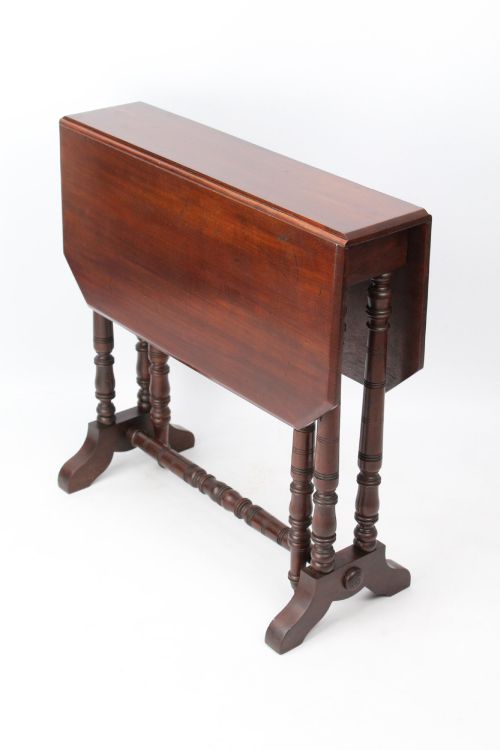
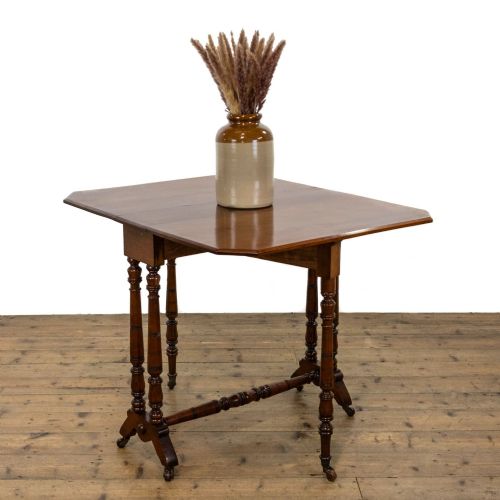
- A narrow drop leaf table with exceptionally small-scale flaps supported by swing legs when open. This design folds down into a very flat footprint for storage against a wall.
- Gateleg table
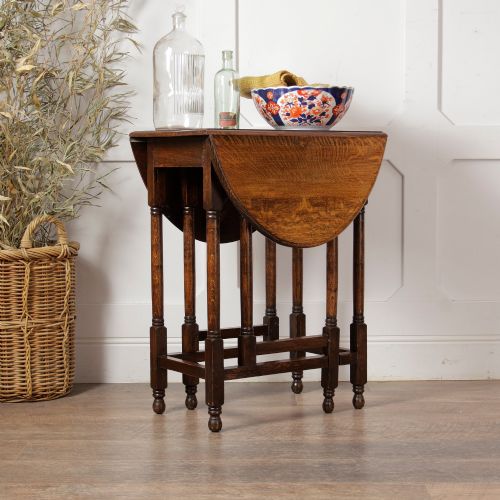
- A table featuring hinged leaves supported by swinging legs that pivot outward like a gate. This construction provides robust support to the extended top while folding compactly.
- Pembroke table
- A small rectangular table featuring two hinged drop leaves on opposing sides and frequently containing one or two drawers. It typically served as a breakfast or writing table in smaller chambers.
- Davenport desk
- A compact form of pedestal desk featuring a sloping, hinged writing surface above a set of small drawers. The interior often contains pigeonholes and smaller compartments.
- Spider leg table
- An occasional table characterised by exceptionally slender turned wooden legs and delicate structural stretchers. This design creates an airy visual profile in small spaces.
Compact Wooden Table: Frequently Asked Questions
What is a Sutherland table?
A Sutherland table is a narrow drop leaf table designed with exceptionally thin flaps that fold down almost vertically. When closed, it occupies minimal floor space while offering substantial surface area upon lifting the leaves.
The folding action relies on hinged gate legs that swing outward from the central underframe to support the extended leaves. This format became particularly popular during the Victorian and Edwardian periods for drawing rooms and smaller parlours.
How do gateleg tables work?
Gateleg tables utilise hinged supporting legs that pivot on vertical wooden axes built into the central frame. When you lift the drop leaf, you swing the leg outward to lock the surface securely in a horizontal position.
This clever engineering allowed larger dining surfaces to exist in compact rooms when meals were served. Afterward, the leaves drop down and the legs swing back flush against the central table structure.
How do I identify Edwardian tables?
Edwardian tables often display lighter timbers such as satinwood inlay, lighter mahogany, or honey oak. The aesthetic frequently mirrors earlier Georgian or Regency revivals but constructed with slightly simpler internal framing.
Makers of this era favoured dainty proportions, subtle string inlay, and occasional furniture designed for versatile household placement. The joinery is typically clean and precise, reflecting industrial machinery improvements of the early 20th century.
Where were drop leaf tables used?
Drop leaf tables served multi-functional roles in kitchens, parlours, and smaller bedrooms throughout Georgian, Victorian, and Edwardian households. Their ability to expand and contract made them valuable in rooms where space changed throughout the day.
In kitchens, sturdy pine versions functioned as work surfaces, while mahogany or walnut Sutherland and gateleg variants sat in reception rooms for tea or writing tasks.