





Canted Corner Table
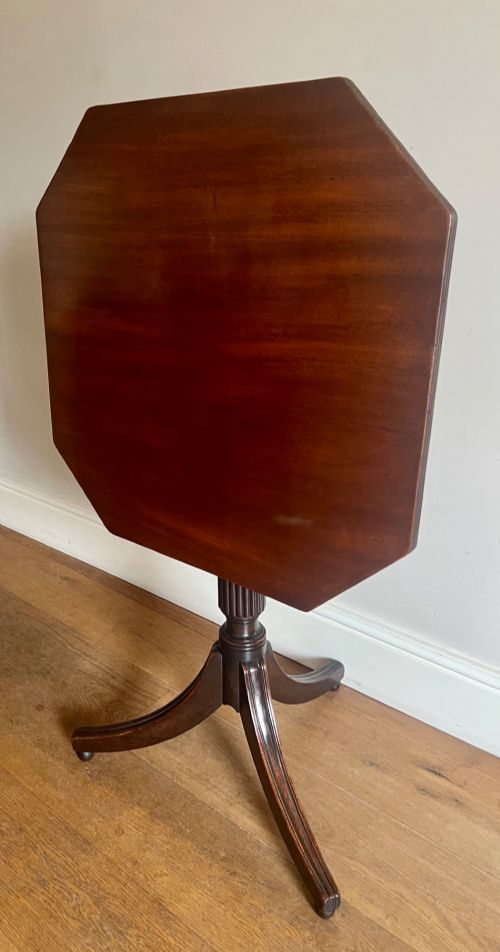
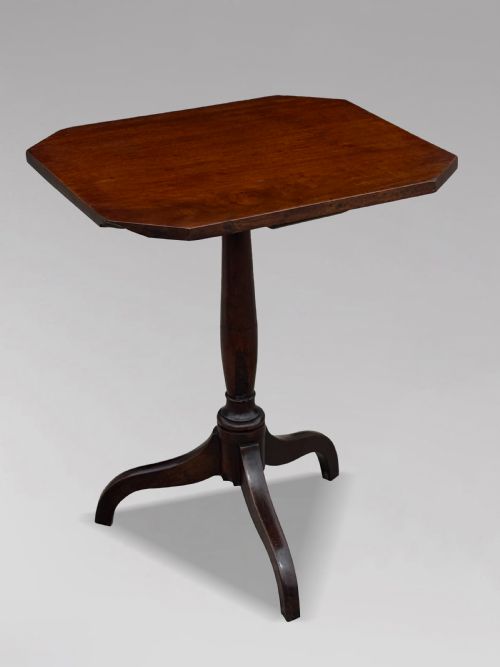
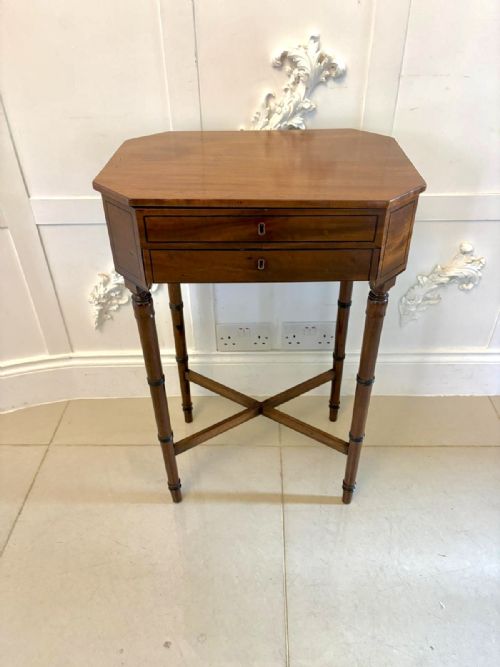
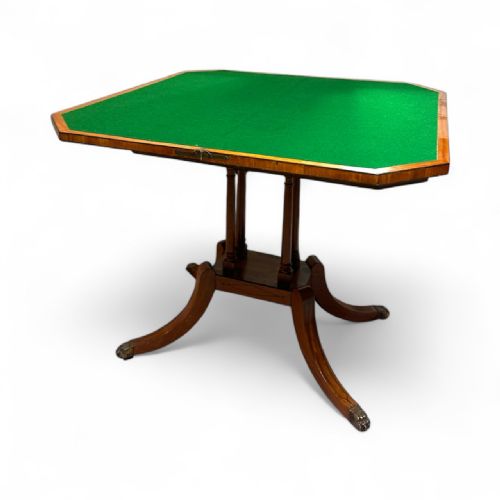
A canted corner table offers a neat diagonal cut to its edges, combining clean geometric form with practical domestic utility across multiple historic periods.
Canted Corner Table
The pieces appearing on this page span several centuries, including the Georgian, Regency, Victorian, and Edwardian periods. Oak and mahogany serve as the primary woods for these designs, often enhanced by satinwood crossbanding or rosewood veneers.
Makers utilised this angled corner profile on diverse object types such as hall tables, console tables, and drop-leaf Sutherland tables. This specific edge treatment softens the silhouette of a square or rectangular top while maintaining a structured architectural presence.
What varies in quality
Quality rests in the precision of the timber selection and the execution of the crossbanding and inlay work around the angled corners. Dense, well-figured mahogany and richly grained rosewood indicate a higher grade of manufacture than plain utility timbers.
Construction details such as dovetailed drawer construction, sturdy pivoting mechanisms on folding tops, and stable pillar-and-tripod junctions separate standard production pieces from finer cabinet work.
Canted Corner Table Retail Price Guide 2026
Typical asking prices for canted corner table among the pieces listed under this phrase on Sellingantiques today, from the lower quarter to the upper quarter. They describe what is for sale here now, not the wider market.
Listings feature woods including mahogany, rosewood, oak, walnut, satinwood, and boxwood across the Georgian, Regency, Victorian, and Edwardian periods.
The Canted Corner Table Glossary
- Canted corner
- An angled corner formed by cutting off a square edge at an oblique angle, usually forty-five degrees. This profile appears frequently on the tops and supports of antique tables.
- Crossbanding
- A narrow strip of veneer applied to the border of a table top with the wood grain running perpendicular to the centre panel. It often frames the angled edges of canted designs.
- Sutherland table
- A narrow drop-leaf table with hinged flaps supported by pivoting gate legs. Edwardian examples in this format frequently incorporate canted corners.
- Teapoy
- A small box-like table originally designed for storing tea canisters, mounted on a central pillar and tripod base. Some variations feature shaped or canted corners.
- Tripod table
- A small freestanding table supported by a central turned column resting on three legs. These form a common silhouette amongst Georgian and Victorian examples.
Canted Corner Table: Frequently Asked Questions
What is a canted corner?
A canted corner is an angled architectural edge created by cutting across a square corner at a diagonal. This shape softens the profile of the furniture while retaining crisp geometric lines.
Cabinet makers applied this detail to tabletops, console supports, and cabinet framing across the Georgian and Victorian eras.
How do I style a canted corner table?
These tables fit easily into corners or against walls because their clipped edges reduce the visual bulk of a standard rectangle. They function effectively as lamp tables, small desk surfaces, or occasional tables in living spaces.
Pair them with traditional seating or use them to display ceramics and table lamps where space is constrained.
How do I date a table?
Dating relies on identifying the secondary woods, construction methods, and stylistic markers associated with specific periods like the Georgian or Edwardian eras. Mahogany and oak frames combined with hand-cut dovetails generally indicate earlier manufacture.
Inlay styles, turning patterns on the legs, and the presence of crossbanding provide further clues to the decade of production.
Were these tables used for dining?
While large dining tables appear in the record, most tables with canted corners serve as occasional, card, tea, or hall tables. Fold-over card tables and tea tables were built for parlour games and entertaining guests.
Smaller occasional and Sutherland formats were designed to be moved easily around a room as domestic needs shifted.