



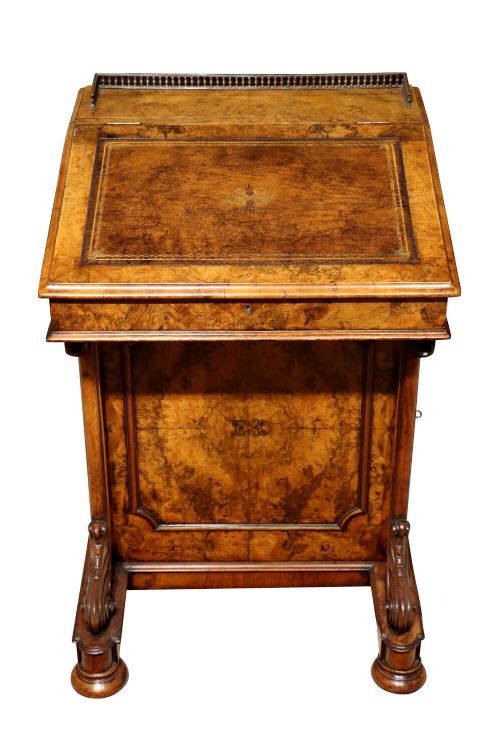

Compact Wooden Bureau
A compact wooden bureau offers clever storage and a dedicated writing surface, making it the ideal small workspace for a period interior.
Compact Wooden Bureau
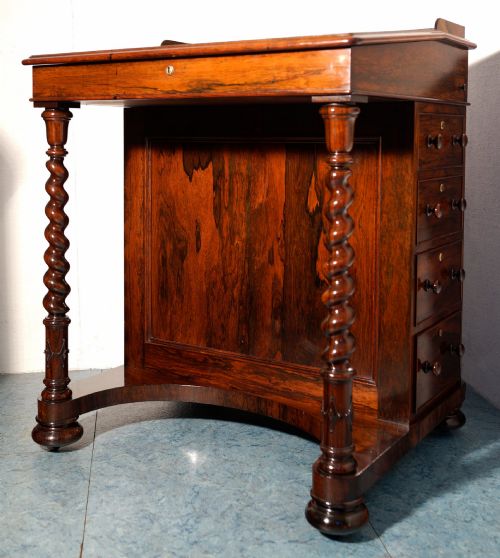
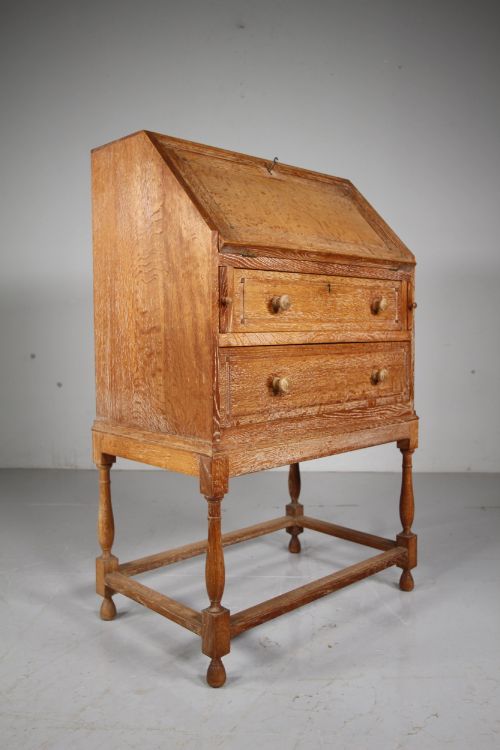
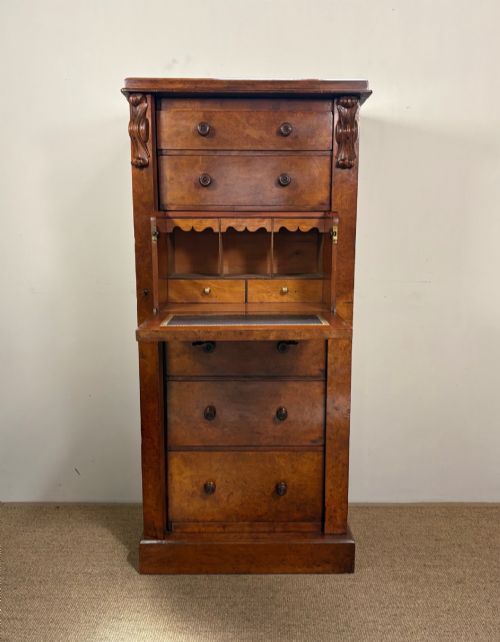
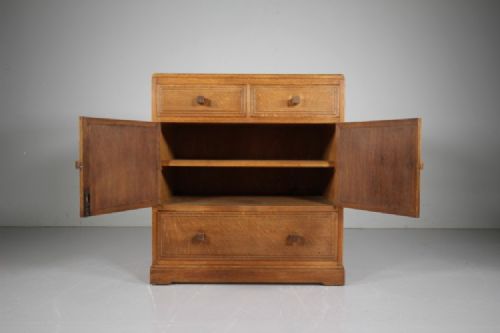
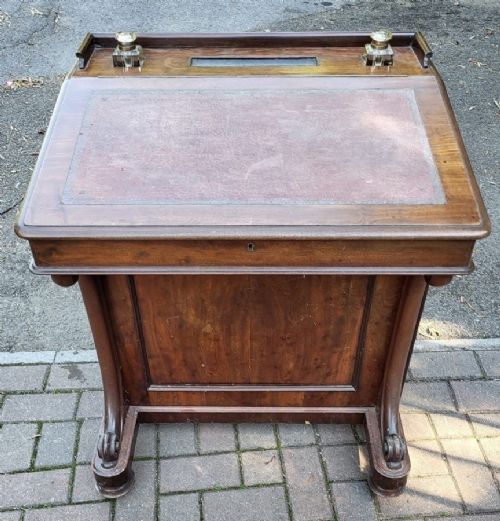
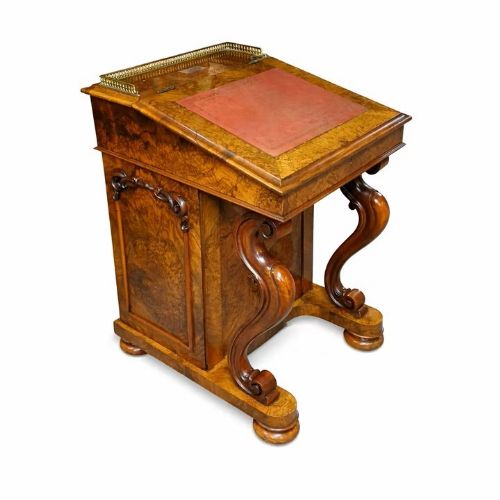
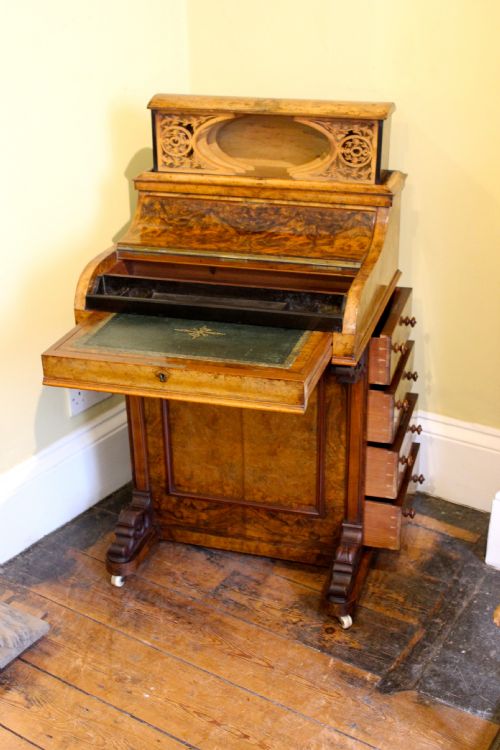
A compact wooden bureau combines a writing surface with concealed compartments and drawers, designed specifically for smaller rooms where space is at a premium. When exploring a compact wooden bureau, you encounter variations ranging from traditional fall-front writing desks to slope-lidded Davenport forms.
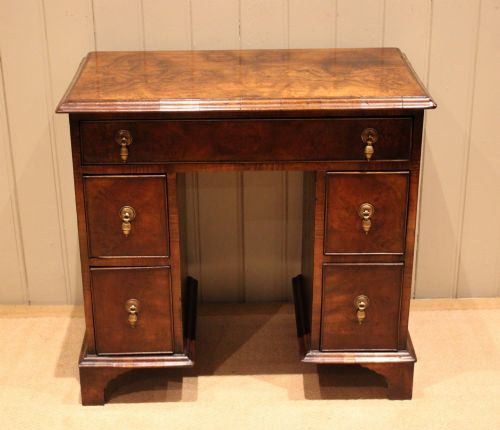
The pieces span multiple periods from the Georgian and Regency eras through the Victorian age into Edwardian and Art Deco decades. Mahogany, oak and burr walnut dominate the selection, often complemented by satinwood interiors and brass fittings.
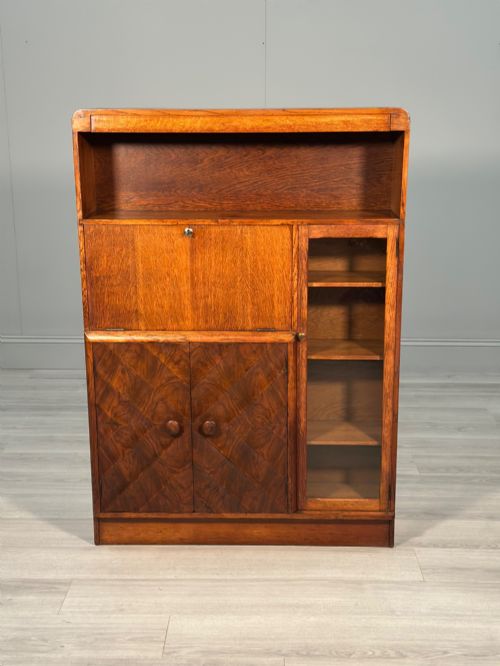
Formats include sloping writing boxes, pedestal desks and bureau bookcases designed to maximise utility in restricted footprints. Each variation provides a distinct method of concealing correspondence and stationery while maintaining a neat silhouette.
How they were made
Cabinet makers utilised dense hardwoods such as mahogany, rosewood and oak for the primary carcase construction, ensuring structural rigidity for daily writing use. Burr walnut and satinwood veneers added decorative grain patterns to external surfaces and internal stationery compartments.
Joinery methods relied on traditional dovetailing for drawer construction and sturdy framing to support hinged writing slopes and fall-front panels. Brass handles, key escutcheons and leather insert panels completed the construction, balancing functional durability with refined decoration.
Compact Wooden Bureau Retail Price Guide 2026
Typical asking prices for compact wooden bureau among the pieces listed under this phrase on Sellingantiques today, from the lower quarter to the upper quarter. They describe what is for sale here now, not the wider market.
Materials span mahogany, oak, burr walnut, rosewood, satinwood and leather across various pedestal and fall-front desk formats.
What varies in quality
The standard of a piece rests heavily on the selection of timber veneers and the precision of the internal cabinet work. Superior examples display carefully matched burr walnut or figured mahogany grains that flow continuously across the drawer fronts and writing surfaces.
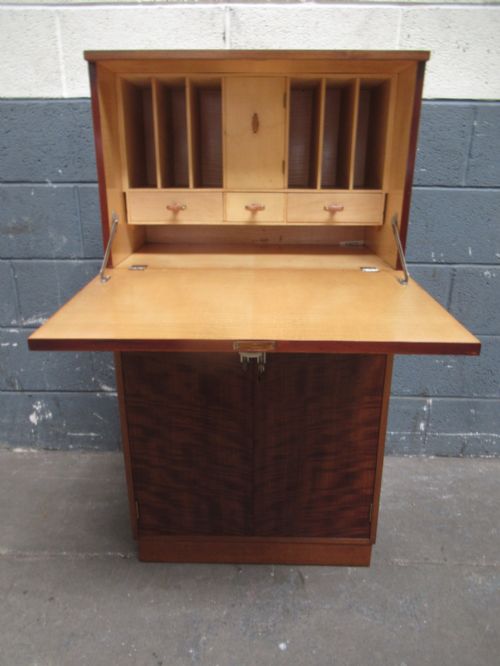
Internal arrangements demonstrate craftsmanship through secret compartments, satinwood pigeonholes and well-fitted small drawers that operate smoothly. The integration of original brass hardware and working locks with keys further separates standard utilitarian items from exceptional cabinetmaking.
Heals of London·Bryn Mawr
The Compact Wooden Bureau Glossary
- Davenport
- A small compact desk featuring a sloping writing top above a pedestal of drawers. It typically includes side storage compartments and a hinged pen tray.
- Bonheur du jour
- A light day-time writing desk originating in France, often fitted with small drawers and shelves above the main writing surface.
- Secretaire
- A piece of furniture incorporating a pull-out drawer or drop-front panel that conceals a writing desk interior. This design hides writing materials while maintaining the appearance of a standard chest.
- Fall-front
- A hinged writing flap that drops down to a horizontal position for writing and folds up vertically to conceal the interior. It often requires internal wooden supports or pull-out slides.
- Satinwood
- A pale, lustrous hardwood utilised for internal drawer linings and decorative stringing. Cabinet makers favoured it for its bright contrast against darker exterior timbers.
Compact Wooden Bureau: Frequently Asked Questions
What is a Davenport desk?
A Davenport is a compact form of writing desk featuring a sloping top hinged above a pedestal of drawers. The design provides a dedicated writing surface combined with built-in storage while taking up minimal floor space.
Originating in the nineteenth century, these pieces often include internal stationery compartments and side-mounted pen trays for everyday correspondence.
How do I use a bureau in a modern room?
A bureau serves well as a discreet home workstation where you can fold away paperwork at the end of the day. The enclosed compartments keep laptops, stationery and correspondence neatly out of sight.
Position the piece against a wall in a living room or bedroom to add period character and a practical surface for writing.
How do I date a wooden bureau?
Dating relies on examining the timber species, construction techniques, hardware and overall style characteristics. Georgian and Regency examples tend to feature linear proportions and mahogany construction, while Victorian pieces often utilise burr walnut veneers.
Later Edwardian and Art Deco pieces introduce lighter oak finishes or geometric forms associated with the twentieth century.