




Side Drawer Davenport
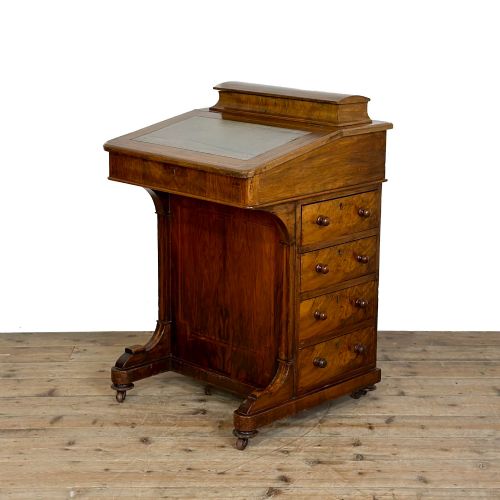
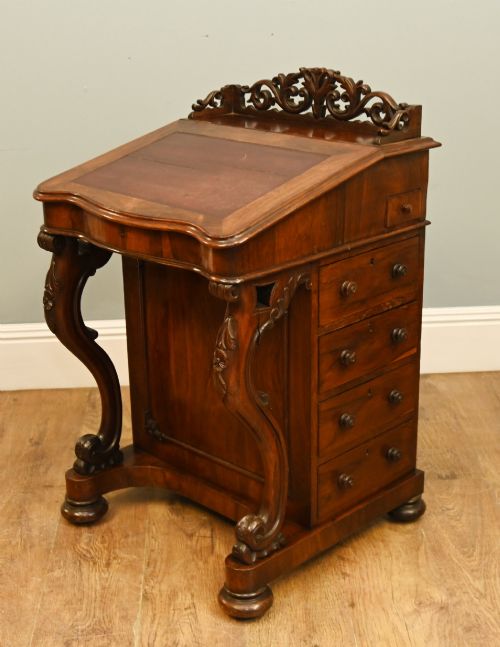
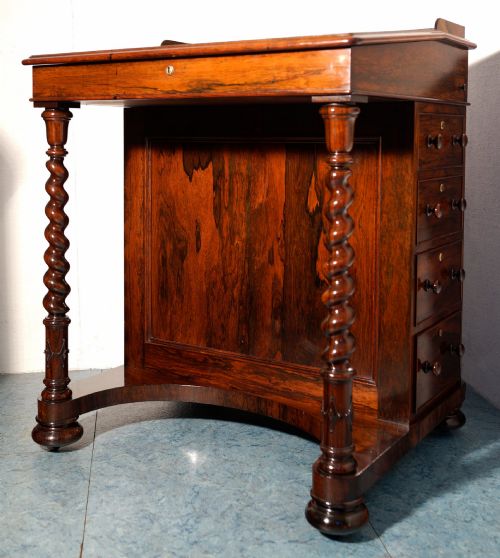
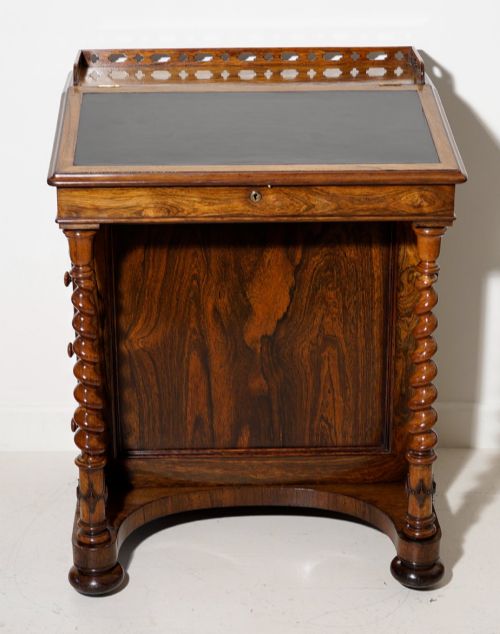
A side drawer davenport is a compact writing desk offering practical drawers to the side, combining secure storage with a sloping surface.
Side Drawer Davenport
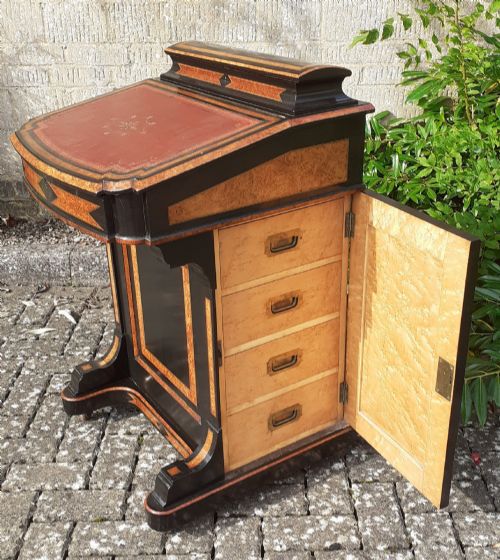
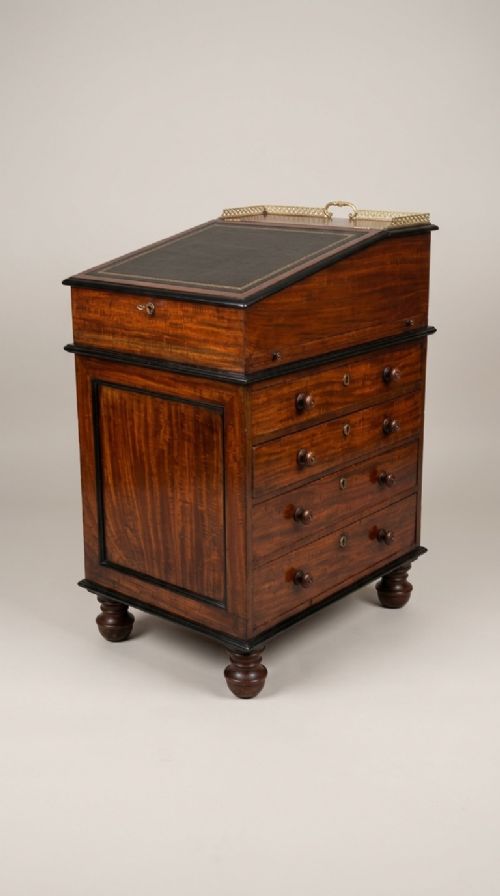
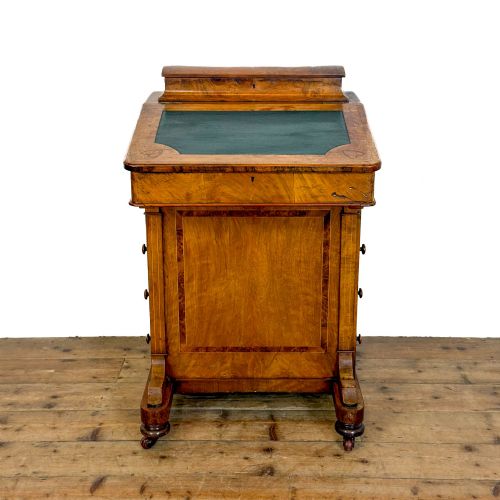
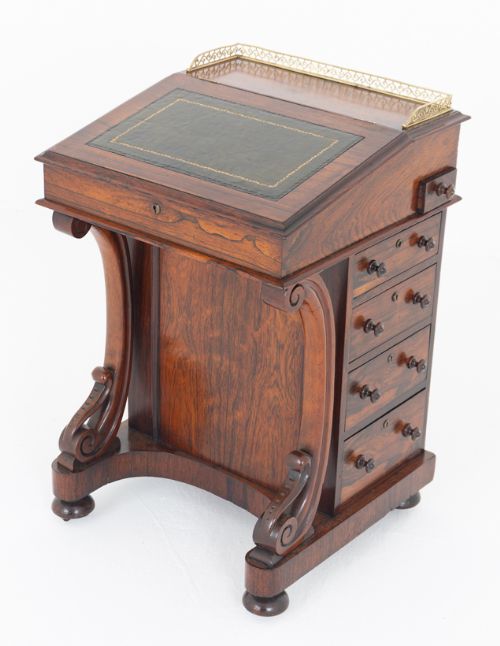
A side drawer davenport is a compact writing desk featuring a sloping top and functional drawers positioned along the side rather than beneath the main writing area.
The pieces on this page span several eras including Regency, Georgian, William IV, Victorian, and Edwardian periods.
Desks and writing tables dominate the selection, frequently taking the form of a freestanding walnut or mahogany Davenport desk.
How they were made
Cabinet makers built these desks using solid timbers like mahogany, rosewood, and pollard oak, often applying veneers of burr walnut or amboyna to the exterior surfaces.
Details include brass hardware, leather writing inserts, and inlaid marquetry work alongside fitted drawers accessed from the side.
Construction methods across the 19th century focused on combining a robust internal carcase with decorative timber grains and fitted compartments.
Side Drawer Davenport Retail Price Guide 2026
Typical asking prices for side drawer davenport among the pieces listed under this phrase on Sellingantiques today, from the lower quarter to the upper quarter. They describe what is for sale here now, not the wider market.
Periods represented span from the Georgian and Regency eras through the Victorian years into Edwardian times.
What varies in quality
Quality shows in the selection of figured timbers like burr walnut or pollard oak, where richly grained veneers are matched across the writing slope and drawers.
The refinement of the cabinet work, from inlaid marquetry details to the precise fitting of the side drawers and interior stationery compartments, separates standard examples from finer ones.
Gillows
The Side Drawer Davenport Glossary
- Davenport desk
- A compact writing desk with a sloped, hinged writing surface above a pedestal of drawers. It typically includes side drawers and internal stationery compartments.
- Burr walnut
- A highly prized timber veneer showing swirling knot formations. It was frequently applied to the exterior of Victorian writing furniture for decorative effect.
- Pollard oak
- Timber taken from pollarded oak trees, noted for its dense cluster of small knots and rich figuring. It appears on mid-19th-century examples.
- Marquetry
- Decorative patterns formed by fitting pieces of various veneers into a wood panel. It adds pictorial or geometric enrichment to the desk surface.
- Pedestal desk
- A heavy desk built upon two pedestals of drawers, though a davenport usually scales this down into a single compact writing cabinet.
Side Drawer Davenport: Frequently Asked Questions
What is a side drawer davenport?
A side drawer davenport is a compact writing desk with a sloping top and drawers positioned along the side. These pieces provide a dedicated writing surface with built-in storage while taking up minimal floor space.
Originating in the late Georgian and Regency periods, the form remained popular through the Victorian era. The interior typically houses small compartments for stationery and letters.
How were davenport desks used?
These desks served as personal writing cabinets for correspondence and household administration. The sloping lid provided a comfortable angle for handwriting.
Side drawers allowed the user to keep papers and writing implements close at hand while seated. Many examples include internal wells and small drawers behind the main writing flap.
Where should I place a davenport?
Because many examples are finished on all sides, davenports work well placed freestanding in a room rather than pushed flat against a wall. Their compact proportions make them suitable for studies, living rooms, or bedrooms.
Consider natural light levels when positioning the desk so the sloping writing surface receives adequate illumination during the day.
How do I identify Victorian examples?
Victorian davenport desks frequently employ walnut, burr walnut, or mahogany timbers with applied brass hardware and leather inserts. Inlaid marquetry and shaped galleries often appear on pieces from this era.
Earlier Regency and Georgian versions tend to feature rosewood or mahogany with simpler, more classical lines, while Edwardian pieces sometimes show lighter inlaid mahogany work.