


Compact Walnut Table
A compact walnut table provides a practical surface for smaller rooms, combining rich timber grain with space-saving cleverness.
Compact Walnut Table
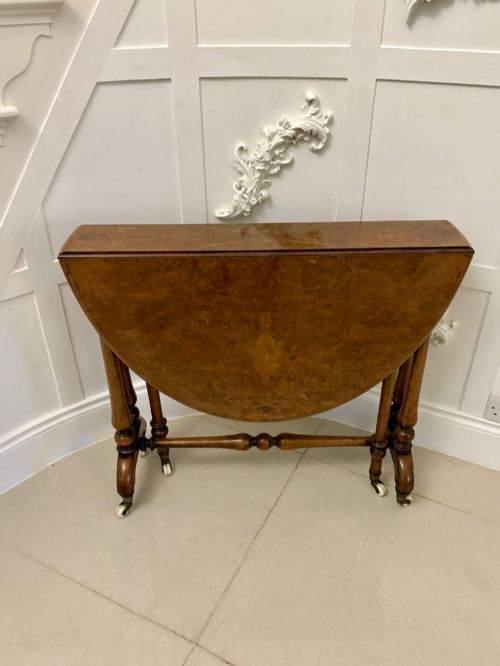
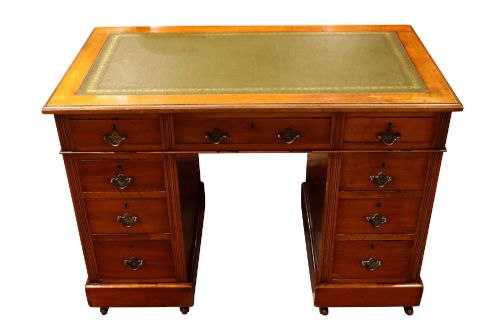
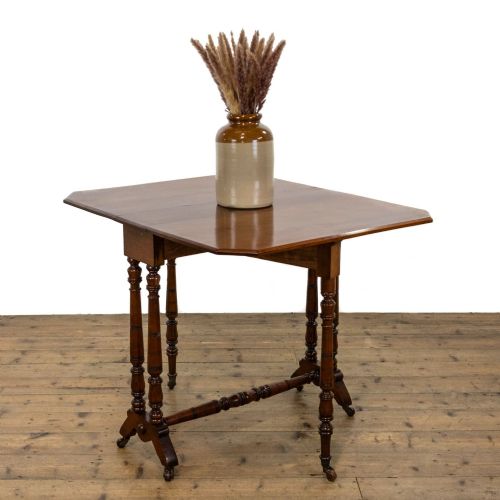
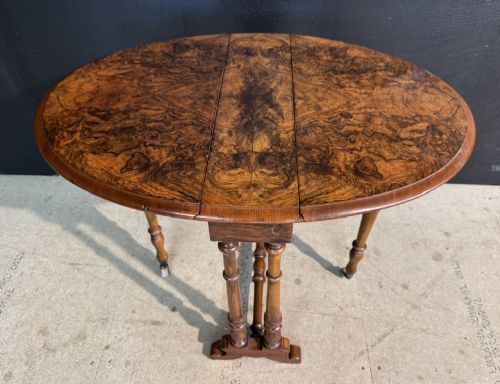
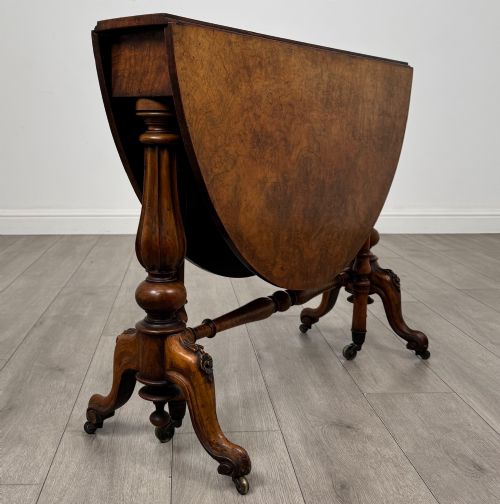
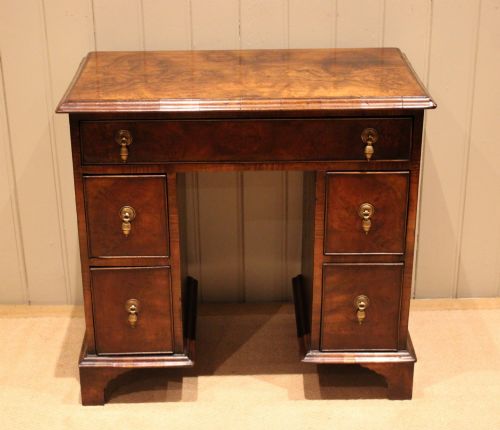
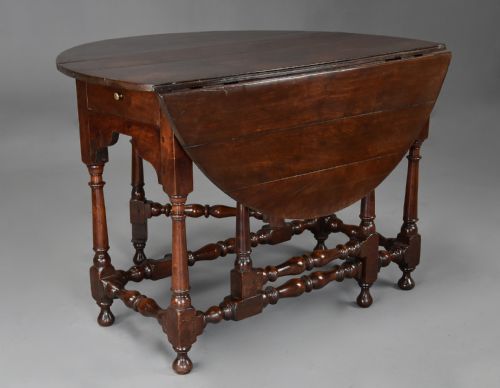
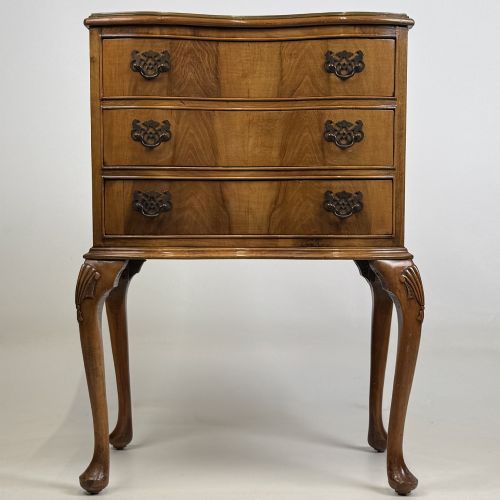
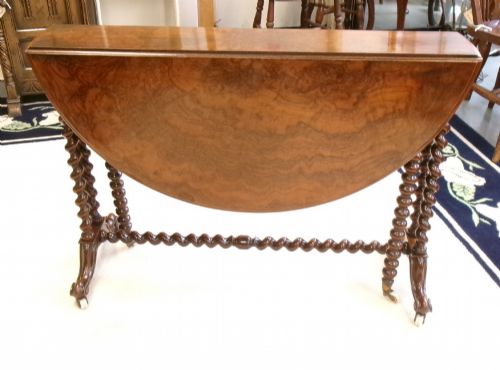
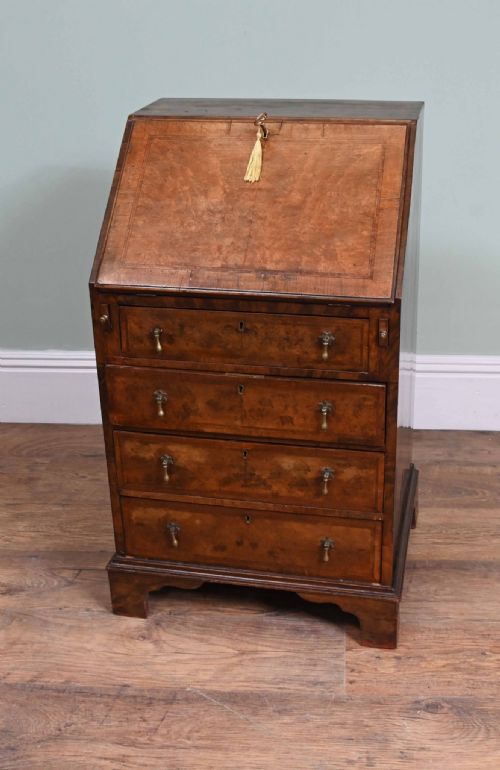
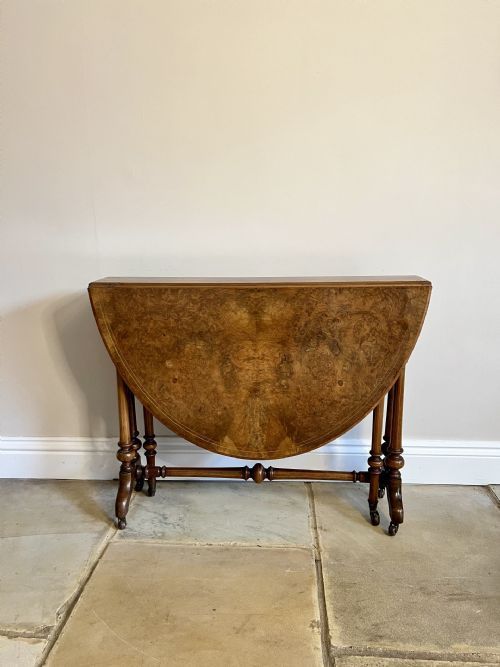
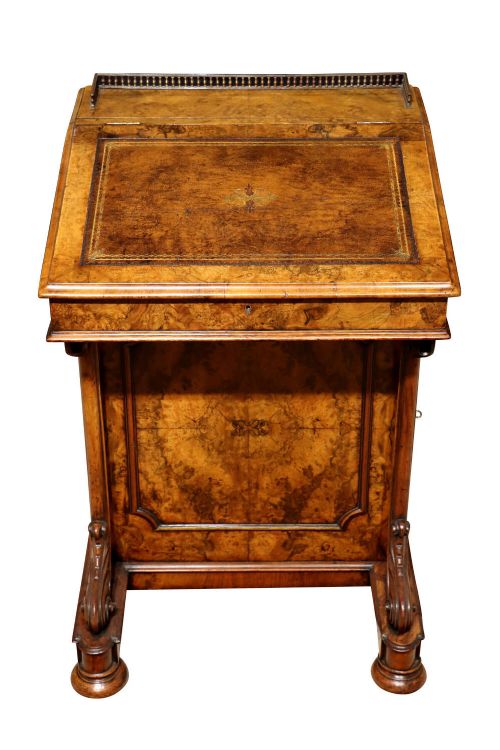
A compact walnut table serves as a versatile item in domestic spaces, frequently appearing as a drop-leaf Sutherland table, a pedestal desk, or a small occasional piece. These forms reflect the functional demands of Victorian and Edwardian parlours and studies, where floor space was at a premium yet hospitality and correspondence mattered.
The materials span solid walnut and burr walnut veneer, often enriched with boxwood inlay, ceramic elements, or brass fittings. Pieces range from mid-19th-century designs to early 20th-century creations, encompassing drop-leaf gateleg mechanisms and multi-drawer writing configurations.
Materials and Construction
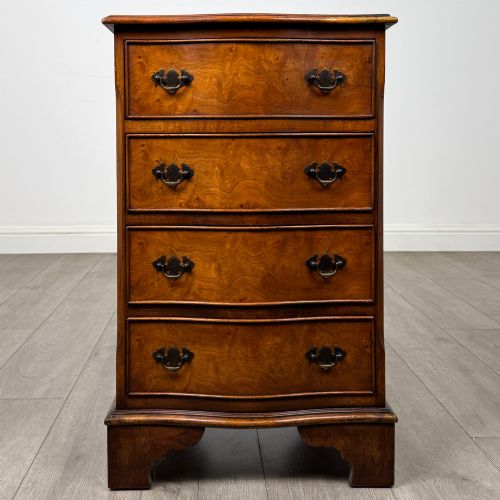
Cabinet makers utilised walnut timber for its strength and rich visual grain, frequently selecting highly figured burr walnut for table tops and drawer fronts to create striking visual patterns. Veneers were applied carefully to stable secondary timbers, while boxwood inlay provided delicate geometric contrast along borders.
Structural joints relied on traditional carpentry methods suitable for folding mechanisms and pedestal carcases. Brass hinges, castors, and handles added durability to drop-leaf Sutherland tables and writing desks, supporting daily movement and use.
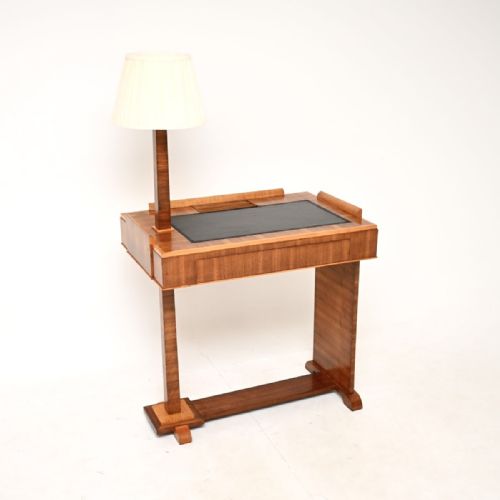
One exceptional desk includes an integrated lamp, proving that Victorian and Edwardian designers loved a clever built-in gadget just as much as we do.
Assessing Quality and Execution
The selection of timber grain largely determines the visual impact of each piece, with densely figured burr walnut commanding attention over plain surfaces. Crispness in boxwood inlay and the precision of marquetry work demonstrate the skill of the original maker.
Proportion and mechanical execution define the better examples, particularly in folding tables and fitted desks where hinges and drawers must operate smoothly. The survival of original polished finishes and unblemished hardware elevates the standing of individual tables.
The Compact Walnut Table Glossary
- Sutherland table
- A narrow drop-leaf table with hinged flaps that drop nearly vertically, supported by swinging legs. It folds flat for easy storage against a wall.
- Burr walnut
- Timber obtained from the gnarled growth on walnut trees, prized for its swirling, highly decorative grain patterns. Cabinet makers typically cut it into thin veneers.
- Davenport desk
- A compact Victorian writing desk featuring a sloped, hinged writing surface above a bank of drawers. The side often incorporates stationery compartments.
- Gateleg table
- A table with hinged leaves supported by legs that swing outward like a gate. This design allows the surface area to expand or contract as needed.
- Marquetry
- The art of applying decorative pieces of veneer to a structure to form intricate designs. Craftsmen use various tinted woods to create pictures or geometric patterns.
Compact Walnut Table: Frequently Asked Questions
What is a Sutherland table?
A Sutherland table is a narrow drop-leaf table designed to save space when folded. The hinged leaves drop down almost completely vertical and are supported by pivoting gate legs.
Victorian homes utilised these versatile pieces as tea tables or occasional surfaces in smaller drawing rooms, moving them easily against walls when not in use.
How do I date a walnut desk?
Dating involves examining the construction methods, hardware styles, and overall proportions of the piece. Victorian and Edwardian examples often feature specific drawer configurations and turned pedestal supports.
Secondary woods, dovetailing techniques, and the presence of factory patents or maker marks also help narrow down the period of manufacture.
Where did people use small walnut tables?
Compact tables found placement in parlours, bedrooms, and studies where larger furniture would overwhelm the floor plan. They served as writing surfaces, tea tables, or stands for lamps and clocks.
Their mobility allowed owners to rearrange rooms quickly for social gatherings or quiet reading sessions.
What is burr walnut?
Burr walnut comes from a tree growth that produces intricate, swirling grain patterns rather than straight lines. Craftsmen slice this wood into fine veneers to adorn the primary surfaces of tables and desks.
This decorative treatment creates a rich, textured appearance that defines many high-quality pieces from the nineteenth century.