

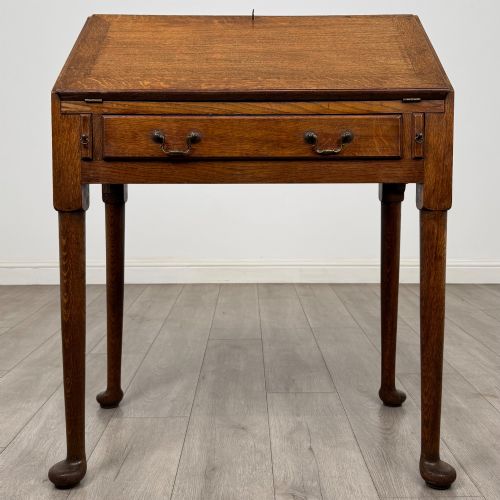
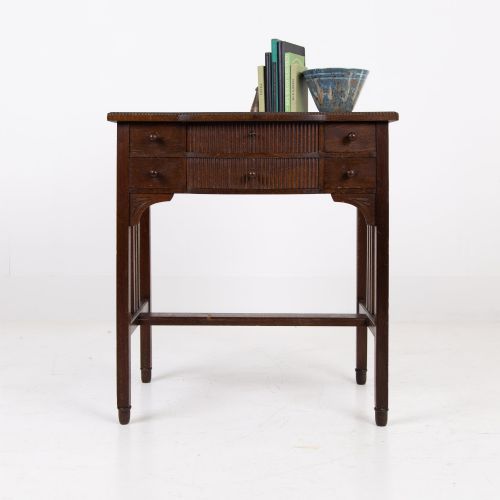
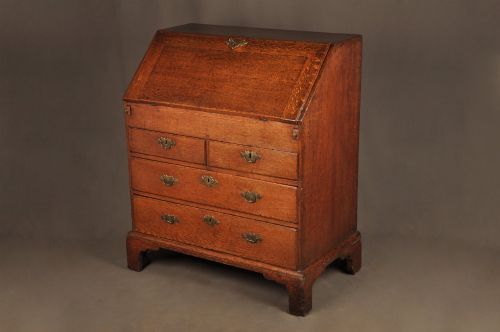
Compact Oak Writing Desk
A compact oak writing desk offers a practical writing space in solid timber, spanning centuries of domestic joinery from simple Edwardian examples to earlier forms.
Compact Oak Writing Desk
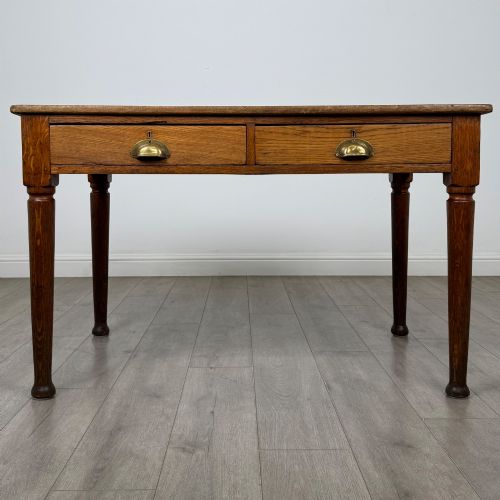
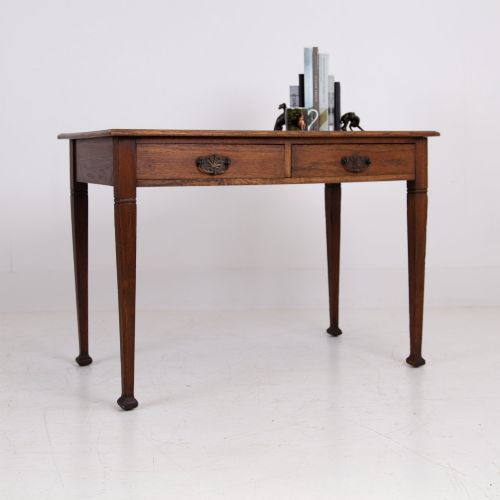
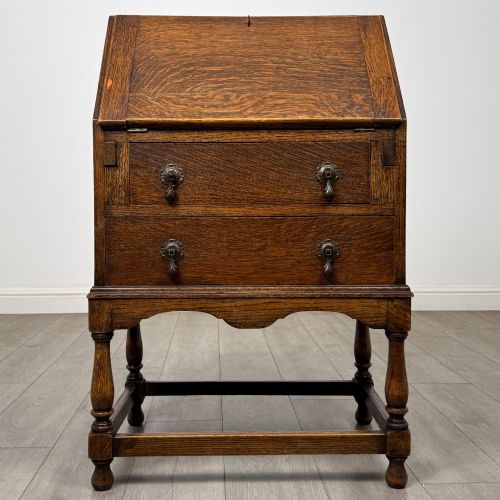
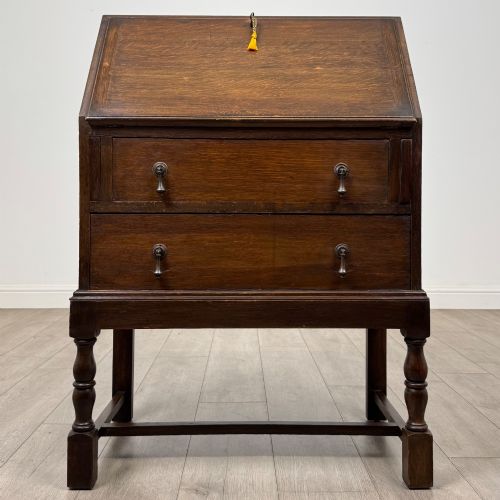
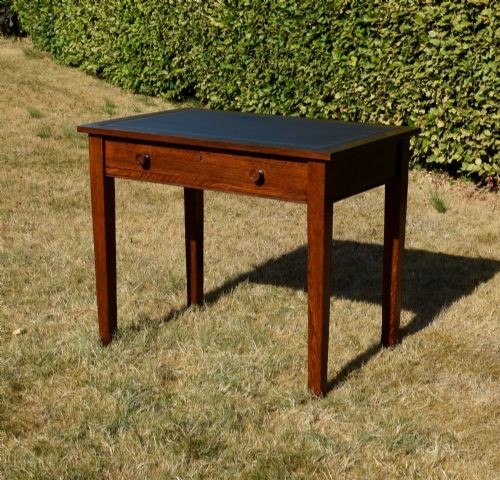
A compact oak writing desk serves as a dedicated spot for correspondence and paperwork, taking up minimal floor space while providing a stable timber surface. Buyers searching for a compact oak writing desk encounter various formats, from straightforward writing tables with drawers to fitted drop-front bureaux.
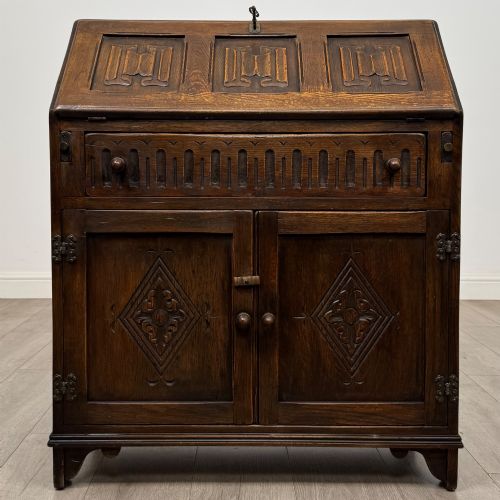
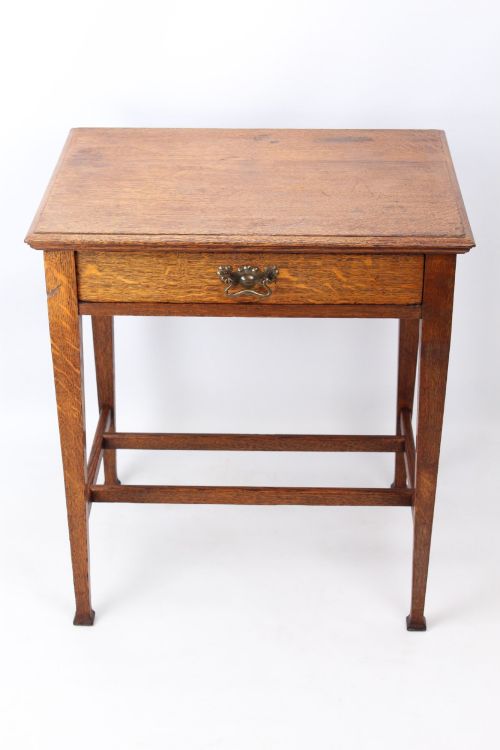
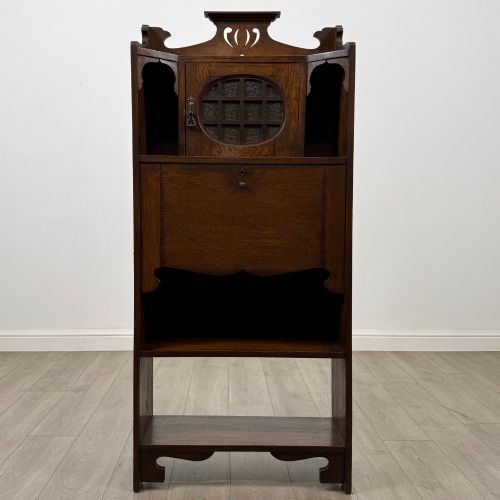
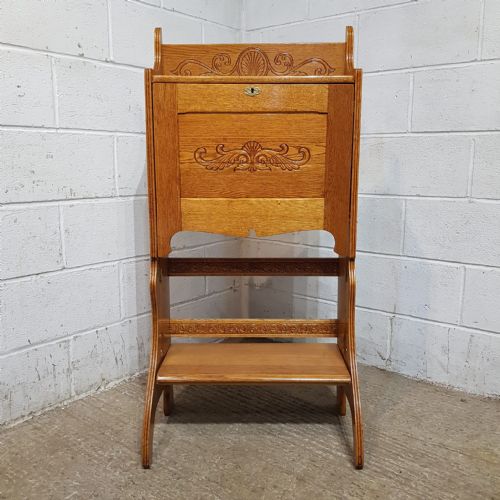
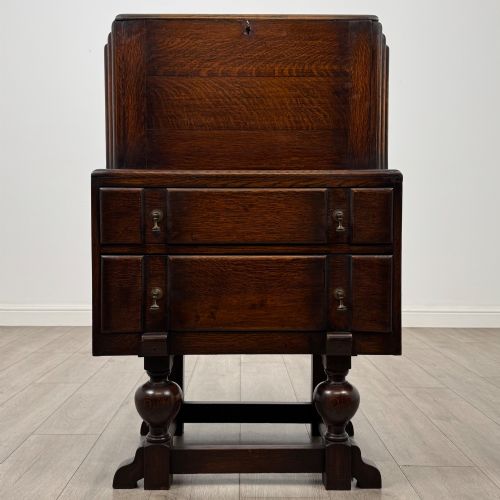
The pieces appearing on this page stretch from the eighteenth century through the Victorian and Edwardian eras into the nineteen-twenties and nineteen-thirties. Edwardian and Arts and Crafts examples dominate the selection, often rendered in golden oak with fitted pigeonholes or small bookshelves above.
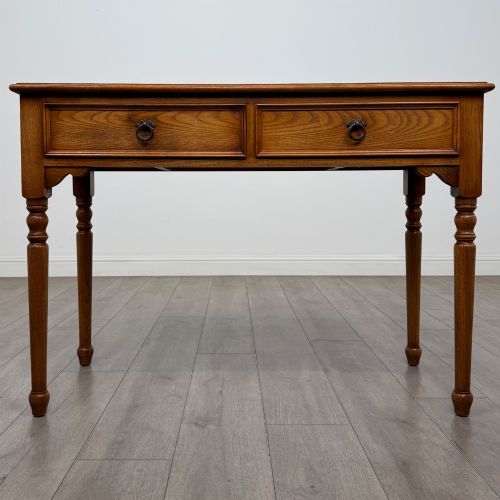
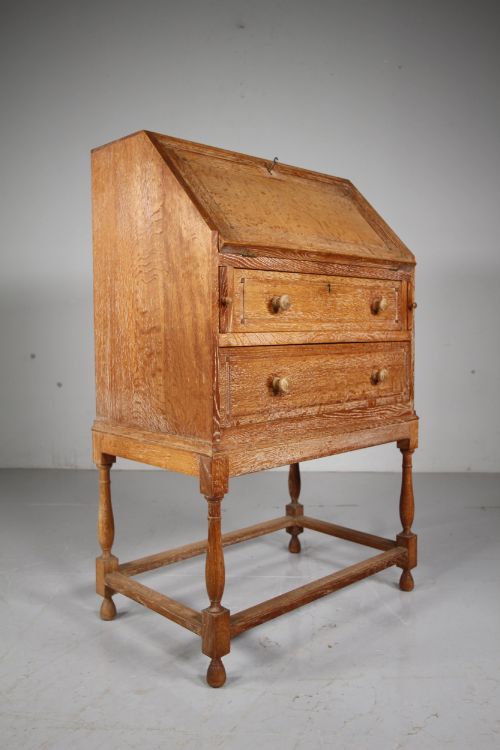
Forms range from modest student bureaux and narrow writing desks to Davenport desks featuring side drawers and sliding tops. Smaller nineteenth-century pieces and earlier eighteenth-century variants also appear, offering deeper patination and traditional pegged joinery for domestic use.
Materials and construction
Makers relied principally on solid oak, frequently augmented by decorative veneers such as pollard oak to add grain movement to drawer fronts and writing slopes. Brass handles, escutcheons, and hinges provide functional hardware, while leather inserts frequently line the writing surfaces of tables and Davenport desks.
Construction methods shift according to the period, employing traditional dovetail joints for drawer construction and pegged mortise and tenon frames for earlier carcases. Later Edwardian and Arts and Crafts pieces often exhibit linear carved details, linenfold panels, or characteristic copper and brass strap hinges.
Compact Oak Writing Desk Retail Price Guide 2026
Typical asking prices for compact oak writing desk among the pieces listed under this phrase on Sellingantiques today, from the lower quarter to the upper quarter. They describe what is for sale here now, not the wider market.
Forms include traditional writing tables, fitted bureaux, Davenport desks, and multi-drawer modular tables.
Assessing quality and character
Quality rests upon the selection of timber, the crispness of hand-cut joints, and the integrity of the original hardware and interior fittings. Pieces showing thoughtful grain matching, well-proportioned drawer dividers, and intact leather surfaces stand apart from simpler utilitarian output.
Makers' marks, labels, or attribution to known firms like Heals or James Shoolbred elevate certain desks, reflecting workshop pedigree. The depth of the natural wax finish and the preservation of original internal drawers and pigeonholes further distinguish standard domestic furniture from finer workshop pieces.
Heals of London·Bryn Mawr·Jenners·James Shoolbred·Simpsons of Kendall·Harris Lebus
The Compact Oak Writing Desk Glossary
- Bureau
- A writing cabinet featuring a sloping fall-front that opens to reveal internal compartments and pigeonholes. It often sits above a chest of drawers.
- Davenport desk
- A compact small desk featuring a sloping writing surface hinged above a pedestal of drawers. The design originated in the early nineteenth century.
- Linenfold
- A style of wood carving that imitates folded linen cloth, frequently seen on panels of Edwardian and revival oak furniture. It provides texture to cabinet doors and drawer fronts.
- Pollard oak
- Timber taken from trees that have been pollarded, producing tightly clustered knots and a highly decorative grain pattern. Cabinet makers used veneers of this wood on high-status writing surfaces.
- Pigeonhole
- A small open compartment within a desk interior used for sorting letters and papers. These compartments often sit above small internal drawers inside a bureau.
Compact Oak Writing Desk: Frequently Asked Questions
What is a Davenport desk?
A Davenport is a small, compact desk with a sloping leather-inset top that lifts to reveal storage. A pedestal of drawers sits beneath, often with drawers opening to one side.
Originating in the nineteenth century, these pieces were designed for drawing rooms and boudoirs where space was limited.
How do I date an oak bureau?
Dating relies on construction methods, hardware, and stylistic details. Eighteenth-century pieces typically show hand-cut dovetails and pegged frames, while Edwardian examples often feature machine-planed timber and lighter oak tones.
Examining the interior drawer construction and timber thickness helps determine whether a piece originates from the Georgian period or the later Arts and Crafts revival.
Where were these desks used?
These desks served primarily in studies, bedrooms, and drawing rooms for managing household accounts and writing letters. Their modest proportions allowed them to fit into smaller domestic spaces.
In larger houses, they provided a private writing space outside the main library or formal office.
Are writing tables different from bureaux?
Writing tables consist of a flat timber top supported by legs, frequently incorporating one or two drawers beneath the surface. Bureaux feature an enclosed cabinet space with a sloping fall-front flap.
Tables offer an open working area, whereas bureaux conceal paperwork when the hinged front is closed and locked.
How do I care for an oak desk?
Maintenance involves applying quality beeswax periodically to nourish the timber and preserve the finish. Avoiding direct sunlight and sudden temperature changes protects the wood from drying out or splitting.
Leather writing surfaces benefit from occasional gentle cleaning and conditioning to prevent cracking across the writing area.