



Compact Home Office Desk
A compact home office desk is a practical workspace built for tight corners, offering clever storage without dominating a room.
What these pieces are
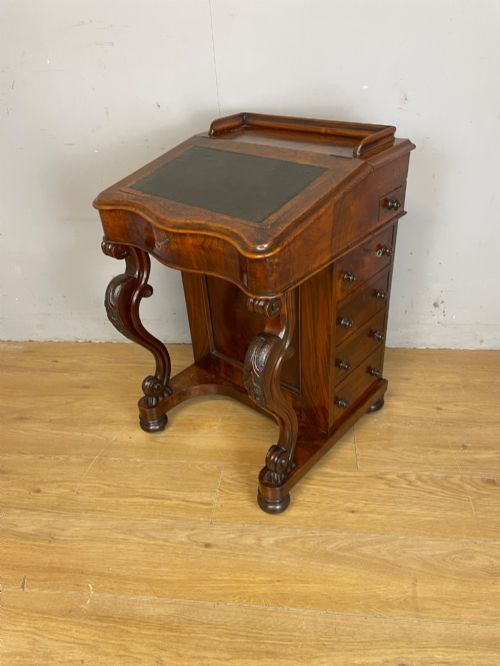
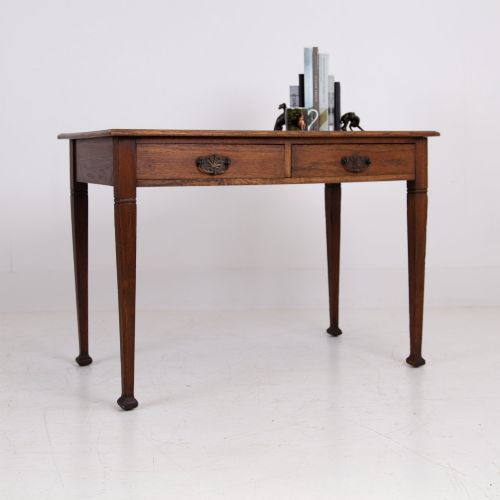
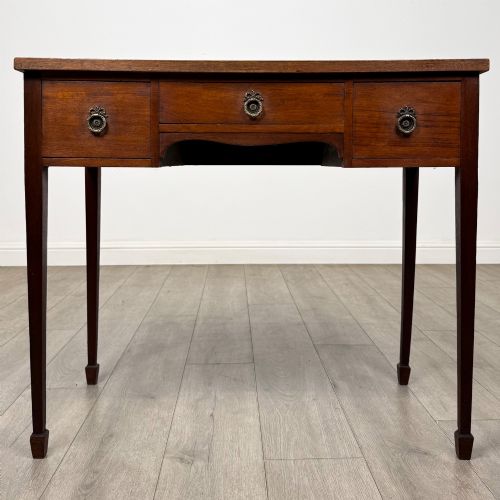
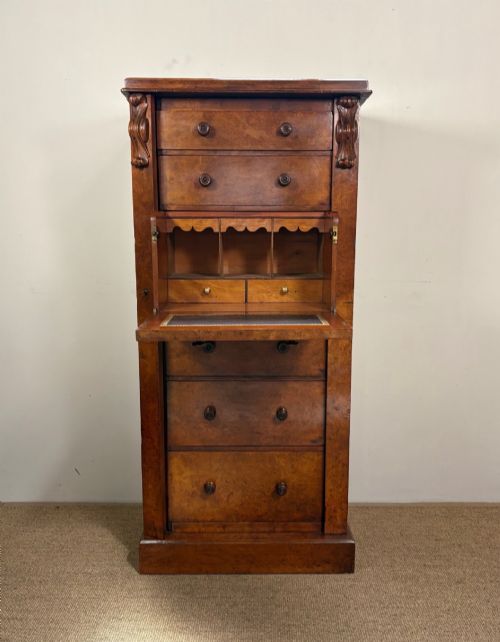
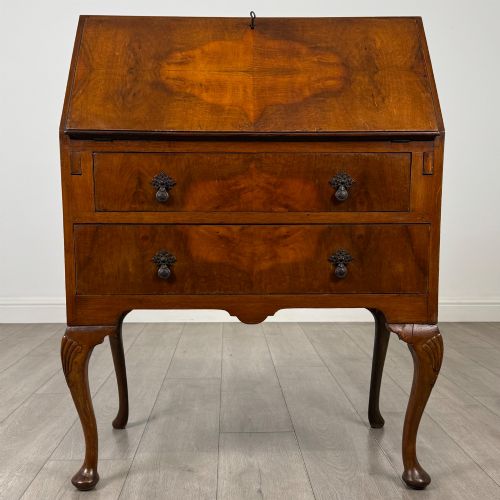
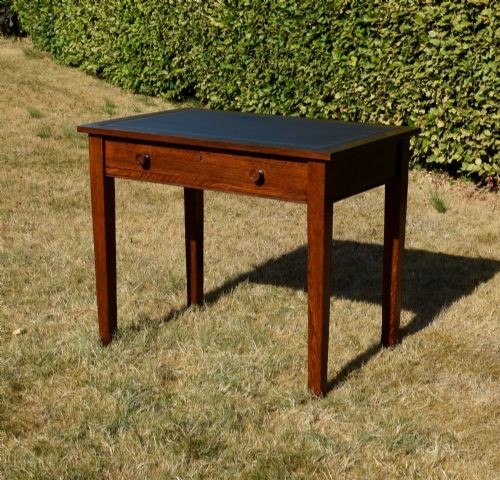
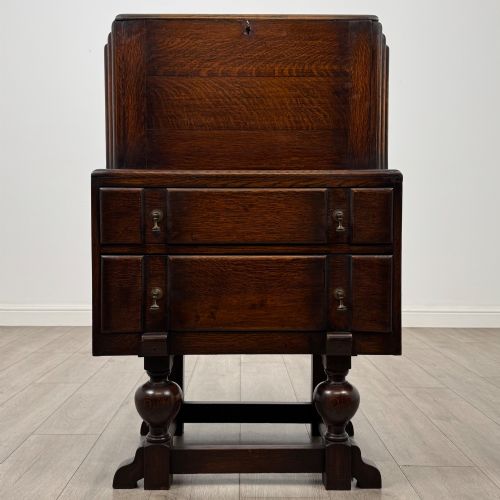
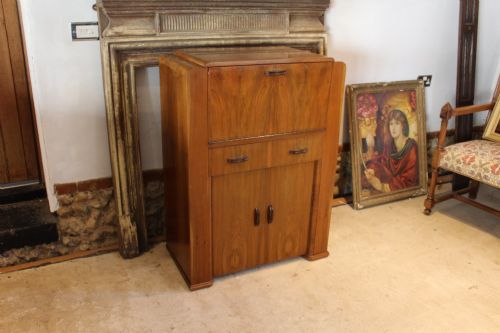
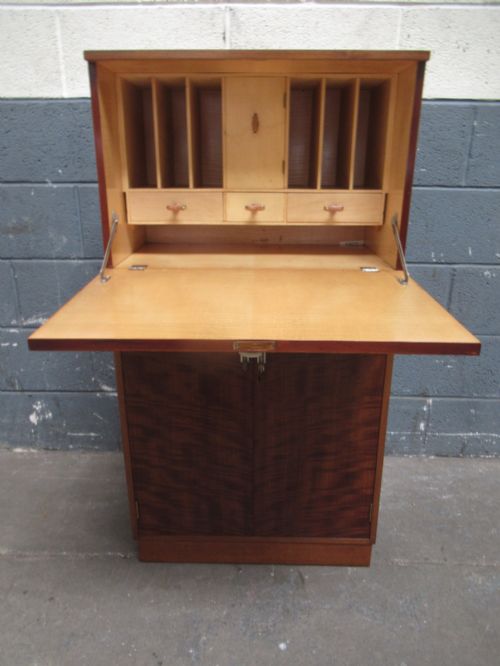
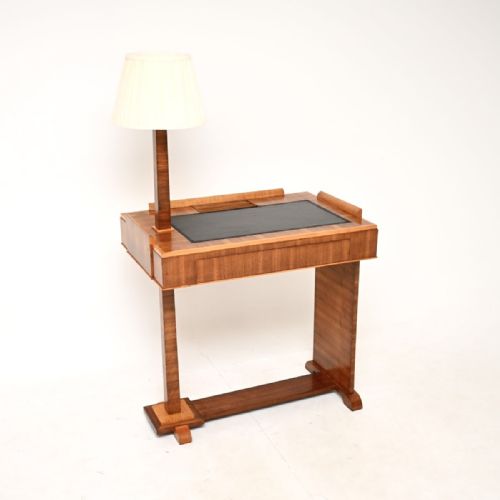
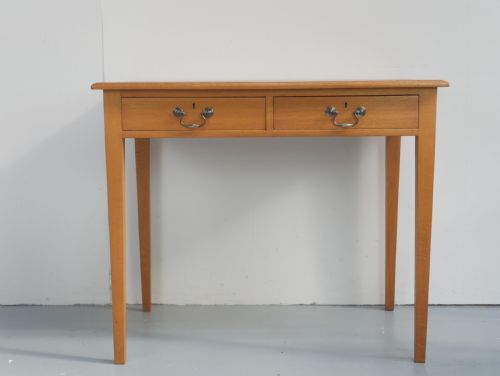
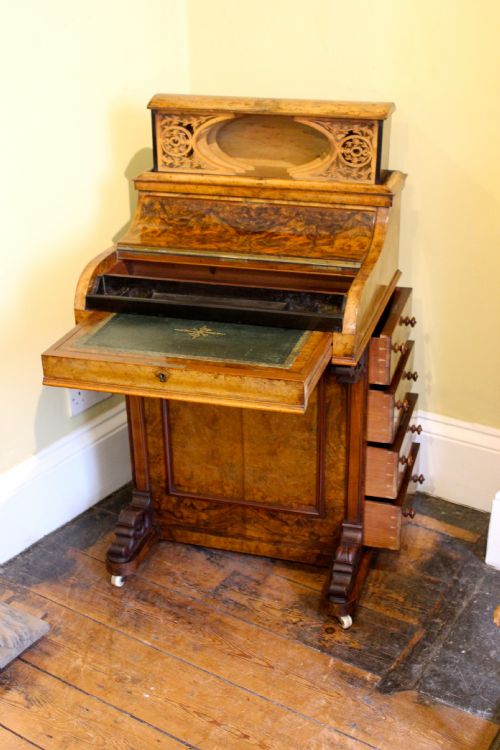
A compact home office desk on this page usually takes the form of a Davenport desk, a bureau, or a secretaire chest. These pieces provide a writing surface and internal compartments while occupying a minimal floor footprint.
The selection spans the nineteenth century through the twentieth century, encompassing Victorian, Edwardian, and Art Deco periods. Buyers frequently encounter Davenport desks with side drawers and sloping writing surfaces alongside traditional drop-front writing bureaus.
Makers of these compact home office desk designs prioritised utility and elegance in equal measure, adapting larger furniture forms for smaller domestic spaces. The forms range from ebonised and walnut crossbanded pieces to flame mahogany and rosewood variants.
How they were made
Cabinet makers utilised dense hardwoods such as walnut, mahogany, and rosewood, often enhancing the surfaces with burr walnut veneers, satinwood stringing, or ebonised finishes. Crossbanding and flame mahogany grains added visual depth to the compact facades of these desks.
Fitted interiors incorporate small pigeonholes and tiny drawers constructed with traditional joinery methods. Hardware typically consists of brass handles, hinges, and lock escutcheons that secure the fall-fronts and stationery compartments.
Writing surfaces frequently feature inset panels of tooled leather to provide a durable and tactile medium for correspondence. The structural carcasses rely on solid secondary timbers to support the heavy hardwood outer layers.
Retail Price Guide 2026
Typical UK retail prices for compact home office desk, calculated from the Sellingantiques database of over a million retail prices indexed since 2003. This retail price guide relies exclusively on Sellingantiques data; no external sources or auction records are used, so the figures do not describe the wider market.
Secret drawers hidden inside Davenport interiors reward curious owners with miniature hiding spots for stamps and keys.
What varies in quality
The distinction between standard examples and superior pieces rests on the choice of timber and the precision of the cabinet work. Highly figured veneers like burr walnut or flame mahogany paired with crisp crossbanding elevate a desk above simpler mahogany or standard walnut builds.
Internal complexity and the integrity of the fitted stationery compartments signal a higher standard of production. Superior examples maintain smooth mechanical action in their writing slopes and side drawers, showing no structural warping across the historical timbers.
The Compact Home Office Desk Glossary
- Davenport desk
- A compact small desk featuring a sloping top with a leather writing surface and drawers accessed from the side. This form became popular during the nineteenth century for writing and storage in smaller rooms.
- Wellington secretaire chest
- A tall, narrow chest of drawers featuring a hinged locking stile on one side that secures all the internal drawers simultaneously. It often incorporates a pull-out writing drawer.
- Crossbanding
- A decorative border technique where thin strips of veneer are laid perpendicular to the grain of the main surface. This frames the primary timber panel with a contrasting wood grain.
- Ebonised wood
- Timber treated with chemical stains or dark finishes to imitate costly ebony. This technique gained favour during the Victorian era for striking contrast.
- Burr walnut
- Timber taken from a tree growth or burl, yielding a swirling and highly decorative grain pattern. Cabinet makers used it on prominent exterior surfaces.
Frequently Asked Questions
What is a Davenport desk?
A Davenport is a compact form of writing desk featuring a sloping, leather-lined top for correspondence. It typically includes a set of drawers opening to the side rather than the front.
This clever configuration allows the desk to occupy minimal floor space while providing substantial internal storage for stationery and papers.
How do I identify an Edwardian bureau?
Edwardian bureaus generally date from the early twentieth century and exhibit lighter timber tones, often utilising walnut or mahogany with subtle stringing. Their proportions are typically refined and less heavy than earlier Victorian counterparts.
The drop-front lid opens to reveal a fitted interior of small drawers and pigeonholes designed for domestic correspondence.
Where were these desks used?
These pieces served primarily in domestic settings such as drawing rooms, bedrooms, or private studies where space was at a premium. Their compact nature permitted writing and record keeping without requiring a dedicated library room.
They functioned as personal administrative hubs for households before the advent of modern office furniture.
How do I care for leather desk inserts?
Leather writing surfaces require gentle treatment using specialised leather balms to prevent drying and cracking over time. Avoid using harsh chemical cleaners or excessive water near the surrounding wood veneers.
Keeping the leather conditioned preserves the tactile quality and appearance of the writing area.