


Compact Home Office Bureau
A compact home office bureau offers a dedicated writing surface and storage within a modest footprint, suiting small rooms where everyday administration needs a tidy home.
Compact Home Office Bureau
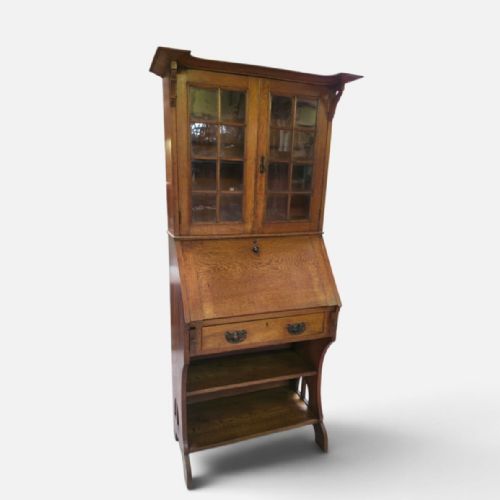
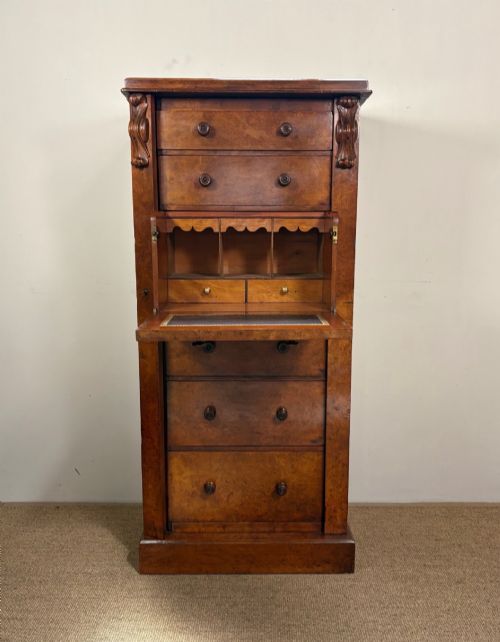
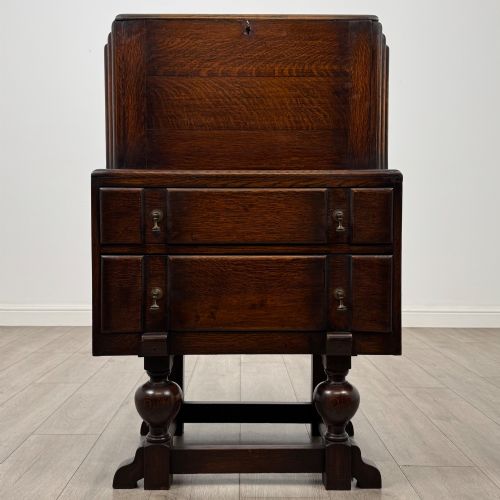
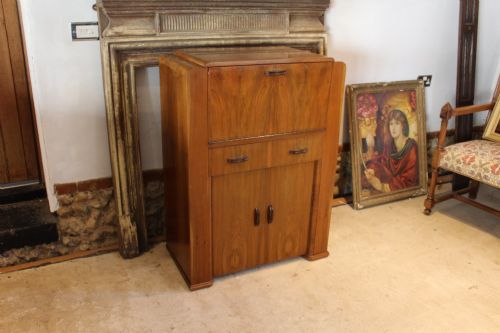
A compact home office bureau brings together writing surfaces and concealed storage in forms designed for restricted spaces. When you search for a compact home office bureau, you meet items spanning the nineteenth and twentieth centuries, including Edwardian, Victorian, and Art Deco eras.
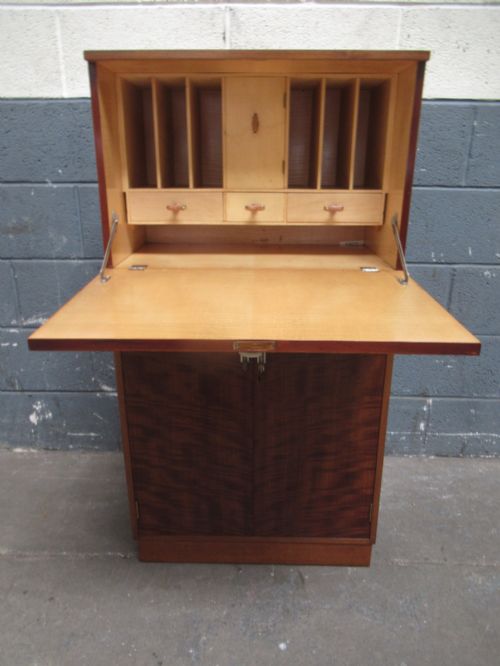
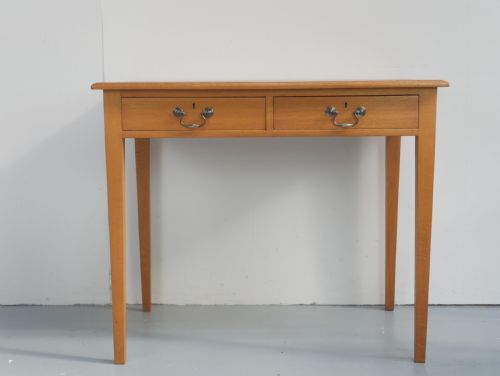
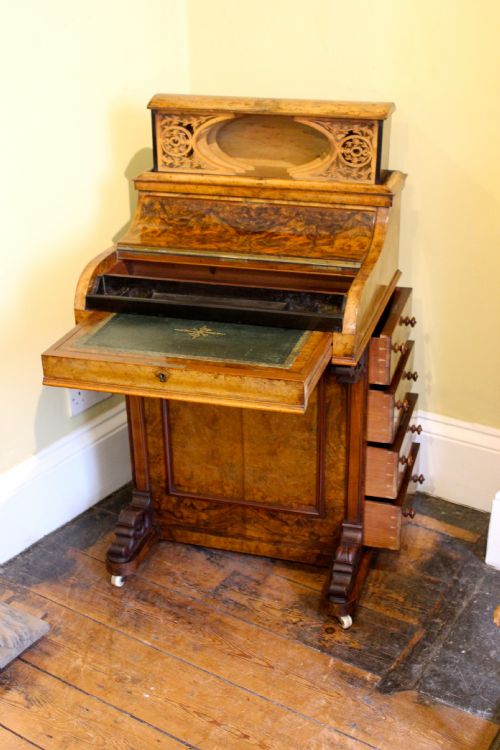
The objects take several forms on this page, including writing bureaux, Davenport desks, secretaire chests, and small writing tables. Walnut, mahogany, and oak dominate the selection, often finished with brass fittings and leather writing surfaces.
Makers and retailers such as F.H. Marshall and Co and Jenners appear alongside revival styles like Queen Anne and Georgian. These pieces provide practical working areas while maintaining traditional cabinet-making proportions.
Materials and construction methods
Cabinet-makers utilised solid timbers such as mahogany, oak, and walnut, frequently applying decorative veneers like burr walnut to drawer fronts and writing flaps. Brass handles, hinges, and lock escutcheons complete the primary hardware.
Writing surfaces often incorporate inset leather panels, whilst interior compartments utilise small drawers and pigeonholes constructed with traditional joinery. Secondary woods support the main structural frames within drawers and carcases.
Some compact writing desks hide secret compartments behind tiny drawers, designed for stashing postage stamps out of sight.
Distinctions in construction and finish
Quality depends upon the selection of timber veneers and the precision of the interior pigeonholes and small drawers. Fine examples display well-figured burr walnut or select mahogany matched carefully across surfaces.
The structural integrity of drop-down writing flaps and their supporting mechanisms separates standard utility items from finer cabinet-work. Original brass hardware and cleanly fitted internal stationery compartments also indicate superior manufacture.
F.H. Marshall and Co·Jenners
The Compact Home Office Bureau Glossary
- Bureau
- A writing desk featuring a sloping flap that opens to reveal internal compartments and drawers. This form has served domestic administration for centuries.
- Davenport desk
- A compact small desk featuring a sloping writing surface with a set of drawers accessed from the side. The top often incorporates a stationery compartment.
- Secretaire chest
- A chest of drawers where the top drawer pulls down to reveal a fitted writing interior. This design conceals workspace within standard chest proportions.
- Veneer
- A thin layer of decorative wood applied to a base timber ground. Cabinet-makers utilise burr walnut and figured mahogany in this manner.
- Pigeonhole
- A small open compartment within a desk interior designed for sorting letters and papers. These compartments sit above the writing surface.
Compact Home Office Bureau: Frequently Asked Questions
What is a Davenport desk?
A Davenport desk is a compact writing cabinet with a sloping desktop and drawers opening to the side. It provides a small footprint for writing while offering drawer storage.
Originating in the nineteenth century, these pieces suit corners or small studies where floor space is limited.
How do I use a bureau daily?
You lower the fall-front flap to create a writing surface, using the internal pigeonholes for post and stationery. When finished, the flap closes to hide papers.
This keeps working areas tidy in domestic settings without requiring a dedicated room.
How do I date an Edwardian bureau?
Edwardian items date from roughly nineteen hundred to nineteen ten, often constructed in mahogany, oak, or walnut. They frequently display inlaid stringing or light Edwardian revival styling.
Construction details and secondary timbers help distinguish these pieces from earlier Victorian examples.
What timber was used most?
Mahogany, walnut, and oak appear frequently across these listings, alongside decorative burr walnut veneers. Brass handles and leather inserts are common companion materials.
Different periods favoured distinct finishes, from dark Victorian mahogany to lighter Edwardian oak.