


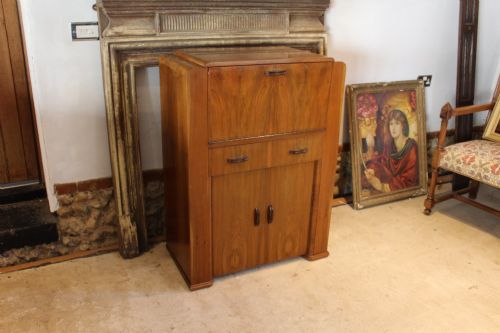
Compact Secretary Desk
A compact secretary desk solves the perennial problem of domestic writing space by combining a hinged fall front with hidden drawers in a neat footprint.
Compact Secretary Desk
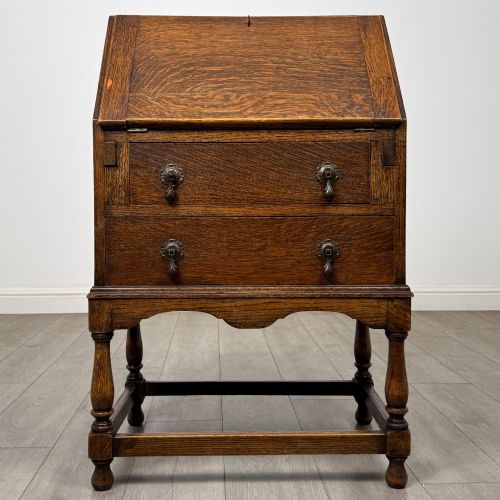
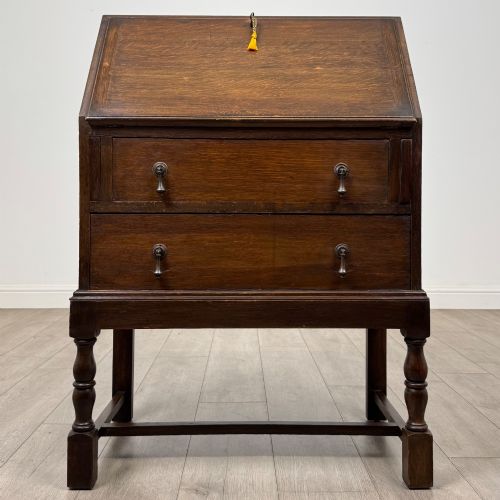
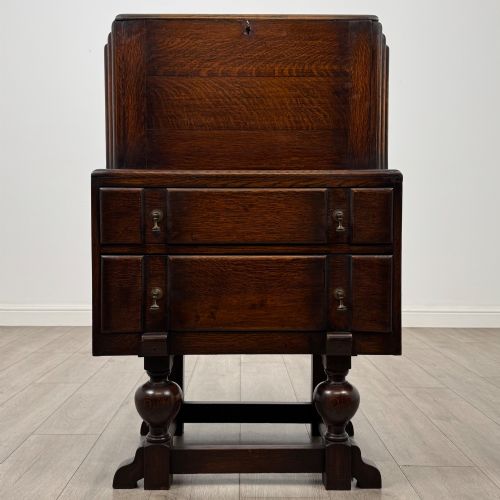
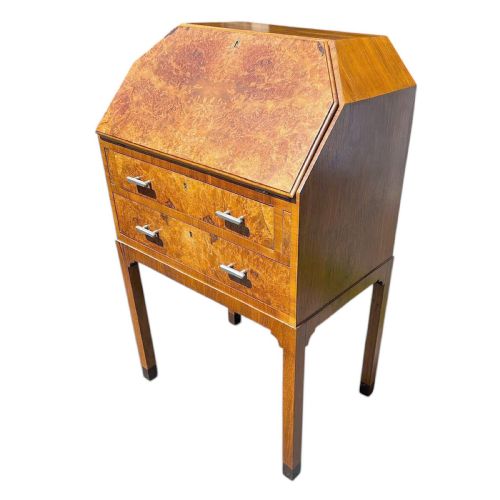
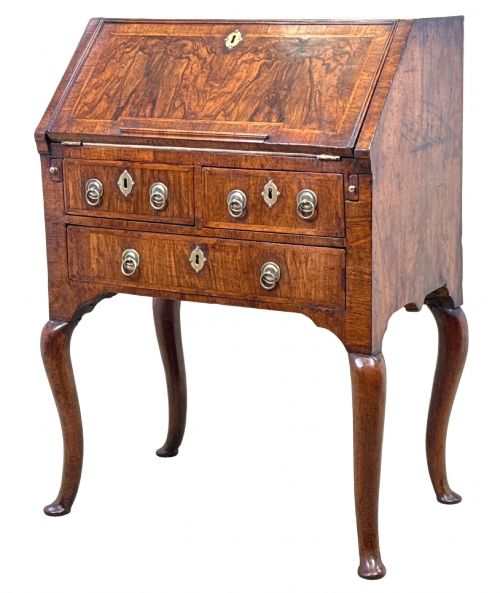
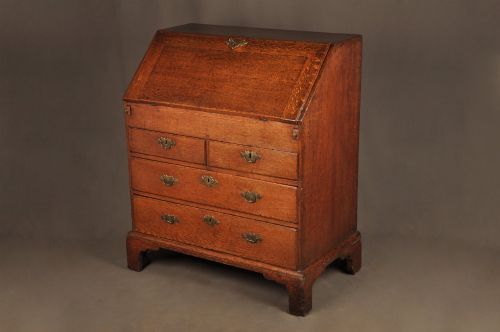
A compact secretary desk, also recorded across periods as a bureau, secretaire, or Davenport, serves as a dual-purpose writing surface and storage unit. These pieces range from early 18th century walnut and oak examples to Georgian mahogany iterations and later Edwardian and 1930s interpretations. Buyers seeking this form will encounter drop-front writing compartments, superstructure bookcases, and lift-action lids designed for constrained spaces.
The prevailing forms on this page draw upon Georgian, Regency, Victorian, and Arts and Crafts design vocabularies. Makers utilised styles such as Queen Anne Revival, Jacobean Revival, and Tudor Revival alongside clean-lined Art Deco expressions. Whether configured as a bureau on stand, a Davenport, or a narrow writing desk, each version prioritises vertical storage and a concealed fall-front writing surface.
How they were made
Cabinetmakers constructed these writing pieces primarily in solid timbers and veneers of oak, mahogany, and walnut, frequently selecting highly figured burr walnut for decorative impact. Brass handles, escutcheons, and hinges provide functional hardware, while internal pigeonholes and small drawers are framed in secondary woods. Leather writing inserts occasionally line the fall-front surface, adding a tactile writing plane to the fitted interior.
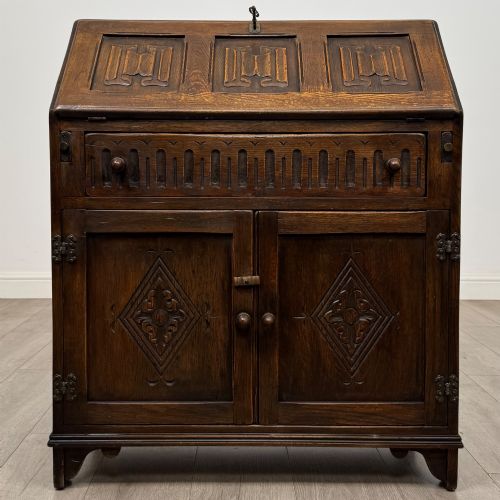
Construction techniques evolved from early 18th-century dovetailing and pegged joints to later 19th-century mechanical actions and label-bearing production. Certain pieces integrate specialised hardware such as metamorphic fold-over mechanisms, lift-action lids, and fitted bookcase superstructures glazed with glass panes. Surface ornamentation ranges from floral marquetry and walnut inlay to plain linenfold carving in oak.
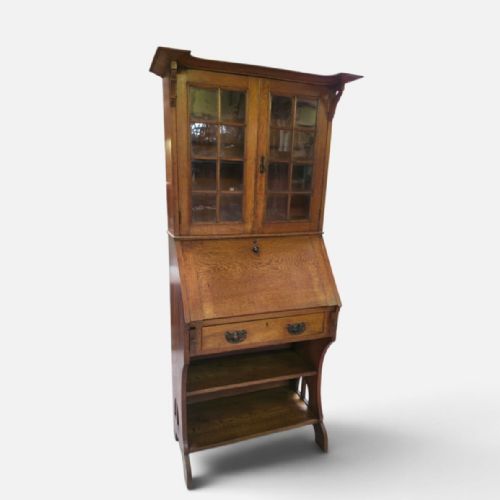
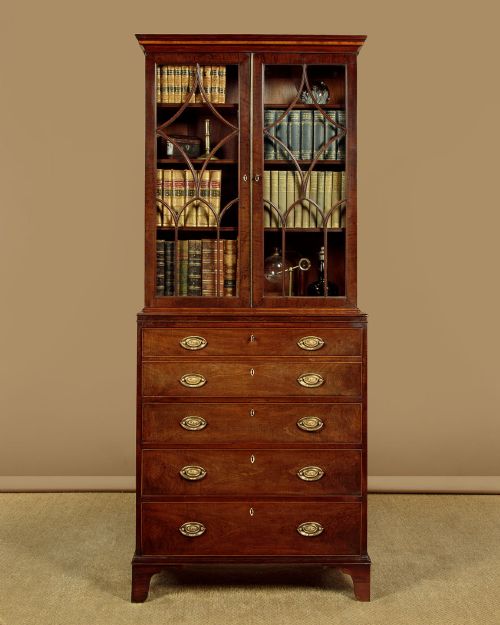
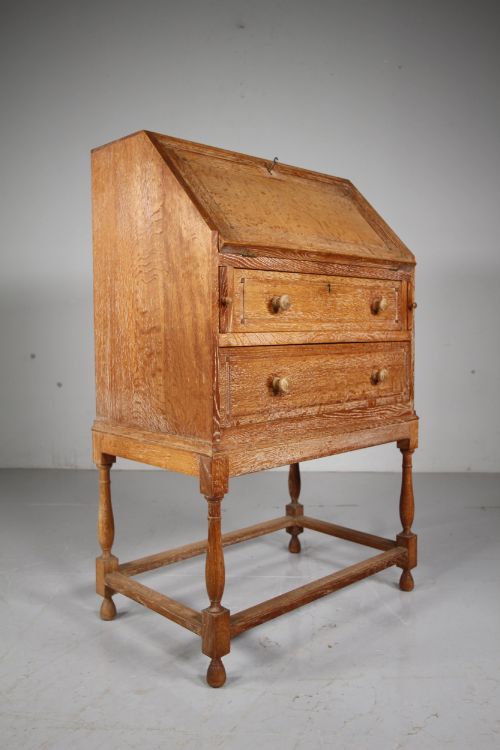
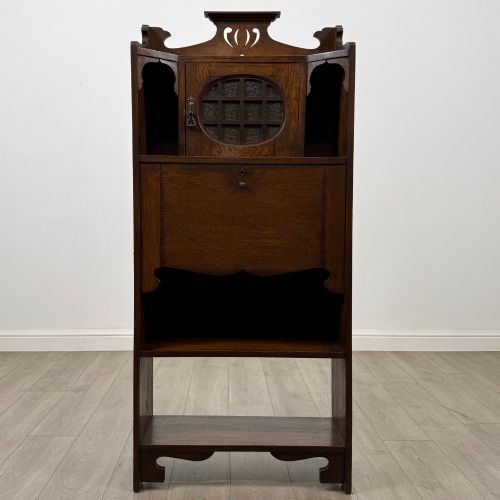
The documented forms range from narrow Edwardian writing desks to tall Georgian bureau bookcases and Victorian Davenport desks.
What varies in quality
The hierarchy of quality rests primarily on the choice of timber and the crispness of the cabinetwork. Examples utilising highly figured burr walnut, rich mahogany, or well-selected oak display a superior visual depth that elevates the piece beyond standard utility. The integrity of the internal fittings, such as secret compartments, finely dovetailed small drawers, and proportional pigeonholes, further separates standard production from finer workshop output.
Proportion and execution define the upper echelon of these writing pieces, particularly in diminutive or bureau bookcase formats. A harmonious balance between the lower writing cabinet and the upper glazed or panelled doors indicates thoughtful design. Maker identification, through stamps or labels from firms such as Heals of London or Druce & Co., adds documented provenance to the physical construction.
Heals of London·F.H. Marshall & Co·Bryn Mawr·Harris Lebus·Druce & Co
The Compact Secretary Desk Glossary
- Bureau
- A desk featuring a sloping fall-front that opens to reveal a fitted interior of small drawers and pigeonholes. This form serves as the primary configuration for compact secretary desks across multiple centuries.
- Secretaire
- A cabinet or chest incorporating a pull-out or drop-down writing drawer with an internal arrangement of pigeonholes. It often sits within a bookcase or a Wellington chest structure.
- Davenport
- A compact desk type characterised by a sloping, lift-action writing lid positioned above a pedestal of drawers. Victorian examples frequently incorporate side drawers and burl walnut veneers.
- Bonheur de jour
- A light, elegant ladies writing table featuring a small superstructure of drawers or shelves above the main desk surface. These pieces emerged in refined Edwardian and Regency domestic interiors.
- Linenfold
- A style of wood carving that imitates folded linen, commonly found on early 20th-century and Edwardian oak panels. It provides textural relief on the fall-fronts of regional bureaux.
Compact Secretary Desk: Frequently Asked Questions
What is a compact secretary desk?
A compact secretary desk is a dual-purpose piece of furniture that combines a concealed writing surface with compartment storage in a small footprint. These items operate as space-saving writing stations for domestic interiors.
Historically termed bureaux, Davenports, or secretaires, they allow users to fold up their paperwork and conceal it behind a wooden fall-front when not in use.
How were these desks used?
These desks functioned as private writing spaces for correspondence, household accounts, and letter-writing before the dominance of modern office furniture. The internal pigeonholes and small drawers organised stationery, inkwells, and postage items.
The sloping fall-front provided a dedicated writing slant, while the lower drawers or cupboard space stored ledgers, books, and personal documents.
How do I live with one?
Living with a compact secretary desk requires evaluating the clearance needed when the fall-front drops down into the room. Placing the desk in a study, bedroom, or living area provides an atmospheric writing surface that conceals clutter instantly.
Maintain the wood surfaces with appropriate natural waxes and keep leather writing inserts away from direct sunlight to preserve the finish.
How do I tell periods apart?
Distinguishing periods relies on observing the primary timbers, hardware styles, and construction traits used by cabinetmakers. Early 18th-century pieces often feature rich walnut or oak with candle slides and tall proportions, while Georgian pieces favour solid mahogany.
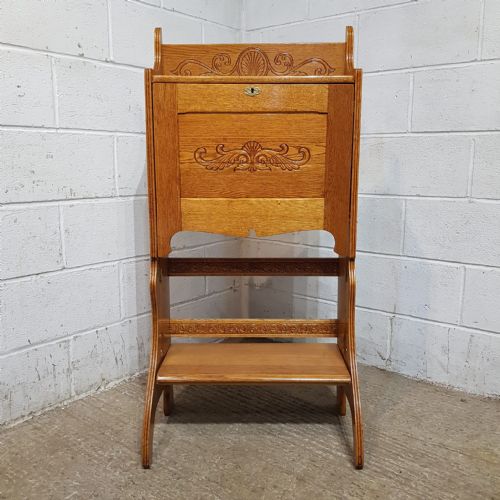
Edwardian and 1930s versions display lighter golden oak tones, Arts and Crafts influences, or factory labels that point to mass-production workshops.