


Edwardian Student Bureau
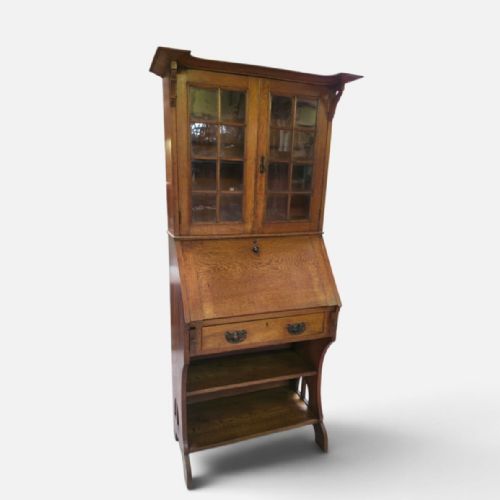
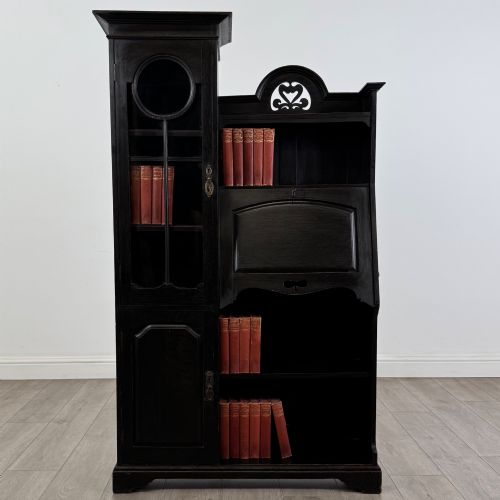
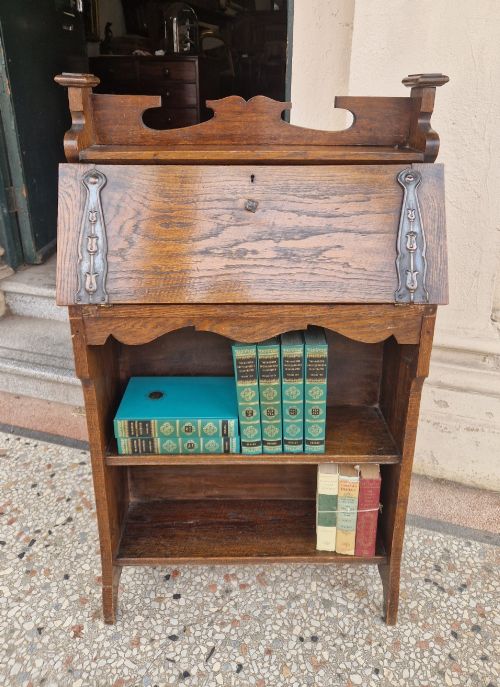
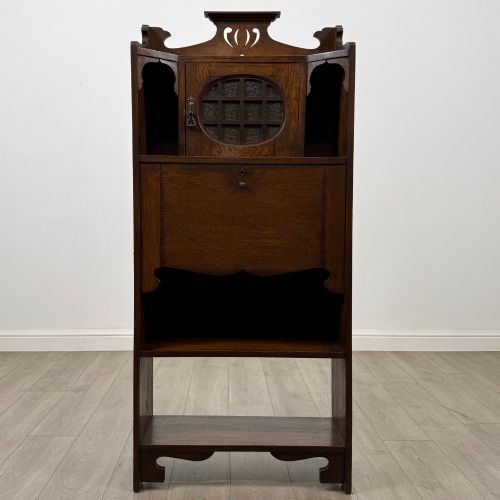
These edwardian student bureau pieces are compact writing desks offering practical surface space and storage, built for smaller rooms and study.
Edwardian Student Bureau
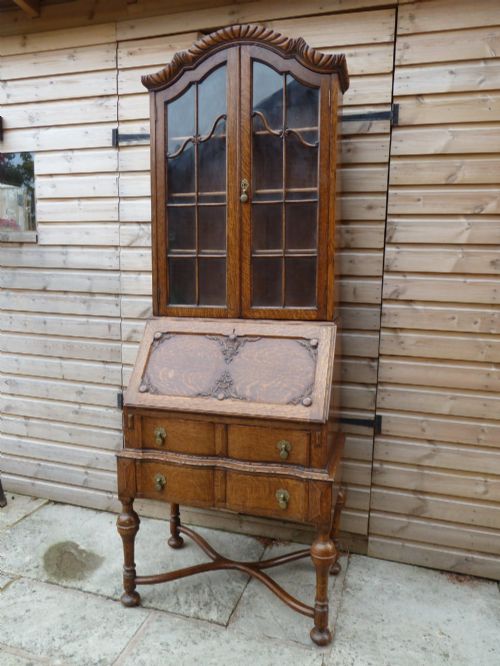
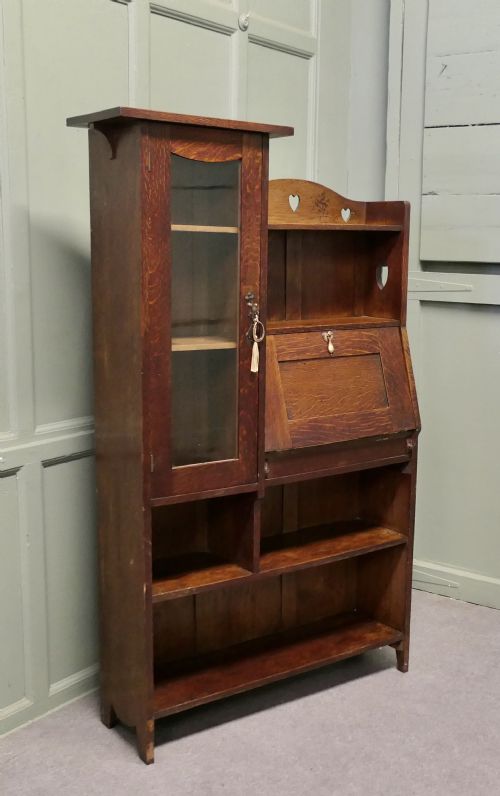
An edwardian student bureau is a compact writing desk designed for efficient use of space, commonly appearing in oak and sometimes mahogany. These pieces combine a writing flap with internal compartments and lower storage such as shelves or bookcase sections.
The versions most commonly met on this page date from the Edwardian period and around nineteen hundred, reflecting styles from Arts and Crafts to Art Nouveau and Jacobean Revival. They serve as practical home study furniture with a distinct period character.
Makers such as Harris Lebus and James Shoolbred & Co contributed to this form, producing narrow writing desks and bureau bookcases. The construction focuses on utility within a smaller footprint.
How they were made
Makers utilised solid oak and mahogany as the primary timbers, often enhanced with wood inlay for decorative effect. Metal elements in brass, copper, lead and iron appear on handles, hinges and glazing bars.
The construction methods reflect period cabinet making traditions seen in Arts and Crafts and Art Nouveau workshops. Wood inlay techniques add surface detail to the writing flap and main body of the desk.
Listings show pieces spanning from eighteen eighty to nineteen twenty, covering Edwardian, Arts and Crafts, Art Nouveau and Jacobean Revival styles.
What varies in quality
The selection of timber grain and the execution of wood inlay separate standard production from finer examples. More accomplished pieces demonstrate careful matching of oak or mahogany across the writing surface and cabinetry.
Hardware details such as brass or copper handles and hinges indicate the level of finish applied to the bureau. The integration of bookcase sections and internal fitted compartments also distinguishes the construction standard.
Harris Lebus·James Shoolbred & Co
The Edwardian Student Bureau Glossary
- Bureau
- A writing desk featuring a hinged sloping flap that opens to reveal pigeonholes and small drawers. This form provides a concealed workspace when closed.
- Bureau bookcase
- A writing bureau combined with an upper shelving or cabinet section for books. This dual purpose design maximises storage in compact rooms.
- Wood inlay
- The technique of inserting pieces of contrasting timber into a recessed surface to form decorative patterns. It appears on mahogany and oak examples.
- Arts and Crafts
- A design movement valuing hand craftsmanship and simple forms over mass production. Pieces from this tradition often feature plain oak surfaces and subtle metal hardware.
Edwardian Student Bureau: Frequently Asked Questions
What is an edwardian student bureau?
An edwardian student bureau is a compact writing desk featuring a fall front writing flap and internal compartments for stationery. They were designed for smaller spaces and study use.
Most examples seen on this page are constructed from oak or mahogany, often reflecting Arts and Crafts or Art Nouveau design influences.
How were these desks used?
These pieces provided a dedicated surface for reading and correspondence in homes where space was limited. The drop down flap served as a writing table during use and concealed papers when closed.
Upper bookcase sections on certain models allowed owners to store reference books directly above the writing area.
Which woods are most common?
Oak is the predominant timber found in these listings, appearing across various styles from plain Arts and Crafts designs to Jacobean Revival pieces. Mahogany also occurs, occasionally paired with wood inlay.
Metal fittings in brass, copper and iron provide functional and decorative contrast to the timber surfaces.
How do styles differ across the period?
Arts and Crafts examples emphasise straightforward construction and the natural grain of oak. Art Nouveau pieces incorporate inlaid mahogany and more fluid decorative motifs.
Revival styles draw on earlier historic forms, applying darker finishes and heavier turnings to the standard bureau shape.