
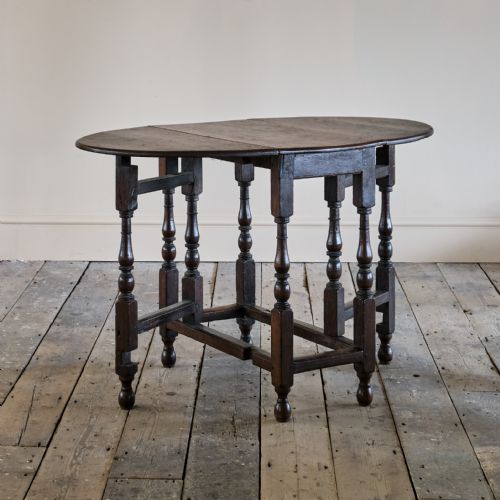


Compact Folding Wood Table
A compact folding wood table brings clever engineering and rich timber into tight spaces.
Compact Folding Wood Table
A compact folding wood table serves as a versatile piece for flexible living, spanning occasional, side, dining, and writing forms. When searching for a compact folding wood table, buyers frequently encounter drop-leaf and gateleg designs alongside specialised Sutherland tables.
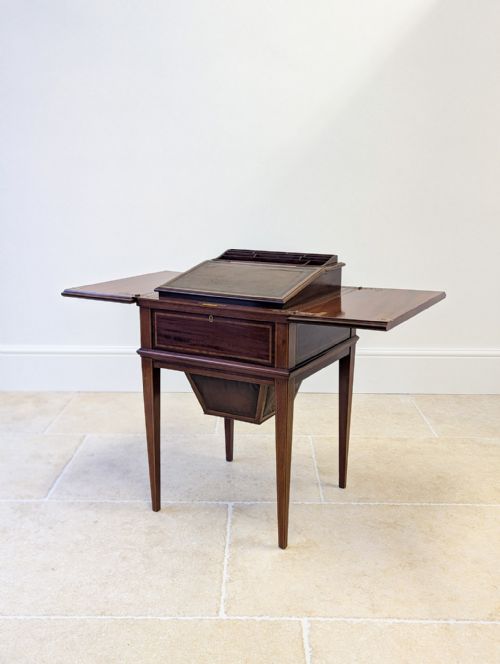
The pieces on this page originate from periods including the 18th century, the Georgian era, the Victorian age, and the Edwardian period. Construction encompasses formats such as double spider leg frames, oval coffee tables, and metamorphic writing desks.
Materials and construction
Cabinetmakers utilised dense timbers like mahogany, walnut, burr walnut, oak, and yew wood, often embellishing surfaces with satinwood crossbanding, boxwood stringing, or intricate marquetry inlay. Brass fittings secure folding mechanisms, hinges, and occasional castors.
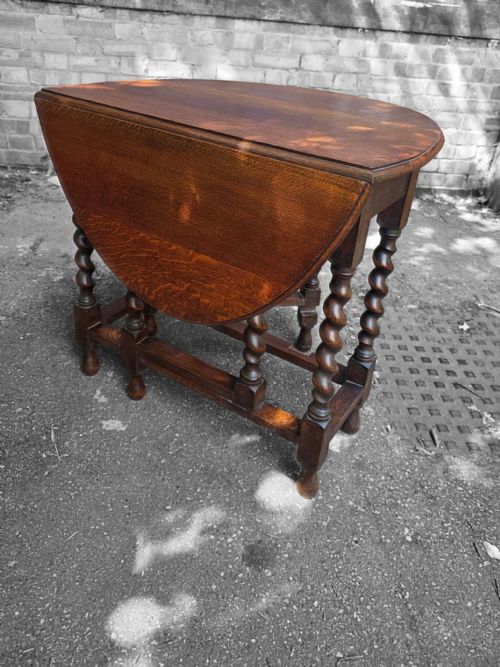
Joinery relies on sturdy gateleg actions and drop-leaf pivots that allow leaves to fold down neatly when not in use. Turning techniques produce decorative elements like barley twist legs and slender spider supports.
Some tables arrive with clever little folding frames that swing open with the gentle dignity of an old library book.
Assessing quality in folding tables
Superior examples showcase carefully selected timber veneers, such as richly figured burr walnut or figured mahogany, matched across folding leaves. Secondary woods and internal framing show equal attention to finish.
The integrity of the folding mechanism dictates daily utility. Tighter tolerances in hinges and smoother movement in gateleg pivots distinguish finer workshops from simpler production.
The Compact Folding Wood Table Glossary
- Sutherland table
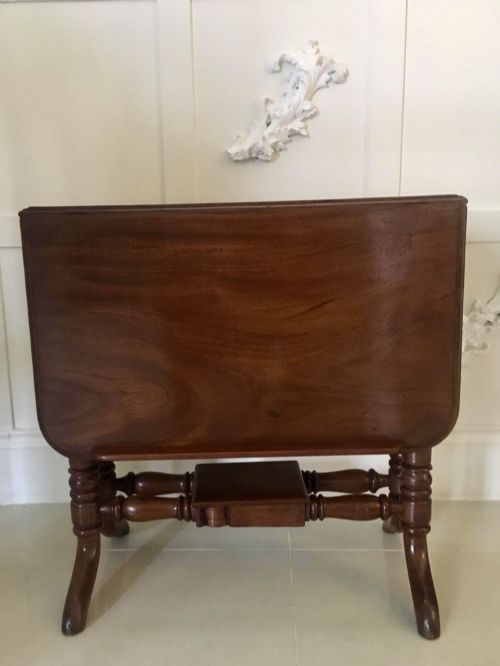
- A narrow drop-leaf table featuring exceptionally slender legs and leaves that fold down almost vertically. It was named after the Duchess of Sutherland in the 19th century.
- Gateleg table
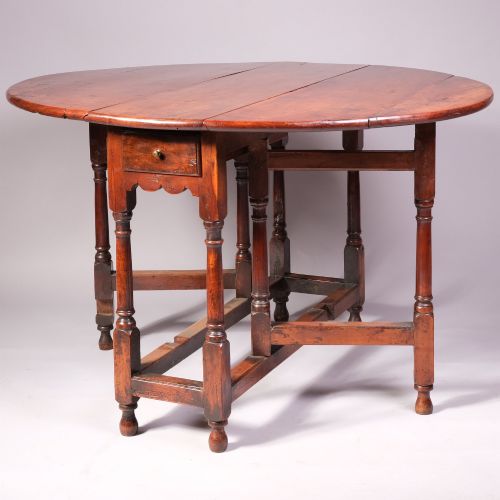
- A table with hinged leaves supported by one or more legs that swing outward like a gate. This design provides robust support for extended leaves.
- Crossbanding
- A border of veneer laid perpendicular to the grain of the main surface, often seen on Edwardian and Georgian pieces. It frames the central timber panel.
- Metamorphic table
- A piece of furniture engineered to transform from one form, such as a table, into another, such as a writing desk. These use specialised internal linkages.
Compact Folding Wood Table: Frequently Asked Questions
Where should I place a Sutherland table?
These tables suit narrow hallways, tight sitting rooms, or behind sofas where floor space is limited. Their slim profile when folded means they occupy minimal room until extra surface area is needed.
Opening the drop leaves transforms the piece into a functional tea or writing station. They integrate easily beside armchairs or against vacant wall spaces.
How do I identify a Victorian gateleg table?
Victorian examples frequently utilise dark hardwoods like mahogany or walnut, often featuring turned or barley twist supports. Look for period-appropriate construction methods in the underside framework and hinges.
Heavier timber sections and traditional hand-cut joinery separate 19th-century pieces from later reproductions. Natural patination on the wood surfaces also indicates age.
What is the difference between an occasional and a drop-leaf table?
An occasional table serves a general, light-duty purpose in a living space, whereas a drop-leaf table specifically incorporates hinged flaps designed to alter the surface area. Many tables on this page combine both functions.
Drop-leaf mechanisms allow the footprint to expand or contract depending on daily requirements. Occasional formats remain fixed in size unless folding frames are included.
How do I care for inlaid wood surfaces?
Inlaid surfaces benefit from gentle dusting with a dry, soft cloth to prevent particulate accumulation. Avoid placing items with high moisture content directly onto the polished wood.
Periodic application of appropriate wax polish maintains the lustre of mahogany, walnut, and satinwood without harming delicate stringing. Keep timber pieces away from direct heat sources.