


Compact Dressing Table
A compact dressing table offers a sensible surface for morning routines, combining small proportions with drawers for daily essentials.
Compact Dressing Table
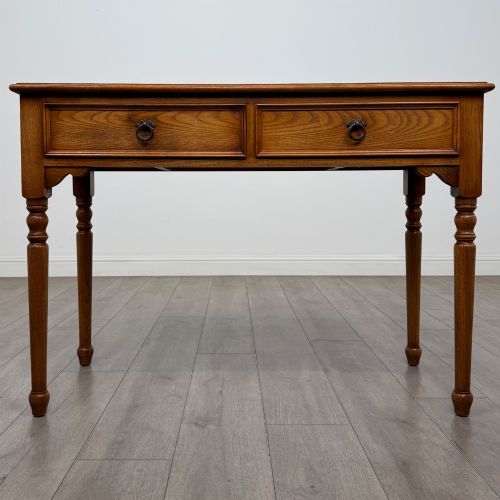
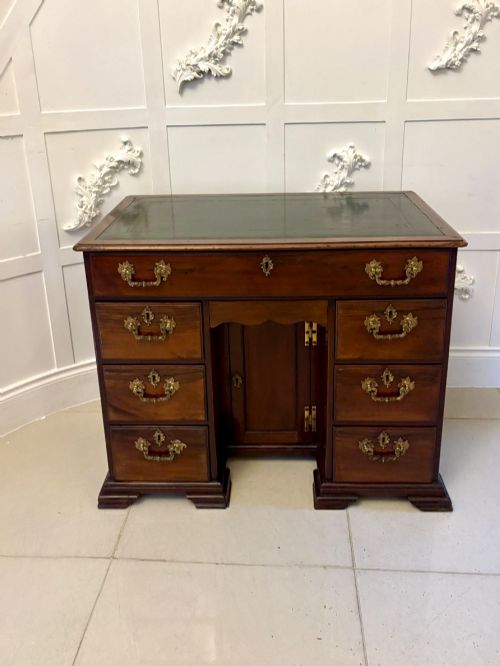
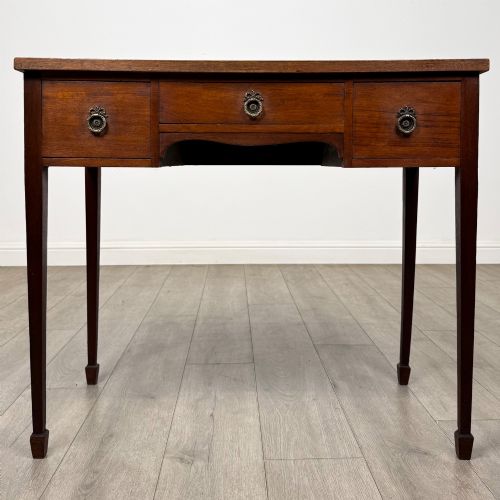
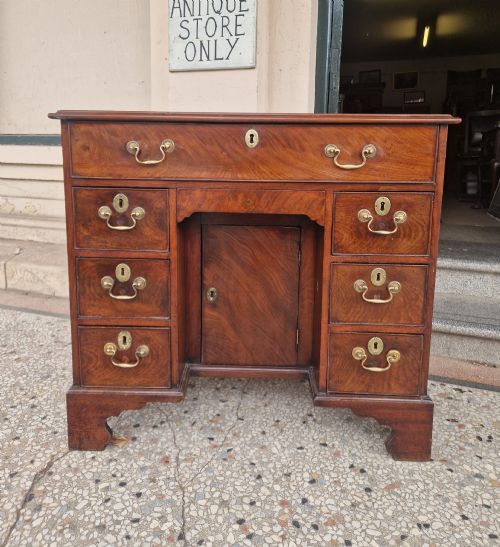
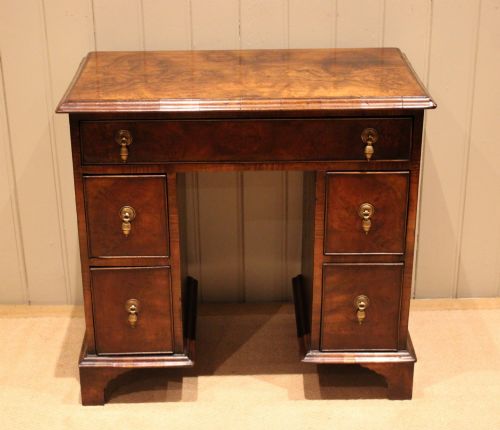
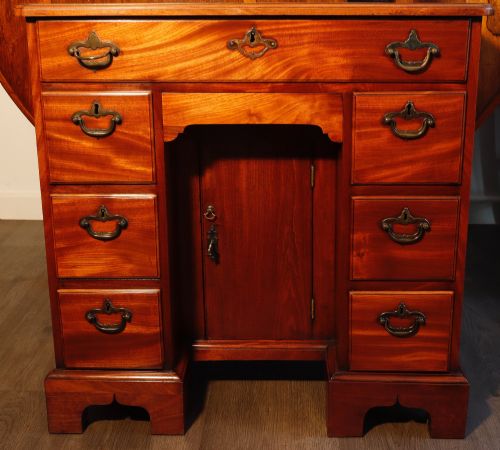
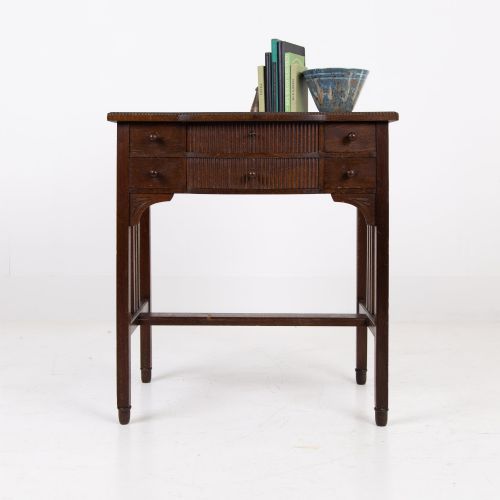
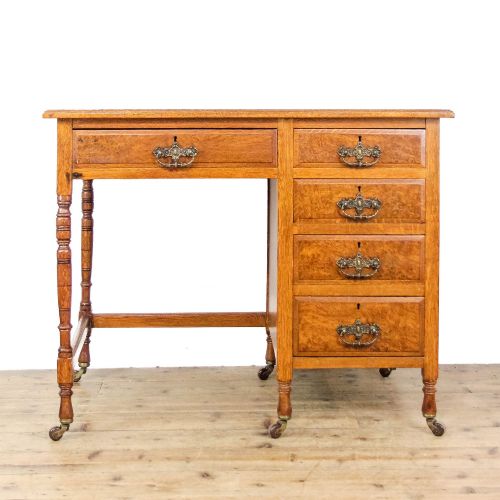
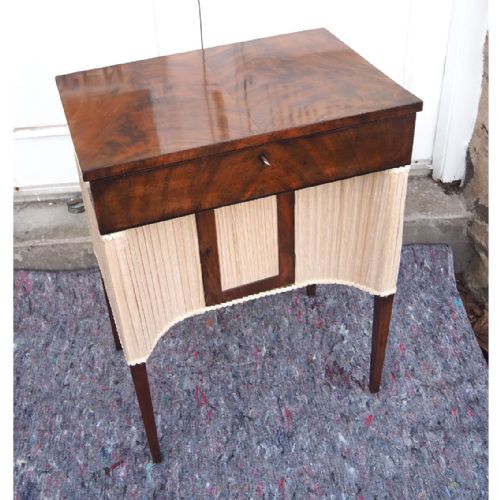
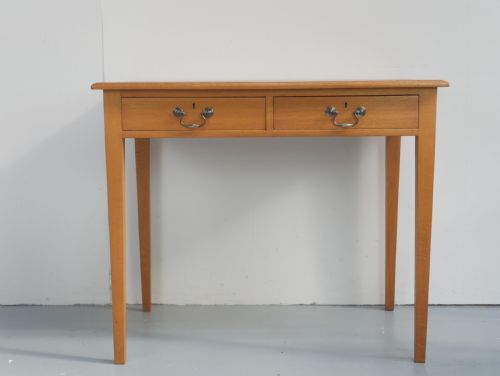
A compact dressing table takes several forms across the periods, appearing most frequently as kneehole desks, small writing tables, and dedicated dressing chests with mirrors. These pieces suit smaller rooms where larger furniture overwhelms the floor space.
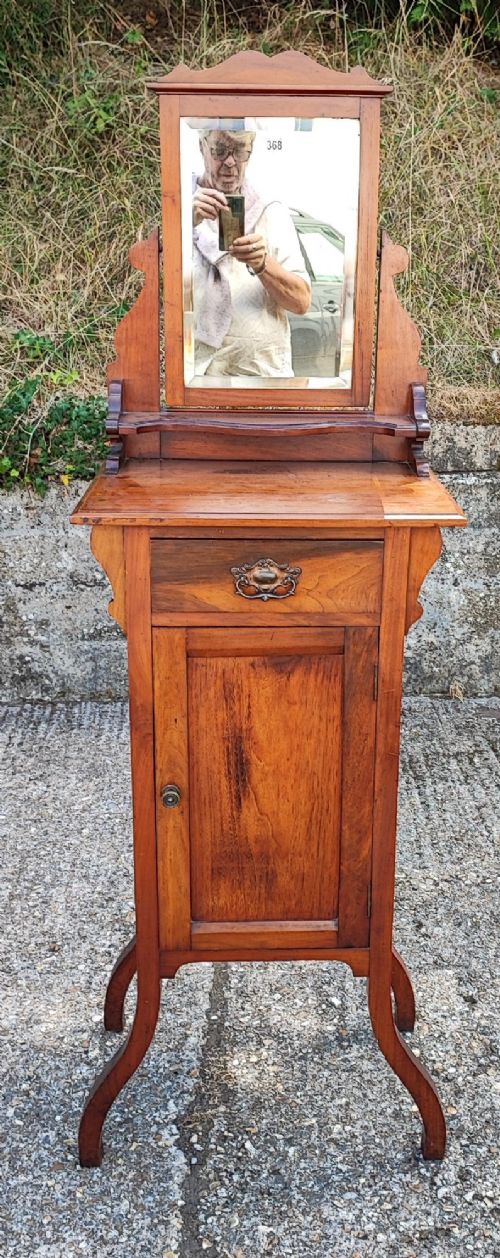
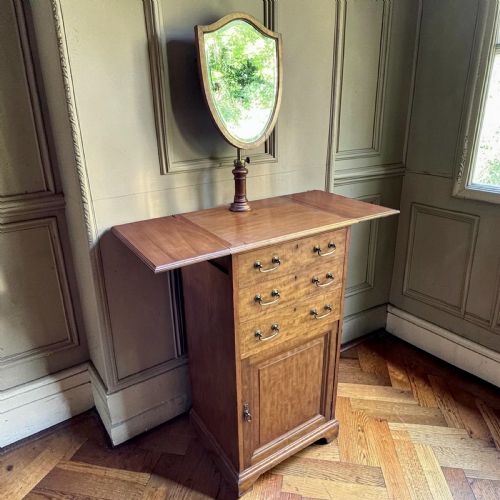
The selection ranges from Georgian mahogany and walnut examples with fitted drawers to Edwardian and Art Deco designs in oak and burr walnut. Makers often integrated mirrors, ranging from adjustable shield shapes to folding travel mirrors.
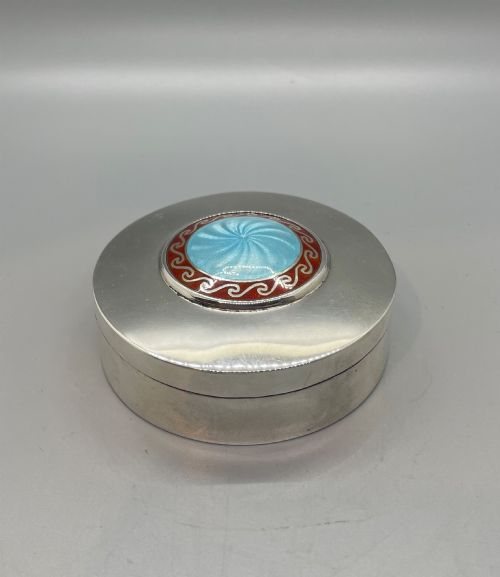
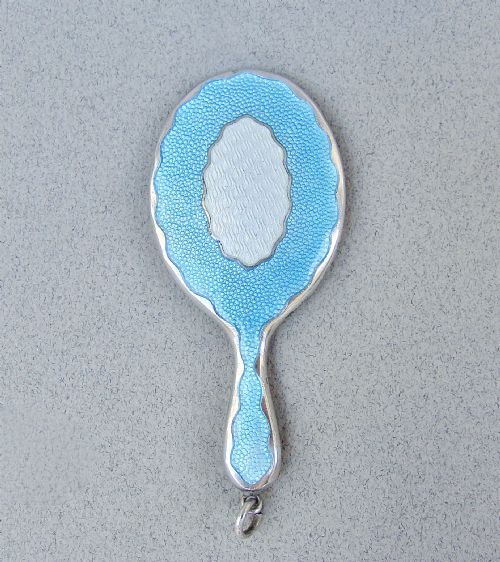
Buyers also encounter smaller related pieces such as silver and guilloche enamel boxes, miniature mirrors, and shaving cupboards that serve similar personal grooming functions in a confined footprint.
Materials and construction
Cabinet makers utilised dense hardwoods such as mahogany, oak, and walnut, frequently selecting figured veneers like flame mahogany and burr walnut for drawer fronts and primary surfaces.
Detailing involved brass hardware, leather writing inserts, and in some pieces, delicate marquetry inlay. Later twentieth-century examples incorporated vitreous enamel and sterling silver alongside traditional timber construction.
The listings span from the eighteenth century through the Art Deco era, featuring oak, mahogany, walnut, and sterling silver.
Assessing quality
Quality rests upon the selection of timber veneers and the crispness of the cabinet work, particularly in the dovetailing of drawers and the preservation of original brass handles or locks.
Proportion defines the better examples, where smaller dimensions remain balanced and internal compartments retain their original fitted layouts rather than undergoing later alterations.
Henry Williamson·Elkington and Co·Cartier London·Rene Lalique·J Shoolbred
The Compact Dressing Table Glossary
- Kneehole desk
- A small writing or dressing table featuring a central recess for the legs flanked by columns of small drawers.
- Guilloche enamel
- A decorative technique where geometric patterns are engine-turned into metal and coated with translucent enamel.
- Burr walnut
- Timber taken from a tree growth that produces intricate, swirling grain patterns highly prized for cabinet veneers.
- Dressing chest
- A chest of drawers fitted with an upright mirror, designed specifically for bedroom use.
- Campaign style
- Furniture constructed to be easily dismantled and transported, often featuring brass corner brackets and flush drawer pulls.
Compact Dressing Table: Frequently Asked Questions
What is a compact dressing table?
A compact dressing table is a scaled-down piece of furniture designed for grooming and writing in smaller rooms.
These pieces typically incorporate multiple small drawers and occasionally an integrated mirror while maintaining a reduced footprint.
How do I date an old dressing table?
Dating relies upon timber selection, construction methods, and hardware styles across different historical periods.
Georgian pieces show hand-cut dovetails and solid primary timbers, whereas Edwardian and later examples introduce machine-made elements and different veneer treatments.
Where were these dressing tables used?
These tables served primarily in bedrooms, dressing rooms, and smaller chambers for personal grooming and correspondence.
Their reduced proportions allowed them to fit into tighter spaces where full-sized bedroom suites proved impractical.
Are writing tables and dressing tables the same?
Writing tables and dressing tables share similar proportions and drawers, though dressing tables frequently include mirrors or specialised compartments.
Many kneehole desks served dual purposes for both writing and personal grooming depending on the owner's needs.