


Commercial Station Clock
A commercial station clock is a dependable timepiece built for public spaces, offering bold dials and robust movements that anchor any room.
Commercial Station Clock
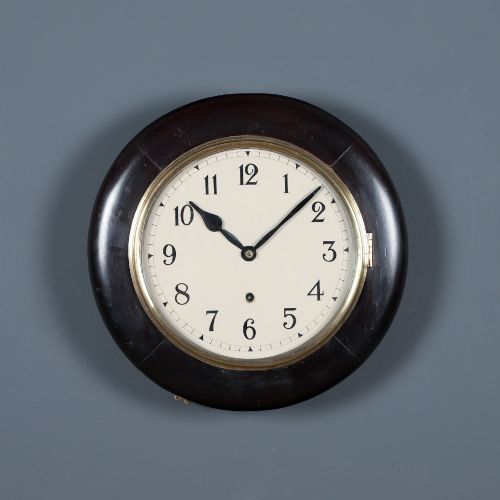
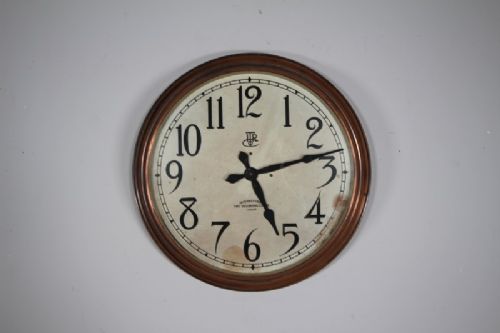
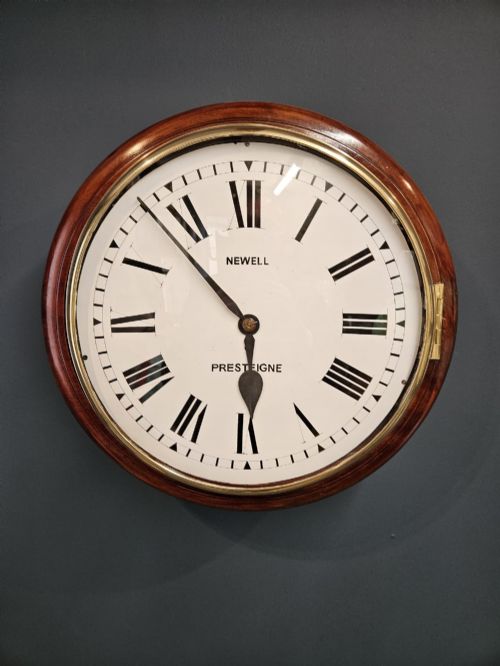
When you search for a commercial station clock, you are looking at large, wall-mounted timepieces designed for railways, factories, and schools to keep precise time in busy environments. These clocks are typically round-dial instruments built for legibility across large halls or platforms.
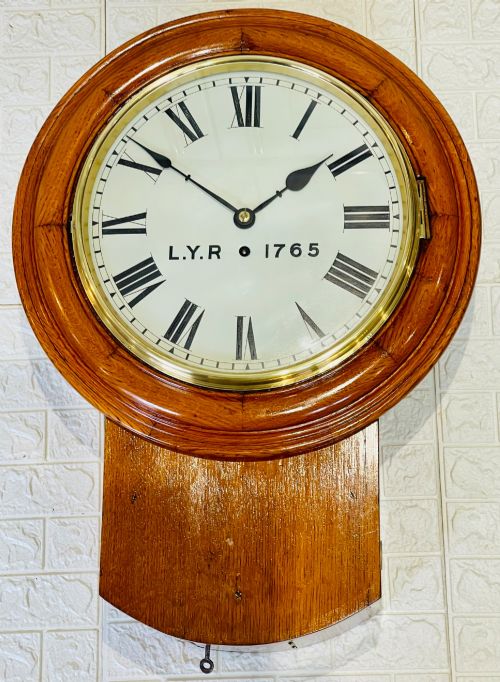
The versions you are most likely to meet on this page span from the Victorian and Edwardian eras into the twentieth century, including pieces marked by railway companies like the Lancs/Yorks Railway and B.R (S).
Form follows function in these clocks, yielding drop-dial cases, fusee movements, and occasional double-sided configurations meant for corridor or platform viewing.
How they were made
Casework relies heavily on timbers such as mahogany and oak, chosen for structural stability and finished to house heavy mechanical movements securely. Metal, brass, and copper feature in bezels, side boxes, and internal fittings, providing durability against constant vibrations.
Glass protects the painted or wooden dials, while specialised movements like fusee mechanisms ensure even tension as the mainspring unwinds, delivering steady accuracy over long periods.
Some railway clocks bear the scars of platform tobacco smoke, carrying a genuine patina from decades of bustling commuters.
What varies in quality
Quality in these clocks rests upon the integrity of the movement and the originality of the case timber. Mechanisms signed by known makers or railway contractors demonstrate superior workshop execution compared to anonymous iterations.
The preservation of the dial, whether painted metal, glass, or turned wood, heavily dictates the character of the piece. Crisp lettering and intact bezels separate standard utility clocks from finer station and factory examples.
John Walker·Camerer Cuss·Smiths·Anglo Swiss Watch Co
The Commercial Station Clock Glossary
- Fusee
- A conical pulley connected to the mainspring by a chain or cord, designed to equalize the torque of the mainspring as it runs down. This mechanism ensures consistent timekeeping across the winding cycle.
- Drop dial
- A clock case featuring a circular dial at the top and a trunk or drop below, often used to house the pendulum swing in railway and wall clocks.
- Bezel
- The metal or wooden ring that holds the glass face in front of the clock dial, frequently hinged to allow access for hand-setting and winding.
- Round dial
- A circular clock face, standard for public and transport timepieces where quick legibility from multiple angles is essential.
Commercial Station Clock: Frequently Asked Questions
How do I wind a fusee wall clock?
Winding requires a key inserted into the dial aperture to tension the spring via the fusee chain. Care must be taken not to overwind the movement.
Most wall clocks of this type run for eight days per wind, requiring a consistent routine to maintain accuracy.
Were these clocks used only in railway stations?
While many served on railway platforms, identical movements and dials were installed in schools, factories, and offices. Transport companies and municipal buildings shared standard utility designs.
Railway-specific pieces often carry company lettering or stamps on the dial or movement.
How do I date a Victorian station clock?
Dating relies on case timber, dial construction, and movement characteristics typical of the nineteenth century. Mahogany cases and fusee movements were standard during the Victorian period.
Moves into the Edwardian era and the nineteen-thirties introduced oak cases and alternative electric or Smiths movements.
Can I hang a heavy station clock on a standard wall?
These clocks are substantial and require fixing directly into masonry or secure wall studs using appropriate hardware. The weight of the timber case and brass movement demands a robust anchor.
Professional installation ensures the pendulum hangs freely and the clock beats evenly.